Article
Team Visibility and Task Tracking in SMEs: The Alios Guide
End the "Who is doing what?" chaos. Learn how to establish total transparency in team management using Alios’s clear assignee logic, powerful filters, and Dashboard tools
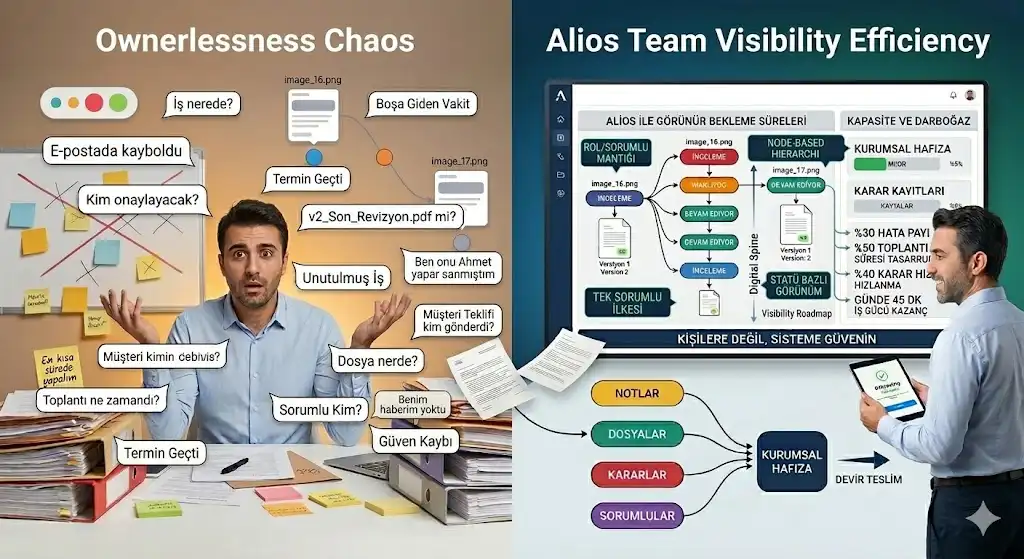
Ending the Chaos of "Who is Doing What?" in SMEs: How to Establish Team Visibility
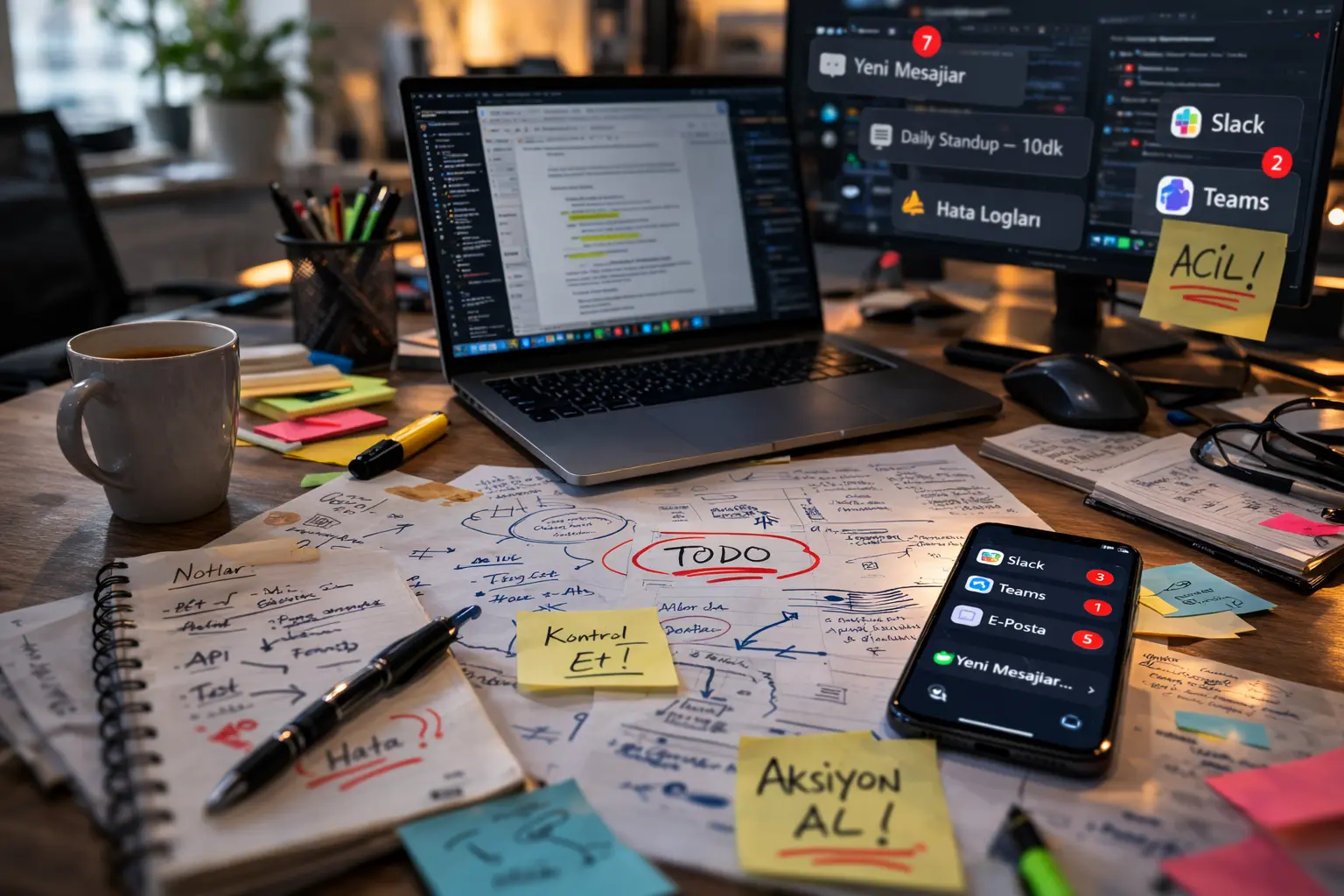
The most painful phase of growth for an SME (Small and Medium-sized Enterprise) is the "gray area" where the owner can no longer be involved in every detail. Once the business grows beyond 5-10 employees, the corridor conversations or WhatsApp groups start to echo with phrases like: "Who was supposed to do that?", "I thought Ahmet was handling it," "Who sent the proposal to the customer?"
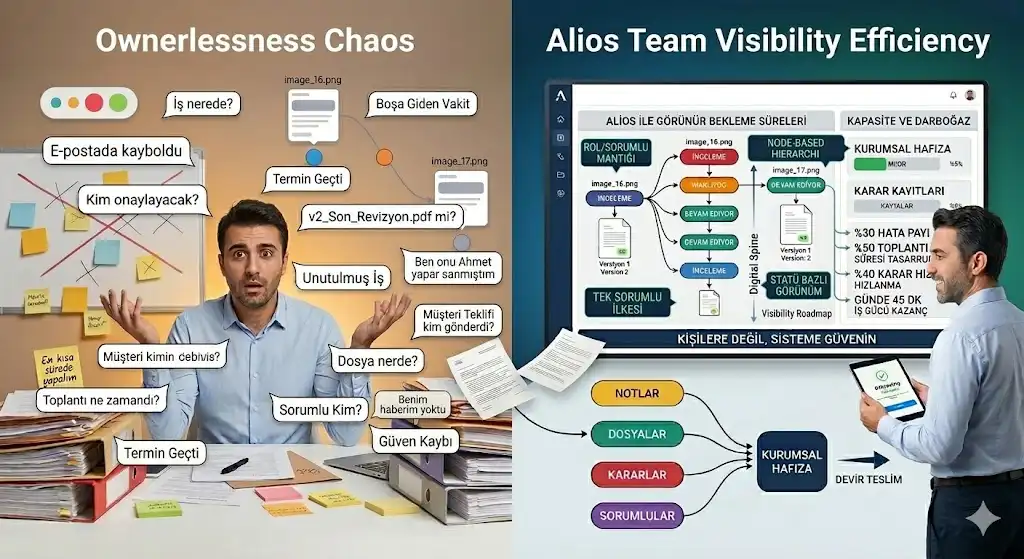
This uncertainty is not just a waste of time; it is a silent cost that kills personnel motivation, erodes productivity, and damages the corporate image in front of customers. Alios eliminates this ownerlessness chaos by placing the Digital Spine methodology and the concept of the "Captain" (Single Assignee) at the core of the work.
1. Ownerlessness Uncertainty: The Silent Killer of SMEs
In many SMEs, tasks are often thrown "out into the open." If the owner of a task is not clearly defined, that task effectively becomes no one’s responsibility.
The "Our Guys Are Looking at It" Fallacy: Writing multiple people as "responsible" for a project actually eliminates responsibility by fragmenting it.
Corporate Memory Loss: If who is doing what is only contained in meeting notes or personal memory, tracking that task depends entirely on the manager's cognitive capacity. Alios moves this burden from people’s fragile minds to the system’s permanent, visual memory.
2. Establishing the "Responsibility" Logic with Alios
Team visibility is not just a feature in Alios; it is a native outcome of how the system functions.
A. Every Node Has One "Captain" (Single Assignee Principle)
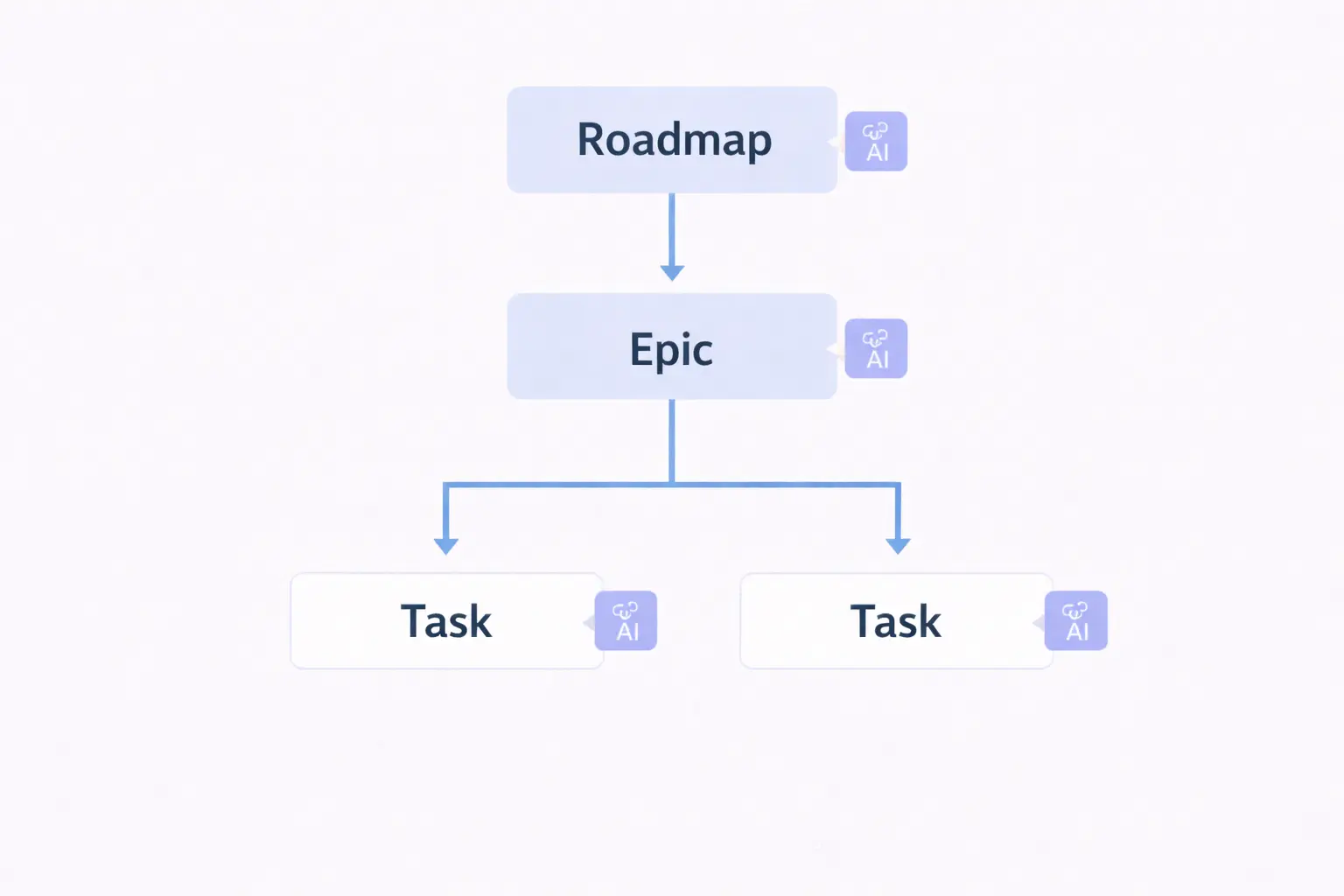
In Alios, every assignment is opened as a Node. A critical rule is that every Node must have one—and only one—Captain (Assignee).
Crystal Clear Accountability: The muhatap (person to contact) for the question "Is this job finished?" is immediate.
Support Team (Collaborators): Others can work on the task as "Observers" (viewing and helping), but only the Captain is responsible for the final outcome and driving progress. This eliminates ambiguity.
B. Role and Authority Sharing
Team members can see not just their own tasks but also other tasks within their department as "Observers." This removes the need to physically walk over to someone's desk to ask, "What are you working on?" and creates organic visibility.
3. Dashboard and Filters: Taking an X-Ray of Your Company
As a manager, when you walk into the office (or open your browser), you must be able to see the instantaneous status of the entire team. Alios enables this through powerful filtering tools:
Assignee-Based Filtering: "How many 'IN PROGRESS' (Devam Eden) tasks does Ahmet have right now?" This question is answered in a single click.
Status-Based View: You can filter the entire company view to see how many tasks are currently in the WAKLIYOG (Waiting) status, immediately diagnosing where the team is stuck.
Capacity Management: If an employee has 20 active Nodes, the system visually shouts at you that they are "overloaded." This allows you to manage capacity rather than just chasing deadlines.
4. Building a Culture of Transparency: "Trust the System, Not Individuals"
Visibility must be seen as a "support" mechanism, not just a "policing" tool.
Transparency of History: Who finished which job, how long it took, and what revisions were made remains transparent in the Node History (Düğüm Geçmişi).
Sense of Justice: The distinction between those who work hard and those who don’t is made through data. Alios ensures that "not the one who shouts the loudest, but the one who finishes the most work" is visible.
Uninterrupted Workflow: When a staff member goes on leave or gets sick, you can reassign their "Captain" Nodes to someone else in seconds. The new responsible party steps in with full command of the entire past history.
5. Conclusion: Clarity Breeds Speed
In SMEs, operational velocity is directly proportional to the clarity of "who is doing what." When you resolve ownerlessness uncertainty, meeting times are shortened, errors are reduced, and the phrase "I didn't know about it" disappears from the corporate vocabulary. Alios provides not just software, but a digital control tower from which you can see every single cell of your company.