Article
AI Incident Risk: Consolidate Your Prod Error Process in One Node
AI speeds up deploys and raises incident risk. Learn how to consolidate your production error process in one node in Alios and turn every incident into lasting learning.

AI Incident Risk: Consolidate Your Prod Error Process in One Node
When development accelerates with AI tools, deploy frequency increases too. Instead of one deploy a day, two, three, sometimes more. Each deploy is a potential incident point.
The math is simple: as deploy frequency increases, even if the quality of each deploy stays constant, total incident probability increases. AI produces code quickly but doesn't know the production environment, the nuances of the existing system, or the full set of edge cases. Code written fast and deployed fast sometimes behaves unexpectedly in production.
Incidents can't be prevented. But they can be managed. And the quality of management depends largely on how quickly coordination gets established.

How Fast Changes Increase Incident Risk
There are three dynamics that increase incident risk in AI-assisted development.
The testing window narrows. Code gets written faster but testing time stays the same. Under time pressure, testing steps get shortened and issues that weren't visible in staging get carried to production.
Context gap accumulation. AI-produced code pieces are individually correct but can cause problems at integration points. Multiple AI-produced modules meeting in the same deploy creates unexpected interactions.
Rollback knowledge is scattered. In a fast-deploy culture, "if this doesn't work, how do we roll back?" doesn't get asked before the deploy. When an incident starts, rollback steps aren't known and time gets wasted.
Coordination lag. When an incident starts, information scatters across different channels: Slack messages, phone calls, screen shares. Who found what, who tried what, what changed when — none of this gets recorded. While the crisis is being managed, coordination is also being attempted at the same time.
Incident Node Template in Alios
A single node gets opened for every incident. This node is the single center throughout the incident — all information, all decisions, all timeline entries live here. Parallel Slack messages get sent but the record stays in the node.
📌 INCIDENT — [INC-Number]: [Short description]
Status: Active / Resolved / Postmortem Pending / Closed
Priority: P1 / P2 / P3 / P4
Start: [Date / Time]
Detected: [How it was noticed — monitoring / user / team]
Resolution: [Date / Time — filled when resolved]
Duration: [X hours Y minutes — filled when resolved]

Incident Lead: [Name]
Comms Owner: [Name]
Technical Lead: [Name]
On-call: [Name]

─────────────────────────────

🔴 IMPACT

Affected system: [Which service, module, page]
Affected feature: [What isn't working]
User impact: [Estimated user count]
Business impact: [Payments down / Login broken / etc.]

Severity:
[ ] P1 — Full outage, all users affected
[ ] P2 — Critical feature broken, no workaround
[ ] P3 — Important feature degraded, workaround exists
[ ] P4 — Minor issue, most users can proceed

─────────────────────────────

📋 TIMELINE

[Time] — [Event / Finding / Decision — who, what]

─────────────────────────────

🔧 ACTIONS

Active:
- [ ] [Action] — Owner: [Name] — Deadline: [Time]

Completed:
- [x] [Action] — [Name] — [Time]

─────────────────────────────

💬 COMMUNICATIONS

Customer notification: [ ] Sent — [Time]
Team update: [ ] Shared — [Time]
Status page: [ ] Updated — [Time]

─────────────────────────────

🔍 ROOT CAUSE

Initial hypothesis: [First guess — at incident start]
Confirmed root cause: [Proven cause — filled when known]
Trigger: [Exactly what triggered it]
AI connection: [ ] AI-generated code  [ ] AI deploy speed
               [ ] Not related

📋 POSTMORTEM

Status: [ ] Pending  [ ] In progress  [ ] Complete
Deadline: [48 hours after incident close]
Owner: [Name]
Example: Fully Filled Incident Node
A realistic scenario where AI-generated code caused a production incident:
📌 INCIDENT — INC-023: Payment page 500 error
Status: Closed
Priority: P1
Start: March 18, 2025 — 14:37
Detected: Datadog alert — error rate rose from 0.3% to 12%
Resolution: March 18, 2025 — 16:52
Duration: 2 hours 15 minutes

Incident Lead: Ali
Comms Owner: Zeynep
Technical Lead: Ali
On-call: Mehmet

🔴 IMPACT

Affected system: Payment service — /api/checkout endpoint
Affected feature: Payment completion step
User impact: ~340 users unable to complete payment
Business impact: Payment flow completely stopped,
checkout page returning 500

Severity: [x] P1 — Full outage, all users affected

📋 TIMELINE

14:37 — Datadog alert: /api/checkout 500 error
        rate 12%. On-call Mehmet received alert.

14:39 — Mehmet opened incident node, pinged Ali.
        #incidents channel informed on Slack.

14:42 — Ali started investigating.
        Last deploy: 14:15 — Stripe webhook handler
        updated using Claude.

14:48 — Initial hypothesis: type mismatch in webhook
        handler. Stripe expects integer for amount
        field, AI code returning string.

14:51 — Zeynep updated status page:
        "Payment system experiencing issues,
        investigating."

14:55 — Ali reproduced locally: Stripe amount field —
        AI code returning Decimal, Stripe expects
        integer. No validation in place.

15:02 — Rollback decision made: reverting 14:15 deploy.
        Mehmet started rollback.

15:11 — Rollback complete. Error rate dropped to 0.2% —
        returned to normal.

15:14 — Zeynep sent customer notification:
        "Payment system restored, affected users
        can try again."

15:18 — Zeynep updated status page: Resolved.

15:20 — Ali opened fix branch: type validation and
        conversion to be added for amount field.

16:40 — Fix written and reviewed.
        Stripe amount handler: Decimal → integer
        conversion + input validation added.

16:48 — Tested in staging: all scenarios passed.

16:52 — Fix deployed, monitoring for 10 minutes.
        Error rate normal, incident closed.

🔧 ACTIONS

Completed:
- [x] Incident node opened — Mehmet — 14:39
- [x] #incidents channel informed — Mehmet — 14:40
- [x] Root cause identified — Ali — 14:55
- [x] Rollback decision and execution — Mehmet — 15:02
- [x] Customer notification — Zeynep — 15:14
- [x] Status page updated — Zeynep — 15:18
- [x] Fix written and deployed — Ali — 16:52

💬 COMMUNICATIONS

Customer notification: [x] Sent — 15:14
Team update: [x] Shared — 14:40 and 15:20
Status page: [x] Updated — 14:51 and 15:18

🔍 ROOT CAUSE

Initial hypothesis: Stripe amount field type mismatch
Confirmed root cause: Webhook handler written with Claude
returned Decimal for amount field where Stripe expects
integer. No input validation in place — error silently
became a 500 in production.
Trigger: 14:15 deploy — webhook handler update
AI connection: [x] AI-generated code
Note: Stripe type requirements weren't specified in the
Claude prompt, existing system context wasn't provided.
Postmortem: Breaking Actions into Separate Nodes
After the incident closes, the node moves to "Postmortem Pending" status. Written within 48 hours.
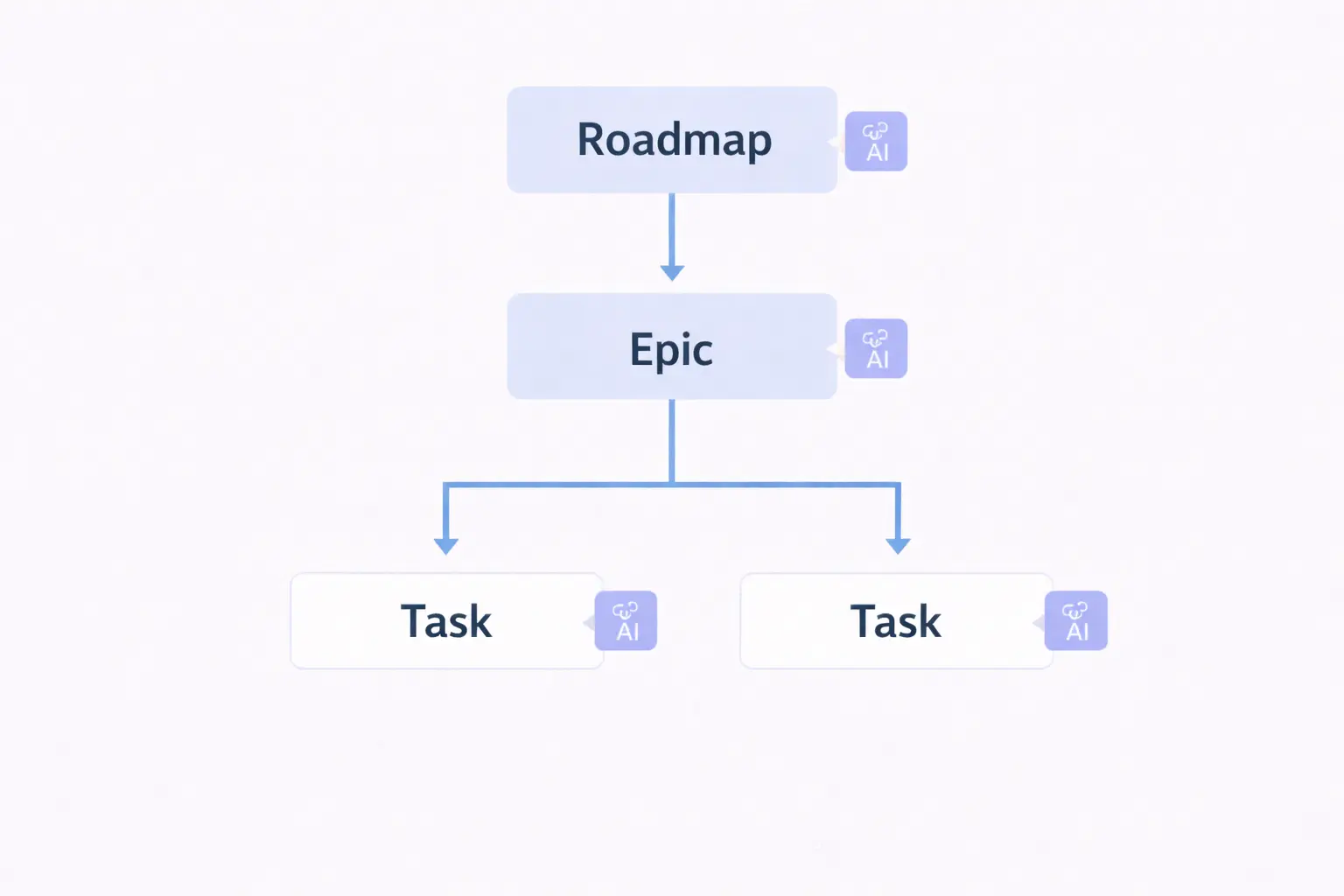
The most critical part of the postmortem is the action plan — and each action gets opened as a separate node. "Postmortem written" isn't a task; every action that comes out of the postmortem is a separate tracking unit.
📋 POSTMORTEM — INC-023

SUMMARY
Payment page experienced a P1 incident between
14:37-16:52 on March 18. A type mismatch in a
Claude-written webhook handler passed to production.
~340 users were unable to pay for ~2 hours. Resolved
via rollback, fix deployed same day.

IMPACT
Duration: 2 hours 15 minutes
Affected users: ~340
Business impact: Estimated lost payment volume

ROOT CAUSE
When asking Claude to write the Stripe webhook handler,
the integer requirement for the amount field wasn't
specified. Generated code returned Decimal. Staging
didn't catch this because staging uses mock data.
No input validation meant it exploded as a 500 in
production.

WHY WASN'T IT CAUGHT?
Staging mock data didn't fully simulate real Stripe
behavior. Review checklist had no control for "AI code —
external service type requirements."

WHY DID IT TAKE THIS LONG?
Rollback decision was delayed 17 minutes — team tried
to write a fix first. Rollback procedure wasn't
documented, Mehmet spent time recalling the steps.

ACTION PLAN

Short term — this sprint:

📌 ACTION-INC023-1 [Opened as separate node]
Input validation template for Stripe integration
Owner: Ali — Deadline: March 21
Acceptance criteria: Type validation present for all
Stripe fields, test coverage exists

📌 ACTION-INC023-2 [Opened as separate node]
"AI code — external service type compatibility"
control added to review checklist
Owner: Mehmet — Deadline: March 19
Acceptance criteria: Review checklist updated,
team informed

📌 ACTION-INC023-3 [Opened as separate node]
Rollback procedure documented
Owner: Ali — Deadline: March 20
Acceptance criteria: "Rollback Procedure" node
created in Alios, steps written, team approved

Medium term — this quarter:

📌 ACTION-INC023-4 [Opened as separate node — on roadmap]
Staging environment to integrate with real Stripe
sandbox — mock data to be removed
Owner: Ali — Deadline: To be prioritized in
Q2 sprint planning

LEARNING

When asking AI tools to write external service
integrations, that service's type requirements,
format constraints, and error behavior must be
explicitly provided in the prompt.

Not "write a Stripe webhook" but "write a Stripe
webhook where amount must be integer, on error
return X."

Prompt template from this incident:
"When writing [service] integration, the following
constraints apply: [type requirements], [format
rules], [error behavior expectations]"
The Incident Node as a Learning Artifact
The incident node doesn't close and disappear. It becomes a permanent reference.
When the next developer works on Stripe integration, searching "Stripe" in Alios surfaces INC-023. They see the root cause, the fix, and — critically — the prompt template that prevents the same mistake. The learning doesn't stay in someone's head or in a Slack message nobody will search for. It lives in the system, linked to the code it affected.
This is the compounding value of incident nodes beyond the immediate crisis: each incident, properly recorded, reduces the probability of the next one.
Final Thought
AI doesn't prevent incidents. But a well-built incident process limits the damage and makes the learning permanent.
The incident node in Alios consolidates coordination into one center. The timeline gets written in real time, actions get assigned, the postmortem doesn't get forgotten. Each action becomes a separate node — tracked, closed.
The next time AI-generated code gets deployed, the same error doesn't repeat. Because INC-023's learning lives in the review checklist, in the prompt template, and in the rollback procedure.