Article
Systematic Agency Project Management: Lead to Delivery with Alios
Master the agency workflow. Learn how to manage projects from Lead and Brief to Production and Delivery using Alios's Node Tree for maximum efficiency and profit.
Systematic Agency Projects: Workflow from Lead to Delivery (Alios)
In modern advertising and digital marketing agencies, success depends not just on the brilliance of creative ideas, but on how those ideas are processed in the "kitchen." An agency project may seem like a simple journey on paper: a client request (Lead) arrives, needs are identified, a proposal is submitted, production begins, and finally, delivery occurs. However, in real life, this linear process often turns chaotic.
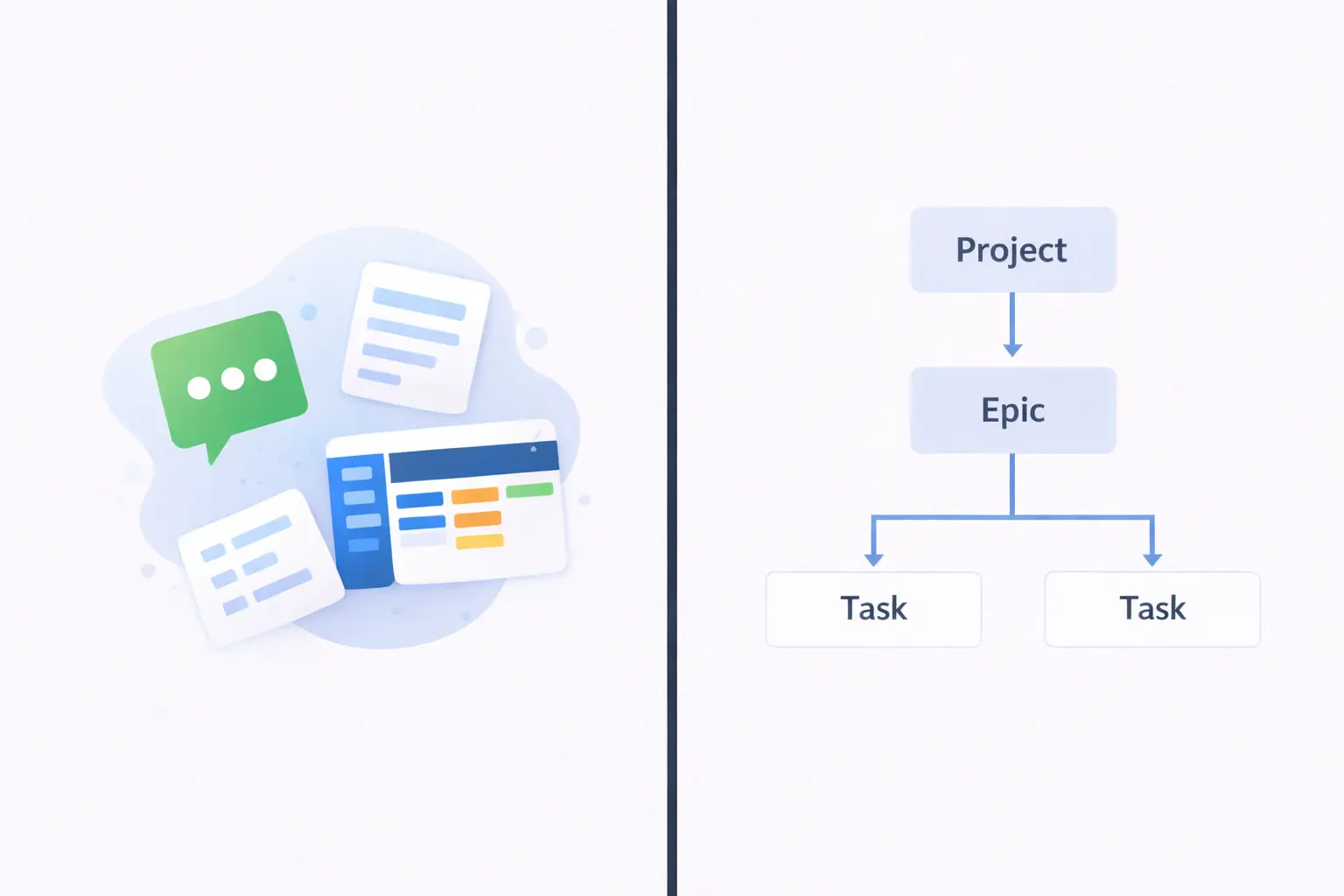
In many agency teams, proposal details get lost in email chains, strategic briefs are forgotten in scattered cloud drives, and tasks are distributed verbally, leading to ambiguous ownership and a revision "black hole." This operational clutter causes that weary question to be asked every morning: "Exactly what stage is this project in right now?" If the answer isn't clear, the agency's profitability and client satisfaction are at risk. Alios ends this chaos by organizing projects into a "Node Tree" structure, providing a systematic workflow that makes every step visible from proposal to delivery.
1. Why Must Agency Project Management Be Systematic?
Unsystematic project management wastes the agency's most valuable resource: time. A lack of discipline leads to several critical issues:
Data Fragmentation: Project info scattered across Slack, WhatsApp, email, and Excel.
Capacity Blindness: Inability to see team workloads, leading to burnout.
Loss of Client Trust: Inability to provide instant, clear updates to the client.
Profit Leaks: Projects exceeding planned costs due to unforeseen revisions and stalled approvals.
Alios solves these risks with the "Single Source of Truth" principle.
2. The Five-Stage Golden Workflow: Lead → Brief → Production → Approval → Delivery
Most agency projects, regardless of scale, pass through five main phases. Setting up this structure in Alios is like taking an "X-ray" of the project.
A. Lead – Request, Opportunity, and Sales Phase
Every project starts with a spark. This is the bridge where the project transitions from sales to operations.
Data Recording: The initial request, budget range, and proposal files are recorded as sub-nodes.
Strategic Importance: When the production team starts, they immediately see what was promised during the sales phase by looking at these initial nodes.
B. Brief – The Project’s Compass
The brief is the constitution of the project. An incorrect brief leads the entire production process astray.
Scope: Target audience analysis, brand tone, and design references are clarified here.
Alios Application: The brief document is placed at the center of the project. Team members are required to read this node before starting, eliminating the "I didn't understand it that way" excuse.
C. Production – The Operational Kitchen
This is the most intensive stage where the agency generates value. The project is divided into manageable micro-tasks.
Task Distribution: Design, copywriting, and ad setup are assigned to relevant specialists.
Visibility: Thanks to Alios’s task tree, there’s no need to ask if a design is finished; status changes are monitored live.
D. Approval – Quality Control and Waiting Cycles
This is the "bottleneck" where projects often lose time. Alios splits this into two:
REVIEW (Internal): Auditing the work within the agency before it goes to the client.
WAITING (External): The passive process where the ball is in the client's court for feedback.
Benefit: This distinction proves with data whether a delay is caused by the agency or the client.
E. Delivery – Project Closure and Archive
Once client approval is received, the project is finalized.
Finalization: Source files are delivered, campaigns go live, and billing is completed.
Learning: "Post-Mortem" notes are added to strengthen corporate memory before closing the node.
3. Sample Project Architecture on Alios
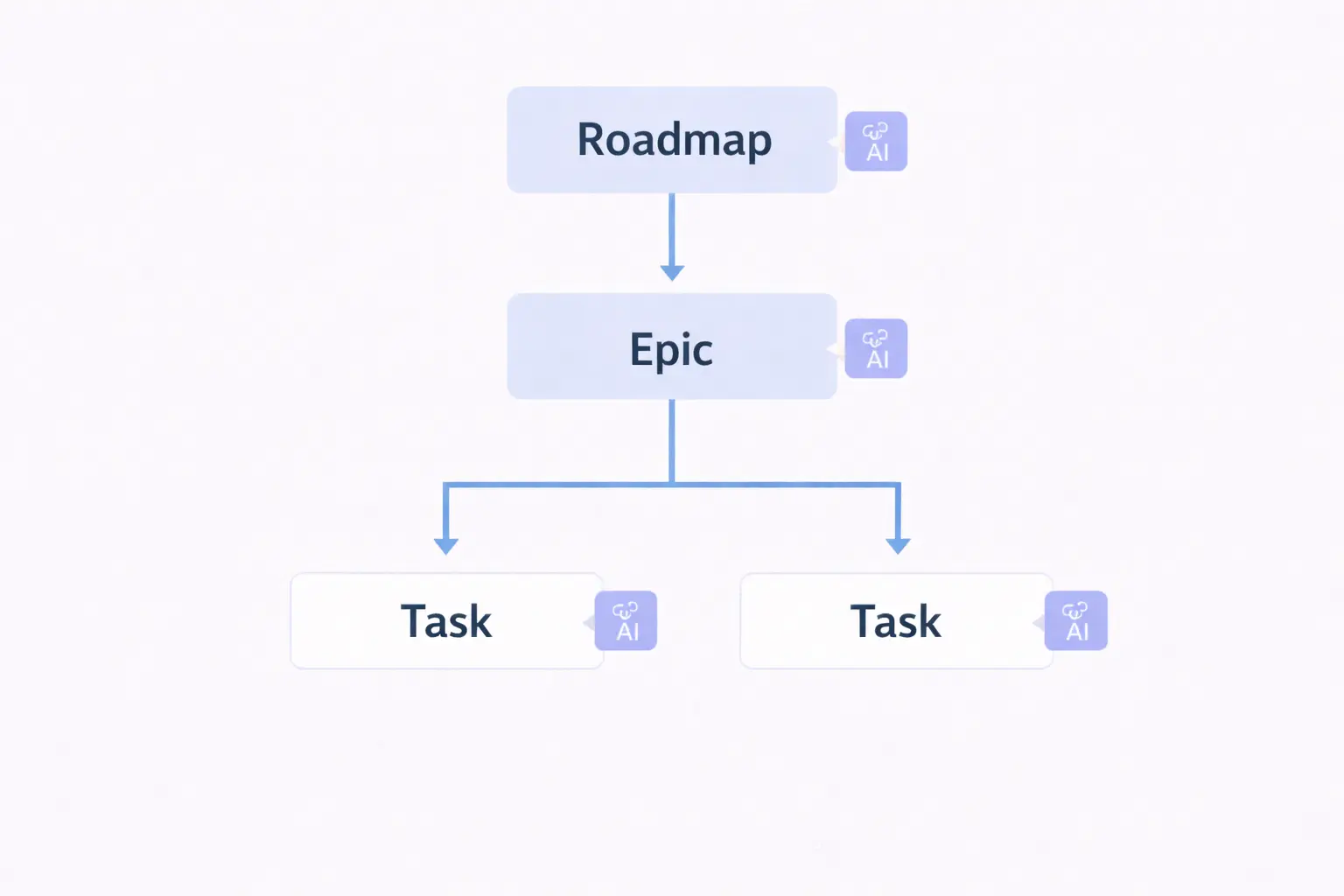
For an SEO-compatible structure, a "Social Media Campaign" project hierarchy on Alios should look like this:
Level 1 (Project)Level 2 (Phase)Level 3 (Tasks / Nodes)Client: X Tech1. Lead & SalesProposal File, Contract, Scope Form2. Strategy & BriefCompetitor Analysis, Creative Brief, Channel Plan3. Production LineVisual Designs, Video Editing, Copywriting4. Approval CycleInternal Review (Review), Client Approval (Waiting)5. Launch & ReportAd Setup, Final Report, Project Closure
4. Impact of Systematic Workflow on Agency Profitability
Why build such a detailed structure? The answer is simple: Profitability.
Velocity: Bottlenecks are cleared quickly because stalled tasks are immediately visible.
Reduced Error Margin: Sticking to the brief reduces "misunderstanding-based" revisions by 40%.
Fast Onboarding: A new hire can grasp a project's history and future in 10 minutes by looking at the Alios tree.
Professionalism: Telling a client, "Your project is currently in the Waiting phase, we are expecting your feedback," projects a professional image.
5. Conclusion: The Future Agency is Built on Operational Excellence
Competition in the agency world is no longer just about "finding the best idea," but "delivering the best idea in the most efficient way." The Lead → Brief → Production → Approval → Delivery flow transforms your agency from a chaos management center into a high-performance production factory.
With Alios, your projects won't be ownerless, information won't be lost, and internal communication noise will be minimized. Start this discipline today by creating a simple project tree and experience the speed operational excellence adds to your agency.