Article
Startup Operations Cost: The Visibility Effect of One System
Time lost switching between scattered tools silently inflates startup operations cost. Learn how single-system visibility in Alios reduces this cost.
Startup Operations Cost: The Visibility Effect of One System
When people talk about operations cost in startups, what usually comes to mind is rent, salaries, and server bills. But there's another cost flowing silently every day: time lost between scattered tools.
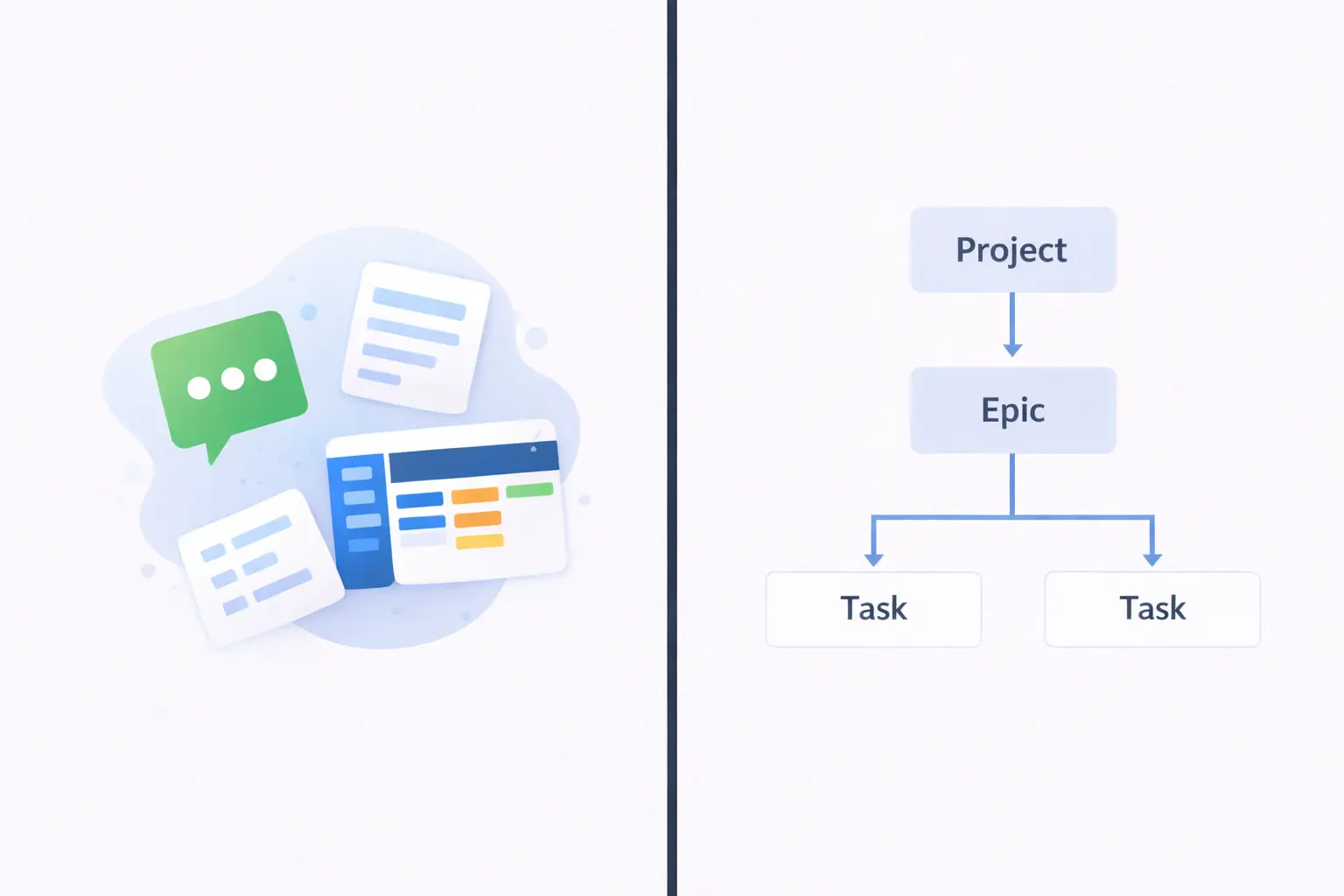
Project in Notion, tasks in Jira, decisions in Slack, files in Drive, meetings in the calendar. Each tool was chosen separately and for good reason. But when they're all used together, the team ends up spending a significant part of the day just "finding the right information in the right place." This spending never appears in any budget line — but it compounds.
The Real Time Cost of Scattered Tools
Let's look at concrete examples.
Information search cost: A developer looks through Slack history, a Notion page, and their email inbox in sequence to find a technical decision made three weeks ago. Average time: 15–20 minutes. A team member who hits this situation twice a day loses 2.5–3 hours per week. Across a five-person team, that reaches 12–15 hours.
Rework cost: Because context wasn't transferred, the same work gets done twice. A designer works on a problem the developer already solved, not knowing it was resolved. Or a new team member tries an approach that was tested and rejected three months ago. This "rework" cost never gets calculated because it's invisible — but it exists in every startup.
Coordination cost: A message gets sent asking "where did this end up?", a meeting gets scheduled, an explanation is awaited. A five-minute question can stretch into half a day before the answer arrives. In teams working asynchronously, this window gets even longer.
Tool-switching cost: Every context switch creates a small focus break. Cognitive load research shows that switching context costs 10–20 minutes of focus each time. For a team member making 8–10 tool switches per day, this adds up to a serious productivity loss.
What Is the Visibility Effect?
The visibility effect is a simple principle: when what's happening in a system can be seen by everyone, at any time, without asking — coordination cost drops.
When "where does this stand?" is answered without being asked, a meeting gets cancelled. When "who's doing this?" already has an answer, duplicate work is prevented. When "why did we decide that?" is written in a node, a 20-minute debate doesn't happen.
Visibility isn't a luxury — it's an operational efficiency tool. And visibility is only possible when information lives in one place.
The Single-System Effect in Alios
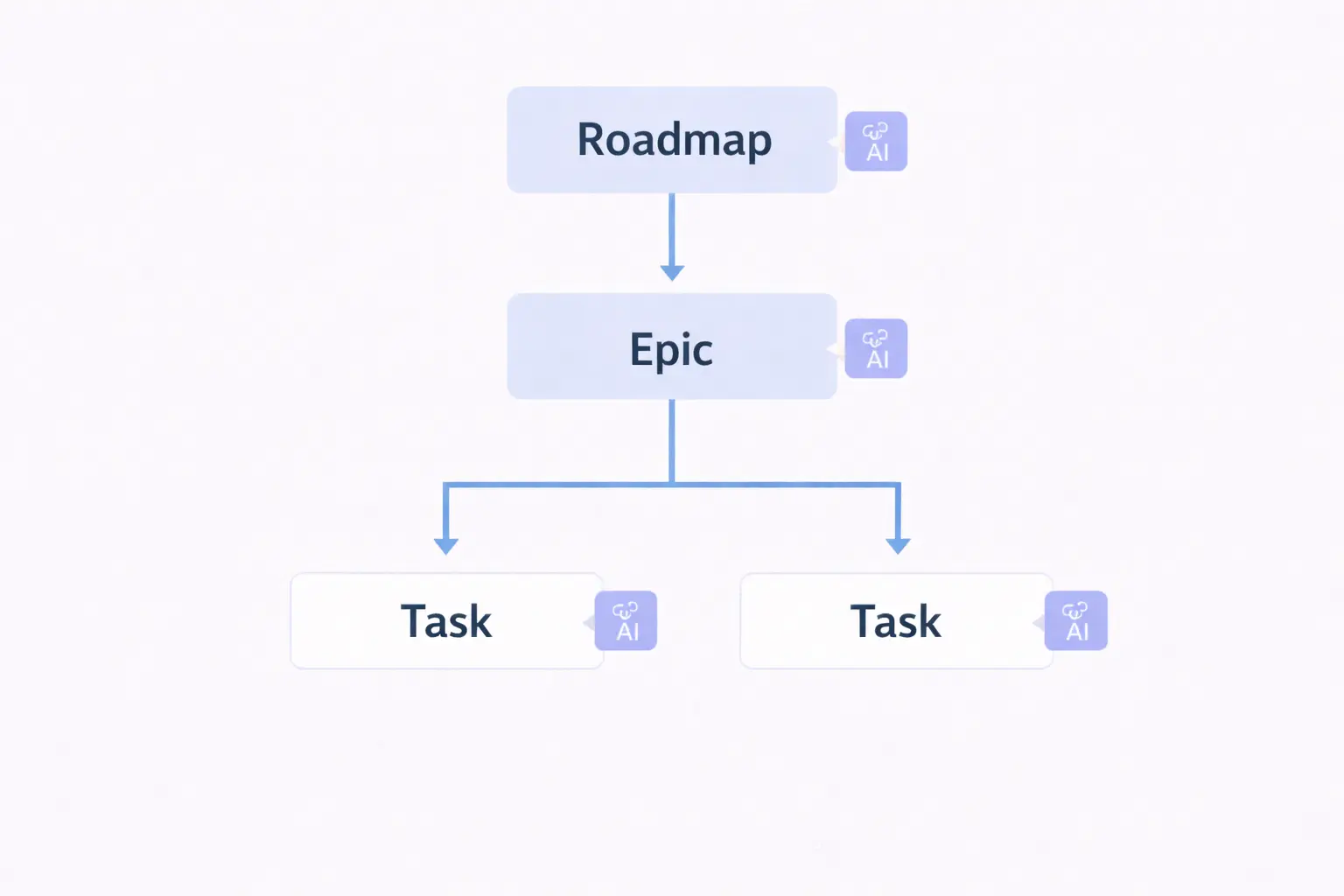
When operations are consolidated into a single node structure in Alios, the visibility effect becomes concrete.
Information Lives in One Place
A task lives in the same node as its context and its decisions. Files live inside the relevant task. Decisions live in the description of the node where they were made. The question "where?" disappears because everything is in the same place.
This single change alone dramatically reduces information search cost. No digging through Slack history, no searching Drive folders, no asking "who knew about this?"
Status Is Visible at Any Moment
Whether a task is complete, whose hands it's in, and when it needs to be done — all visible without asking. This visibility reduces two costs simultaneously: coordination meetings decrease, and delays stop being surprises.
Context Transfer Becomes Automatic
When a new team member joins, when a task changes hands, or when work set aside a month ago gets picked back up — the context is already waiting in the node. Instead of "let me walk you through it," it's "look at the node." This fundamentally changes the transfer cost — both in time and quality.
Measurable Metrics: What to Track
To keep the single-system effect from staying abstract, it helps to define measurable indicators. After starting to use Alios, tracking the following metrics makes the visibility effect concrete:
📊 OPERATIONS EFFICIENCY METRICS

Delay rate:
→ Percentage of tasks that miss their deadline
→ Target: 10–15% reduction each quarter

Rework rate:
→ Identifying overlapping or duplicate nodes
→ Target: near zero per sprint

Coordination meeting time:
→ Time spent in weekly "what are we doing,
  where did things land" meetings
→ Target: 30% reduction in first 3 months

Information search time:
→ "How long did it take to find this?" —
  internal team survey
→ Target: from 15 minutes average to under 3

Onboarding time:
→ Days until a new team member works independently
→ Target: 20% shorter with each new hire after
  the first onboarding
Not all of these need to be measured at once. Starting with whatever is causing the most pain is enough. Is delay the problem? Track the delay rate. Is rework happening too often? Watch that metric.
Tool Count vs. Information Architecture
There's an important nuance here: the problem isn't the number of tools — it's information architecture. Some teams work in a scattered way even with a single tool. Others operate efficiently with five tools and a consistent structure.
Alios promises to be one system, but the real value doesn't come from tool consolidation — it comes from information living in a consistent structure. When node hierarchy, status tracking, descriptions, and file references come together, visibility increases and startup operations cost starts dropping — regardless of how many tools are in use.
Final Thought
The silent line item in startup operations cost is scattered information. It never gets billed. But it gets paid every day: in searching, coordination, rework, and delays.
Single-system visibility in Alios doesn't eliminate this cost entirely — but it makes it visible and reduces it. Information stops getting lost, context gets transferred, status is visible without asking.
Operational efficiency isn't lost through big transformations. It's lost through small frictions that accumulate. It's won back the same way.