Article
Sprint Tracking for Small Teams: A Lightweight Process with Alios
Full Scrum is too heavy for small teams. Learn how to set up sprint tracking for small teams in Alios with a lightweight process that actually gets followed.

Sprint Tracking for Small Teams: A Lightweight Process with Jira
A 3-person team opening Jira for sprint tracking. Epics, stories, sub-tasks, sprint velocity, burndown charts, story points. A week later: only one person uses the system. Two weeks later: nobody updates it. A month later: "let's find something else."
The problem here isn't the team. It's the tool being designed for a 20-person engineering organization, not a 3-person startup.
Sprint tracking for small teams doesn't need to carry that weight. The core need is simpler: what are we working on this sprint, who owns what, is anything blocked, and what did we actually finish?
Why Full Scrum Falls Apart in Small Teams
Scrum was designed for larger, more complex organizations. When applied directly to a small team, two things typically happen.
The process overhead consumes the work time. Sprint planning, daily standups, sprint review, retrospective, backlog grooming — in a 3-person team, these ceremonies can eat a meaningful share of the actual working week. The system meant to improve productivity starts reducing it.
The tooling creates maintenance burden. Jira requires someone to maintain it. Story points need to be estimated and reviewed. Velocity needs to be tracked and interpreted. In a small team, nobody has the bandwidth to be a Scrum Master — and without that role, the system gradually falls apart.
The result is a team that either abandons sprint tracking entirely ("we just use a shared doc") or runs a hollow ceremony ("we do sprint planning but nobody looks at the board during the week").
Neither is the answer.
What Small Team Sprint Tracking Actually Needs
Strip sprint tracking down to its core purpose: making the team's work visible for a defined time period, with clear ownership and a rhythm for reviewing progress.
For a small team, this means four things. A sprint container that defines the time box. Tasks inside it with owners and deadlines. A midpoint check to catch blockers early. And a close-out that captures what finished and what carries forward.
That's it. Everything else can be added later if the team genuinely needs it.
Sprint Structure in Alios
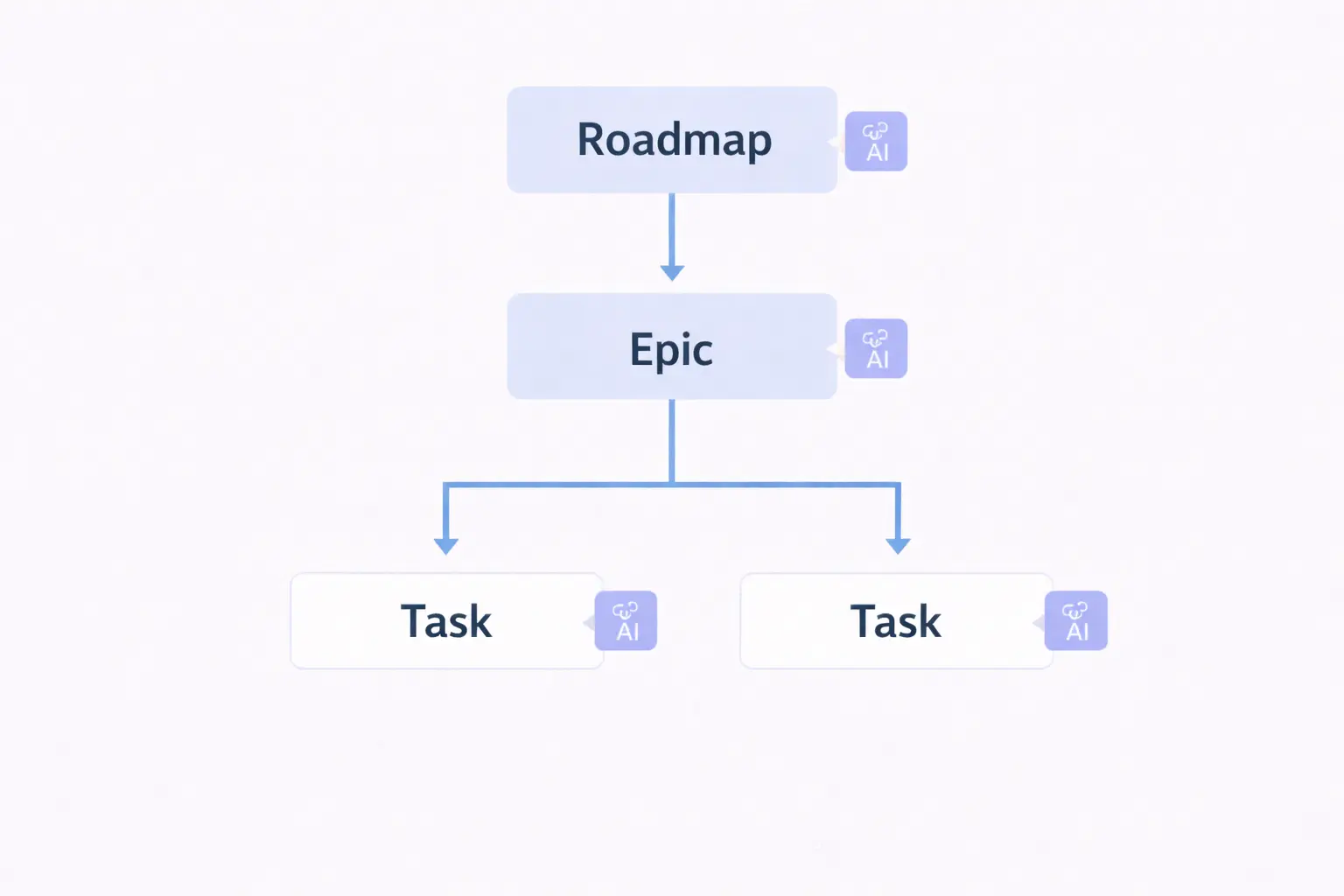
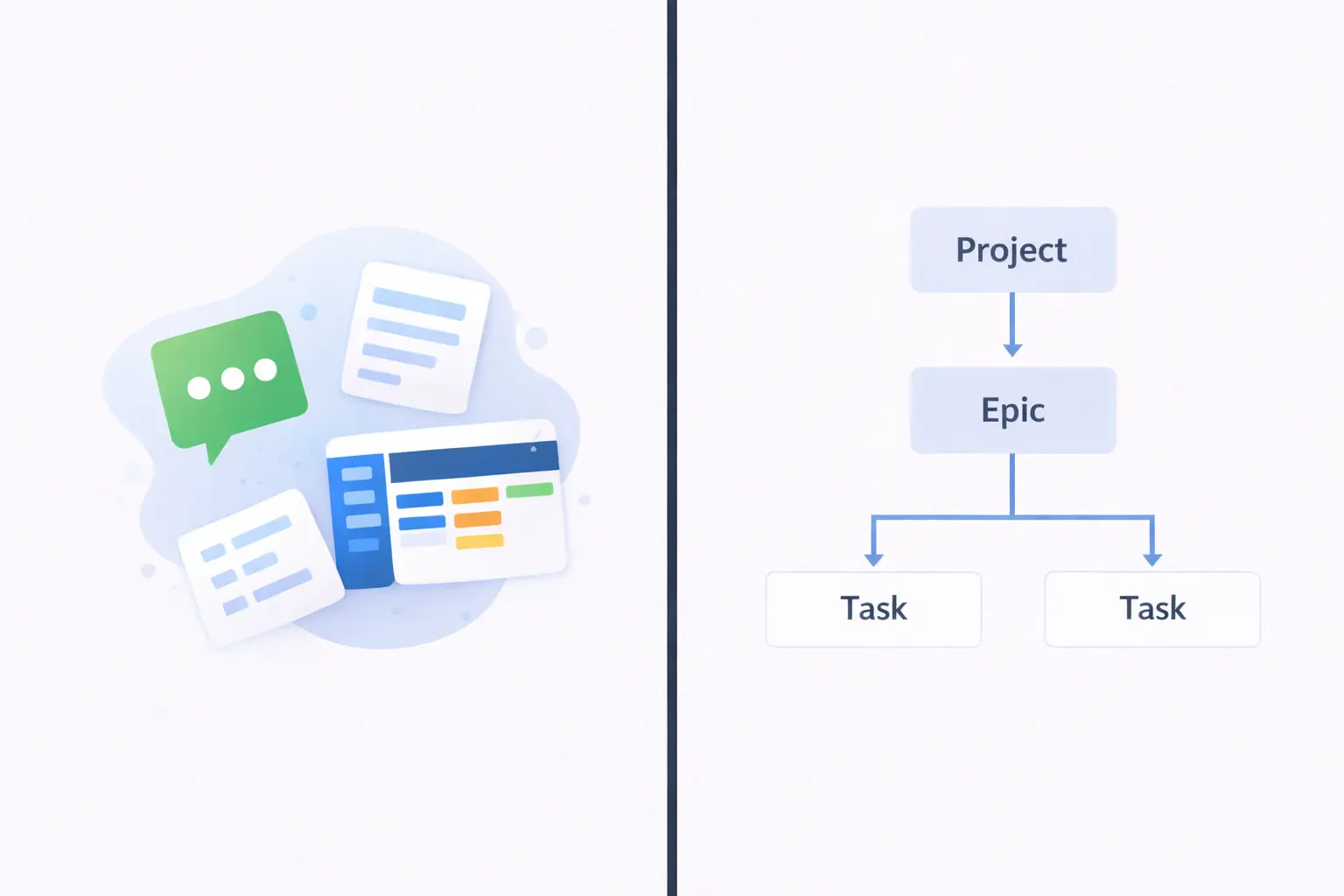
In Alios, sprint tracking for small teams is built around a single sprint node with tasks underneath it. No separate boards, no story points required, no configuration overhead.
Opening a Sprint
Each sprint gets its own top-level node:
📁 SPRINT [Number] — [Start Date] → [End Date]
Description: [2-3 sentences: what this sprint
focuses on, what the team is trying to achieve]
Owner: [Lead or person running the sprint]

─────────────────────────────

🔴 CRITICAL — must finish this sprint
├── [ ] [Task] — Owner: [Name] — Deadline: [Day]
└── [ ] [Task] — Owner: [Name] — Deadline: [Day]

🟠 HIGH — planned for this sprint
├── [ ] [Task] — Owner: [Name] — Deadline: [Day]
└── [ ] [Task] — Owner: [Name] — Deadline: [Day]

🟡 MEDIUM — if capacity allows
└── [ ] [Task] — Owner: [Name]

⚫ CARRIED OVER FROM LAST SPRINT
└── [ ] [Task] — Owner: [Name] — Why carried: [Note]
Critical tasks get deadlines set at sprint midpoint — not sprint end. This way, a slip on a critical item gets visible with time to respond, not on the final day.
Midpoint Check
On the middle day of the sprint — no meeting required, just a 10-minute node review:
✅ Critical tasks completed? → Close them
⚠️ Critical tasks stuck? → Write blocker in description,
   figure out what unblocks them
🔄 New work coming in? → Backlog or this sprint?
   Make the call explicitly, don't let it drift in
📊 Is the sprint still realistic? → If not, reduce scope
   now rather than miss everything at the end
This midpoint check is what separates a sprint that works from one that collapses on the last day. A delay noticed on Wednesday is recoverable. A delay noticed on Friday usually isn't.
Sprint Close
At the end of the sprint, a 15-minute close-out:
✅ Close completed nodes
📝 For each uncompleted node — write why in the
   description (scope too large? blocked? deprioritized?)
🔄 Decide what carries forward vs. goes back to backlog
📋 Write a 3-sentence sprint summary in the top node:
   what finished, what didn't, what changes next sprint
The sprint summary matters. Two months from now, when someone asks "when did we ship the payment flow?", the answer is in the sprint nodes. It doubles as a lightweight changelog.

The Weekly Rhythm Inside a Sprint
For a two-week sprint, the rhythm looks like this:
Monday (Sprint Start) — 20 minutes: Open the sprint node, distribute tasks, confirm owners and deadlines. Every task gets an owner before the meeting ends.
Wednesday (Week 1 Midpoint) — 10 minutes: Quick check. Critical tasks on track? Any blockers? New requests get triaged — in or out.
Monday (Week 2 Start) — 10 minutes: How did week one go? Any reprioritization needed before the final push?
Wednesday (Week 2 Midpoint) — 10 minutes: Final blocker check. Anything that won't finish by Friday gets flagged now.
Friday (Sprint End) — 15 minutes: Close-out. What finished, what carries forward, what sprint summary to write.
Total: roughly 65 minutes of sprint overhead per two-week sprint. For a small team, that's sustainable.
Handling Scope Creep
The most common failure mode in small team sprints isn't poor planning — it's uncontrolled scope additions mid-sprint. Something comes up, it feels urgent, it gets added to the sprint, original priorities slip.
In Alios, the fix is simple: every new request that comes in mid-sprint gets opened as a node in the backlog, not directly in the sprint. Then at the next checkpoint, the team makes an explicit decision: does this displace something already in the sprint, or does it wait?
Making scope changes explicit — rather than letting them drift in silently — is what keeps the sprint container meaningful.
When to Add More Process
Start with the minimal structure above. Add more only when a specific pain point demands it.
If the team finds that tasks are too large and spill repeatedly, introduce a simple size convention: tasks should be completable in 1–3 days. If a task is larger, break it into subtasks before putting it in the sprint.
If blockers keep getting noticed too late, add a brief daily async check-in — each person writes one line in their node description: done yesterday, doing today, any blockers.
If retrospectives feel valuable, add a 20-minute session at sprint close. But only if the team actually wants it — a retrospective nobody engages with is just a meeting.
Final Thought
Sprint tracking for small teams works best when it's light enough that the team actually maintains it. The heavyweight Scrum framework was built for a different context. Stripping it to the essentials — a time box, clear ownership, a midpoint check, a close-out — gives small teams the structure they need without the overhead that kills adoption.
In Alios, this fits naturally into the node structure. One sprint node, tasks underneath it, status kept current throughout the week. When the sprint ends, the history is already written.