Article
SME Task Tracking: Free Excel Template & Migration to Alios
Download a professional SME task tracking template and learn the step-by-step process of migrating to the Alios Digital Spine for 100% visibility.

Free Business Task Tracking Template (Excel) for SMEs and the Strategic Migration to Alios
For many Small and Medium-sized Enterprises (SMEs), the journey toward professional management begins with a humble Excel spreadsheet. It is the first step toward institutionalization—an attempt to answer the three most critical questions in business: Who is doing what? When is it due? What is the current status?

While Excel is a powerful tool for static data, it often becomes a bottleneck for dynamic operations as a business scales. In this comprehensive guide, we provide a structured free task tracking template logic for those starting out, and then we explore why—and how—growing SMEs should migrate their "Digital Spine" to Alios to achieve true operational excellence.
Part 1: The Essential Excel Task Tracking Template
If you are currently managing a small team and are not yet ready for dedicated software, a well-structured Excel sheet is your best friend. A chaotic list of tasks is useless; you need a structured "database" approach.
The Columns You Need
To maintain any level of discipline, your spreadsheet must contain the following specific headers:
Task Name (Node): A concise description of the action.
Assignee (Captain): The single individual responsible for the outcome.
Project/Client: The root category this task belongs to.
Priority Level: (Low, Medium, High, Critical).
Start Date & Deadline (Termin): The temporal boundaries of the work.
Current Status: (Pending, In Progress, Waiting, Under Review, Completed).
Notes/Last Update: The most recent contextual information.
Why Excel Eventually Fails SMEs
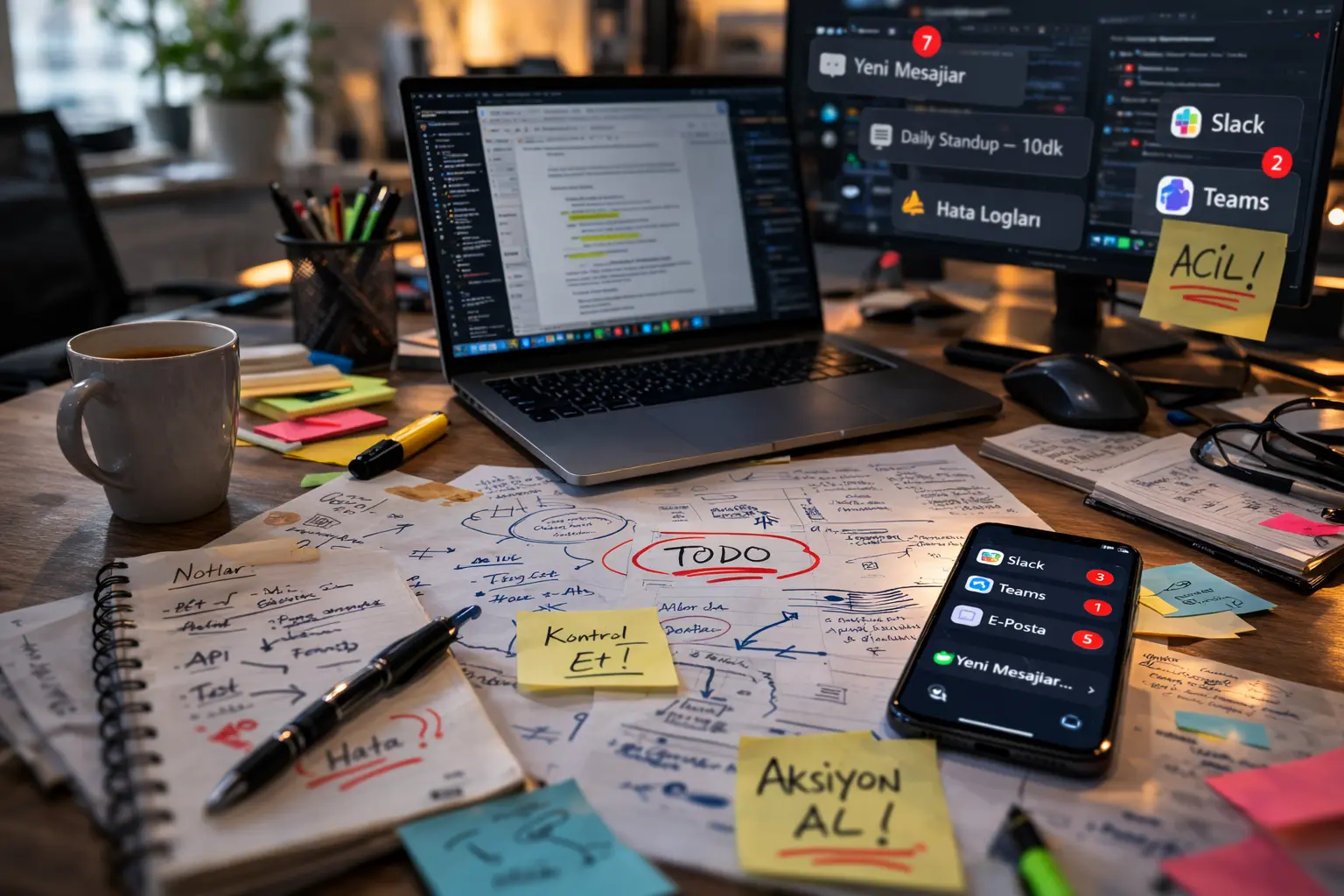
As your business grows from 5 to 25 employees, the "Excel method" begins to show cracks. You might find yourself facing the following "Spreadsheet Pathologies":
Version Control Chaos: Is "Task_List_Final_v3.xlsx" really the latest version?
The Visibility Gap: You cannot see real-time progress. You only see what was manually typed in hours or days ago.
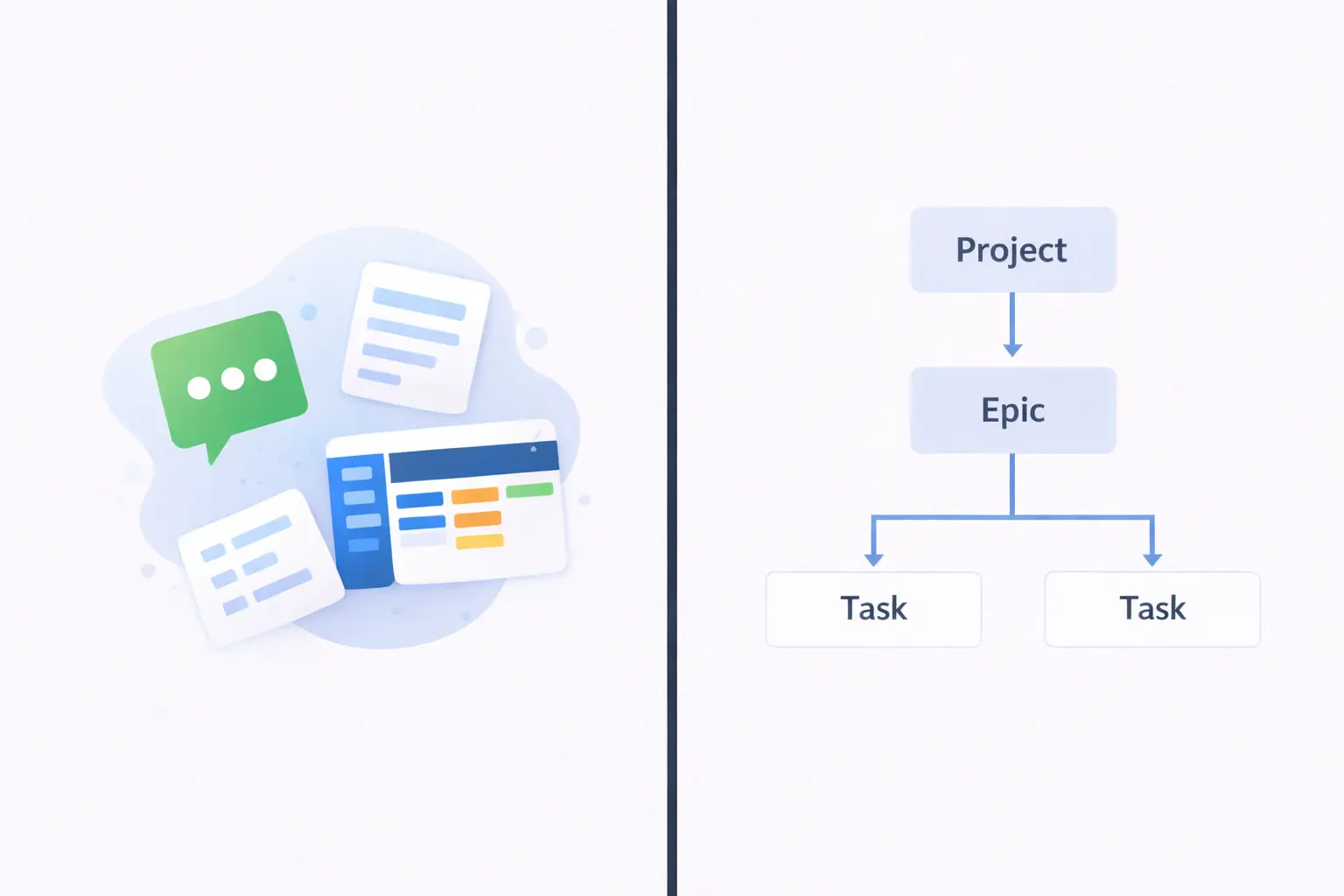
Communication Silos: The task is in Excel, but the client’s feedback is in WhatsApp, and the design file is in an email attachment. This fragmentation causes 20-30% of labor hours to be wasted simply searching for info.
No Proactive Alerts: Excel won't tap you on the shoulder to tell you a deadline is 2 hours away.
Part 2: Introducing the Alios "Digital Spine"
Alios is not just a "task manager"; it is an Operating System for Business. It takes the simple logic of your Excel sheet and breathes life into it through the Digital Spine methodology.
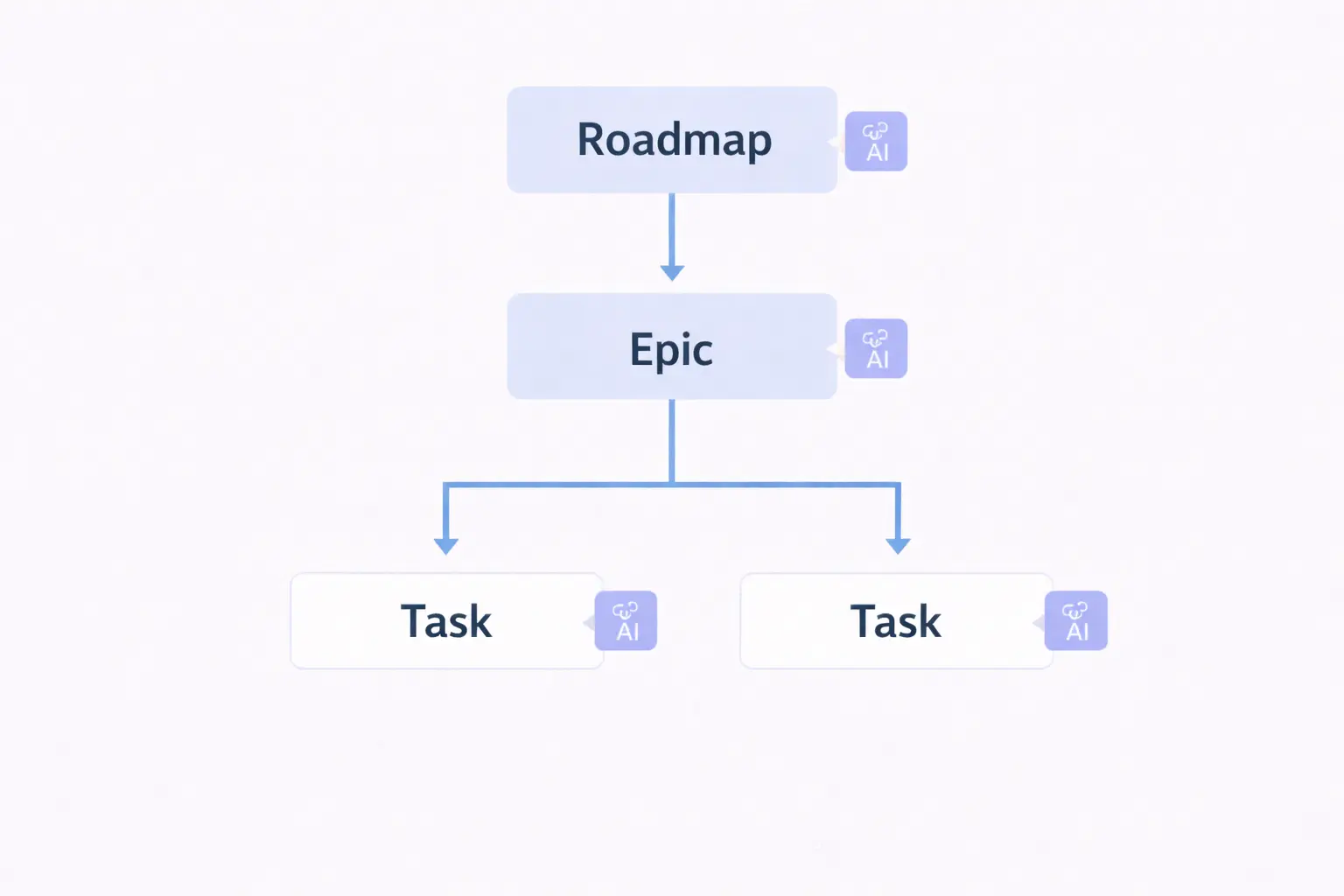
In Alios, work is not a flat list of rows; it is a Node-Based Tree Structure. This allows you to see the hierarchy of your business, from a high-level client overview down to the smallest sub-task.
Part 3: Step-by-Step Guide to Migrating from Excel to Alios
Moving your operations from cells and rows to a digital spine is a transformative process. Here is how to do it without disrupting your daily workflow.
Step 1: Data Sanitization
Before migrating, clean your Excel sheet.
Remove completed tasks that are older than 6 months.
Ensure every active task has a clear Captain (Assignee).
Standardize your "Status" names to match Alios logic (e.g., changing "On Hold" to WAKLIYOG).
Step 2: Mapping the Tree (Master Nodes)
In Excel, you likely have a "Client" column. In Alios, these become Master Nodes.
Instead of repeating the client's name on every row, you create one root Node for "Client A."
All projects and tasks for that client will branch out from this root. This creates Corporate Memory.
Step 3: Importing the "Termin" (Deadlines)
Transfer your deadlines into Alios. Unlike Excel, Alios will use these dates to trigger the Early Warning System. If a deadline is approaching and the task isn't moving, the system will visually highlight the delay on the Dashboard before it becomes a crisis.
Step 4: Embedding Context (The Death of Email)
This is the most critical step. Take the files and emails associated with your Excel rows and upload them directly into the corresponding Alios Node. * Result: When an employee opens a task, they don't ask "Where is the file?" They see it attached to the Node.
Part 4: Life After Excel – The Alios Advantage
Once your migration is complete, the way you manage your SME will change fundamentally.
1. The WAKLIYOG Revolution
In Excel, a "Stalled" status is just a word. In Alios, the WAKLIYOG (Waiting) status is a diagnostic tool. It forces the Captain to state why they are waiting (e.g., waiting for client approval, waiting for raw materials). Managers can filter for "WAKLIYOG" and clear bottlenecks instantly.
2. The Dashboard vs. The Spreadsheet
Instead of scrolling through 500 rows of data, the Alios Dashboard gives you a "Control Tower" view.
Red: Overdue tasks.
Yellow: Due today.
Blue: Future planning. It turns management into a visual exercise rather than a data-entry chore.
3. Review & Approval Logic
Excel doesn't have a quality control mechanism. Alios has the REVIEW status. A task cannot be marked as "Done" until it has been reviewed by a supervisor. This ensures that the "SME quality" remains consistent even as you scale.
Part 5: Building a Sustainable Future
The ultimate goal of moving from Excel to Alios is to move from People-Dependent operations to System-Dependent operations.
In a people-dependent SME (Excel-based), if your top manager leaves, they take the "logic" of the spreadsheet with them. In a system-dependent SME (Alios-based), the system holds the logic. A new hire can step in, look at the Node Tree, read the history, and be productive within hours.
Conclusion: Stop Typing, Start Managing
Excel is a fantastic tool for counting what you have, but Alios is the tool for managing what you do. By migrating your business task tracking from static cells to a dynamic digital spine, you eliminate the hidden costs of searching, waiting, and miscommunicating.
Your business deserves more than a spreadsheet. It deserves a spine.