Article
Simple Project Management for SMEs: 1-Week Digital Setup
Ditch complex tools! Learn how to achieve operational excellence in 7 days by managing work lists, owners, and deadlines using the Alios framework.
Simple Project Management for SMEs: A 1-Week Roadmap to Digital Order
As an SME (Small and Medium-sized Enterprise) owner or manager, you likely don't have the luxury of time for massive software suites, endless training certifications, or complex Gantt charts that require daily manual updates. You don't need "theory"—you need to be able to see exactly who is doing what at a single glance when you start work tomorrow morning.
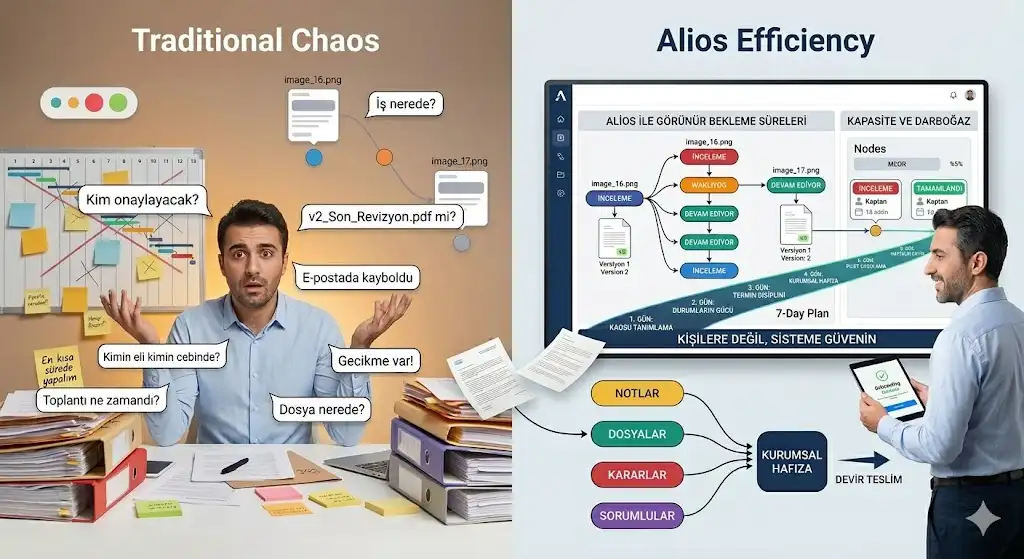
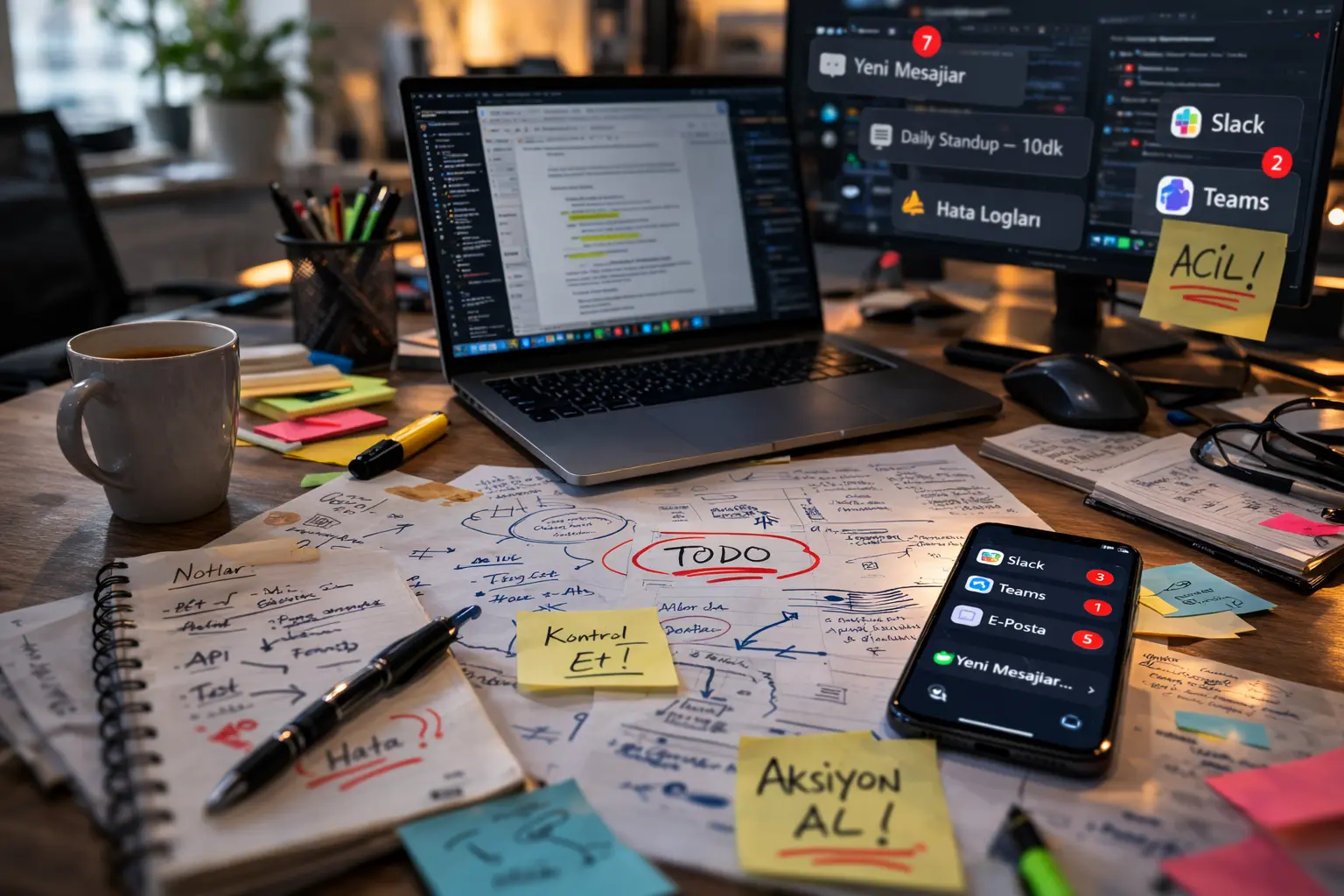
Project management in an SME doesn't have to be as difficult as nuclear physics. Often, the reason projects fail or stall isn't a lack of software; it's a lack of process clarity. Using the Alios methodology, you can pull your business out of chaos and into a systematic digital order in just 7 days by following this "Minimum Process" guide.
Day 1: Define and Simplify the Current Chaos
The first day is about "dumping" all existing tasks into one place. But be careful: we are not collecting every tiny detail yet; we are capturing the big picture.
The Backlog (Work List): List every task currently stuck on whiteboards, in Excel sheets, or within the noise of WhatsApp groups.
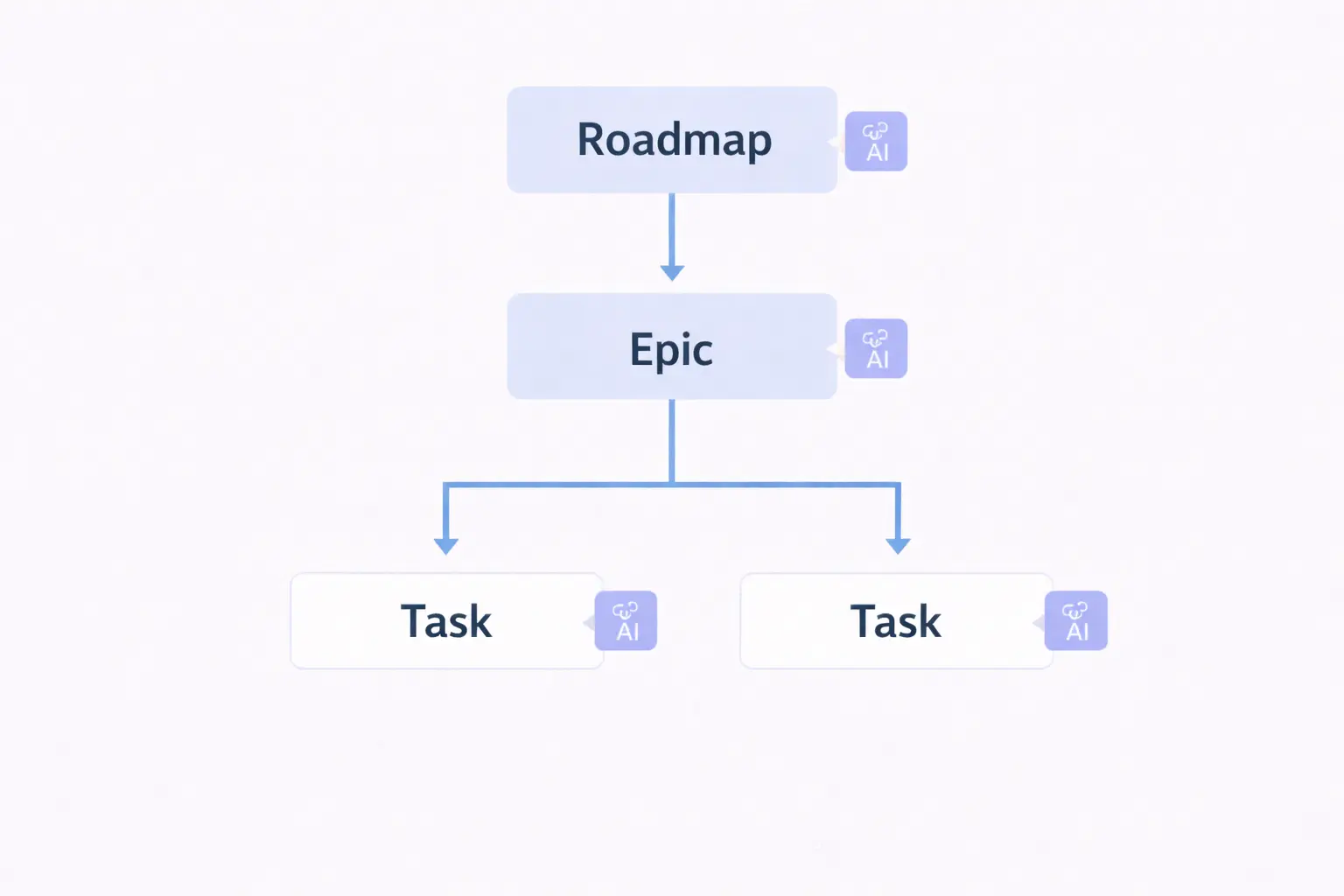
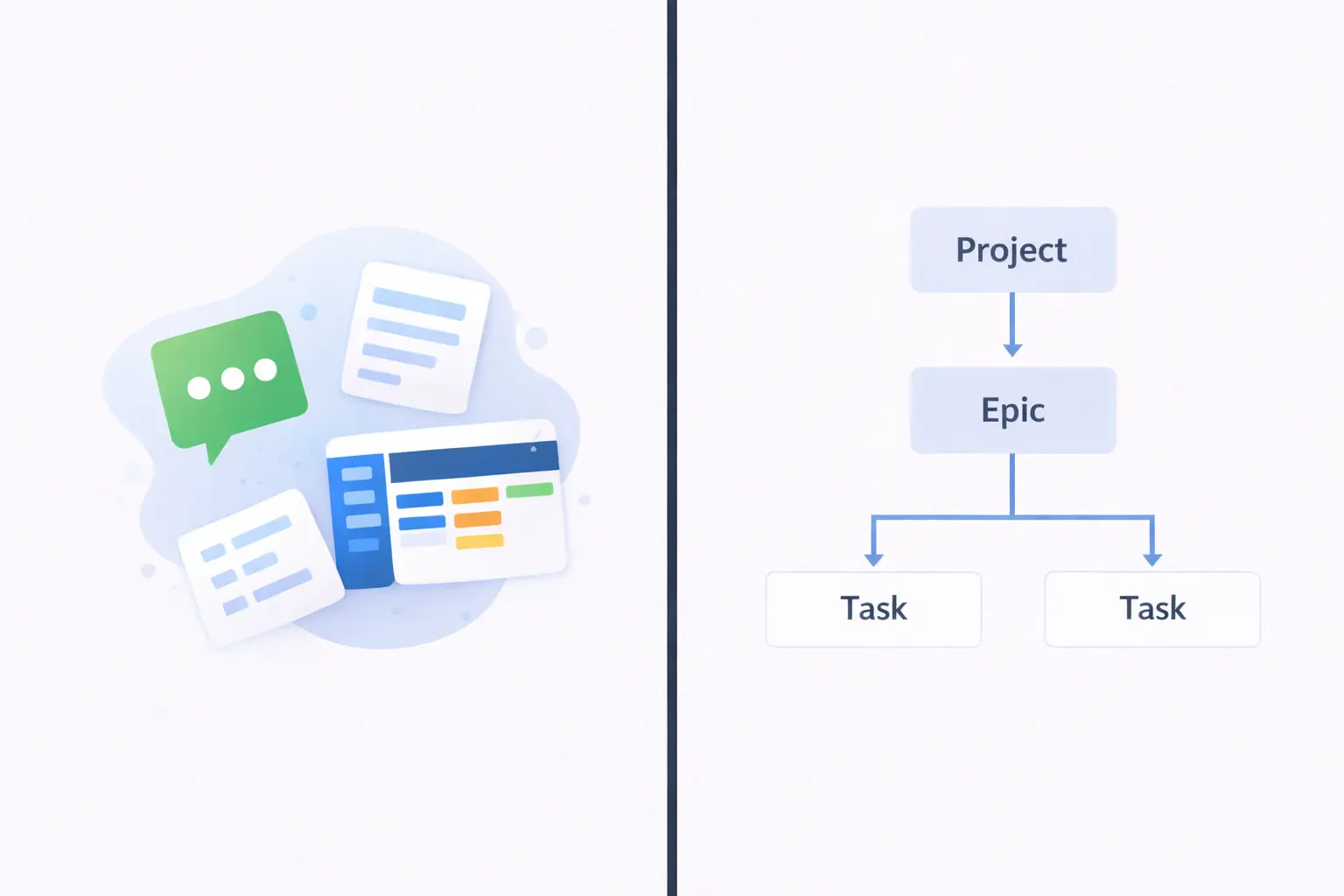
The Alios Approach: Define each main task as a Node (Düğüm). If a task takes more than a week to complete, break it down into sub-Nodes.
The Critical Rule: If a task doesn't have an "owner," it’s just a wish. Assign a Captain (Assignee) to every Node.
Day 2: The Power of Statuses
Dividing tasks simply into "To-Do" and "Done" is insufficient for the reality of an SME. In real life, most time is spent "waiting for someone" or "awaiting approval."
The Minimum Status Set: Adopt the standard but powerful status structure of Alios:
PLANNED: Tasks not yet started, next in line.
IN PROGRESS: Tasks currently being worked on. (Ideally, no person should have more than 3 tasks in this status simultaneously!)
WAKLIYOG (Waiting): The most critical status. Why did the work stop? Is a customer approval missing? Are raw materials out of stock?
REVIEW: The work is done, but the "manager" or "customer" needs to approve it.
DONE: The work is finished and archived.
Day 3: Deadlines and Commitment Discipline
The phrase "Let's do this as soon as possible" is a productivity killer in an SME.
Termin (Deadline) Dates: Every Node must have an end date.
Realistic Planning: Do not set dates that exceed your staff's capacity. Use the Alios Dashboard to check how many "overdue" tasks each person currently has. If a task passes its deadline, establish a culture where the reason must be written as a comment under that Node.
Day 4: Building Corporate Memory (Files and Comments)
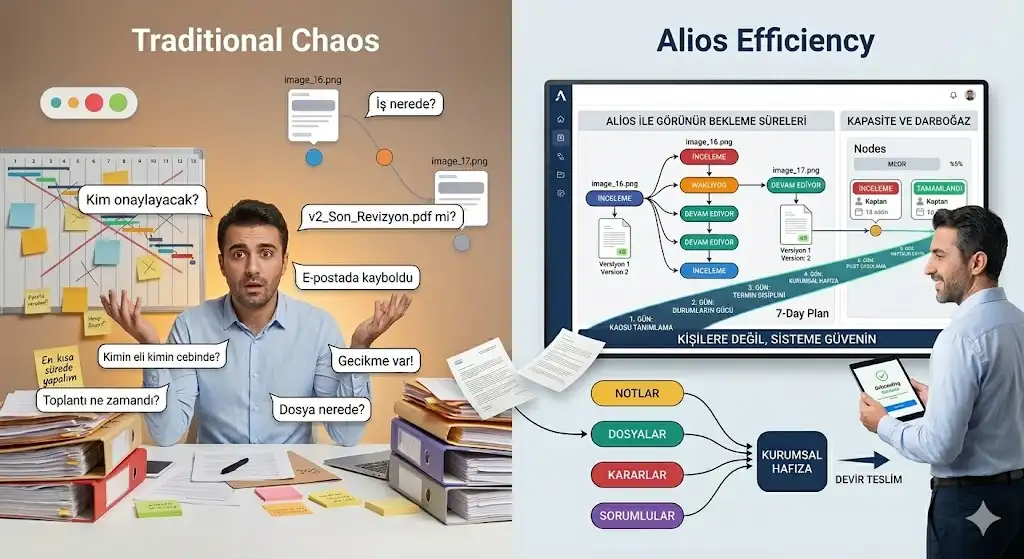
It's time to say goodbye to questions like "Where is the file?" and "What did we decide during that meeting?"
Contextual Filing: Do not upload a proposal file to a general folder. Upload it directly inside the Node where that proposal was made.
Decision Logging: Instead of writing a decision made in a meeting via WhatsApp, note it under the relevant task with the header "Decision:". Alios’s Digital Spine ensures that even if a staff member is absent, someone else can see exactly how the work was progressing.
Day 5: Pilot Implementation and Team Training
Introduce the system to your team. Instead of a 2-hour presentation, tell them this:
"From today on, we track all our work through Alios. If a task is not opened as a Node in Alios, that task effectively does not exist. If a task status is not updated, it means the work is not being done."
Q&A Session: Answer their "Where do I click?" questions on the spot. Make them feel that the system is not a "burden" for them, but a "display window" where they can prove their value.
Day 6: Audit and Cleanup
Check the data from the first five days.
Warn staff about tasks with outdated statuses.
Investigate tasks in the "WAKLIYOG" status to see why they are waiting and solve those bottlenecks.
Delete or merge unnecessary or duplicate Nodes.
Day 7: Weekly Status Report and Establishing Routine
At the end of the week, look at the "What was finished? What got stuck?" report via Alios.
The Weekly Ritual: Every Monday morning, hold a 15-minute "Meeting in Front of the Alios Screen." Have everyone show the status of their work directly from the display. This pushes transparency and accountability to their peak.
Why Alios? (The SME Perspective)
While other tools in the market force you into their own complex methodologies, Alios places your existing way of doing business onto a Digital Spine.
Visibility: The owner no longer needs to ask, "How are things going?"
Accountability: It becomes crystal clear who is holding up the work.
Speed: Unnecessary meetings and phone traffic are reduced by up to 50%.