Article
Simple CRM or Project Tracking for SMEs? Which Comes First?
Explore the SME dilemma: Why building an operational digital backbone with Alios must come before CRM to ensure scalable growth and eliminate project bottlenecks.
For SMEs: Simple CRM or Project Tracking? Which Comes First?
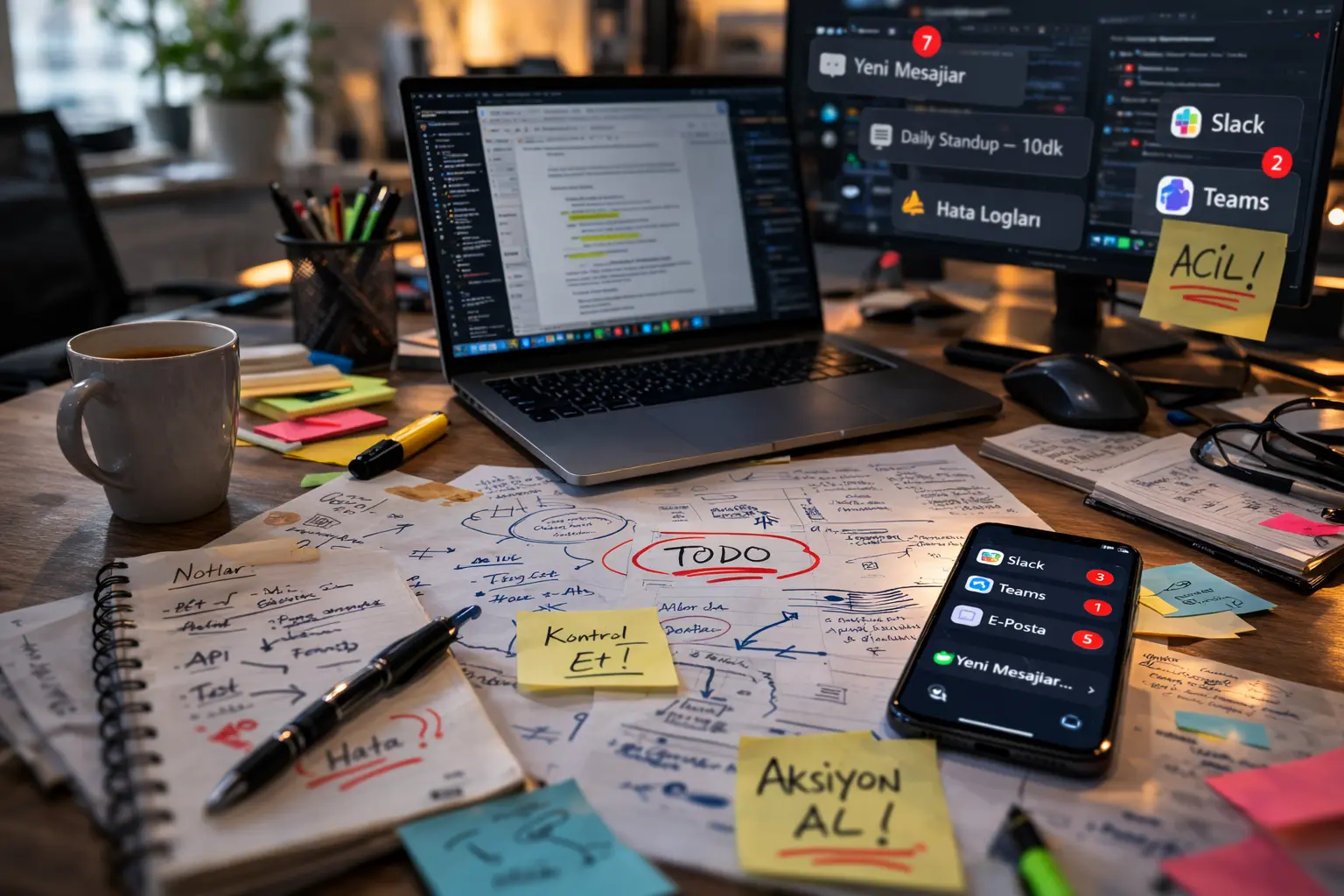
For Small and Medium-sized Enterprises (SMEs), the journey to digitalization often begins with a fundamental strategic question: "Where do we start?" As the business scales, informal management through memory, spreadsheets, and private messaging app groups inevitably cracks under pressure. Information fragmentation sets in, and a "structural chaos" trap begins to emerge.
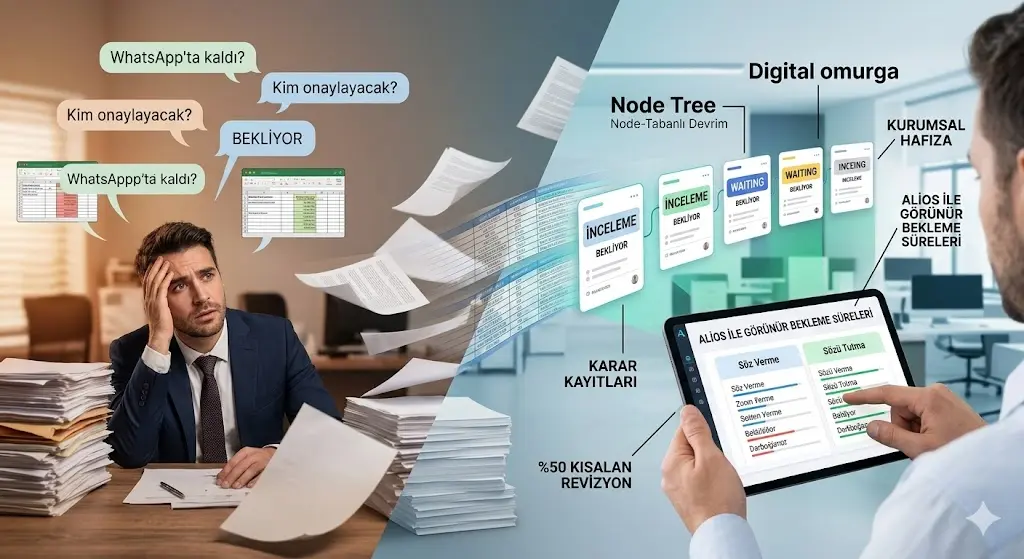
When choosing their first core software system, SMEs typically find themselves at a crossroads, forced to choose between two giants: CRM (Customer Relationship Management) and Project/Task Tracking. While glitzy marketing campaigns often promote CRM as the ultimate growth accelerator, the post-sale reality for many SMEs is an operational bottleneck that halts growth and drains profitability.
1. Defining the Core Strategic Question: Sales vs. Operations
The digitalization hiyerarşisi (hierarchy of digitalization) for an SME is not just about adopting tools; it is about building a scalable foundation. This fundamental question must be answered from the perspective of "value creation."
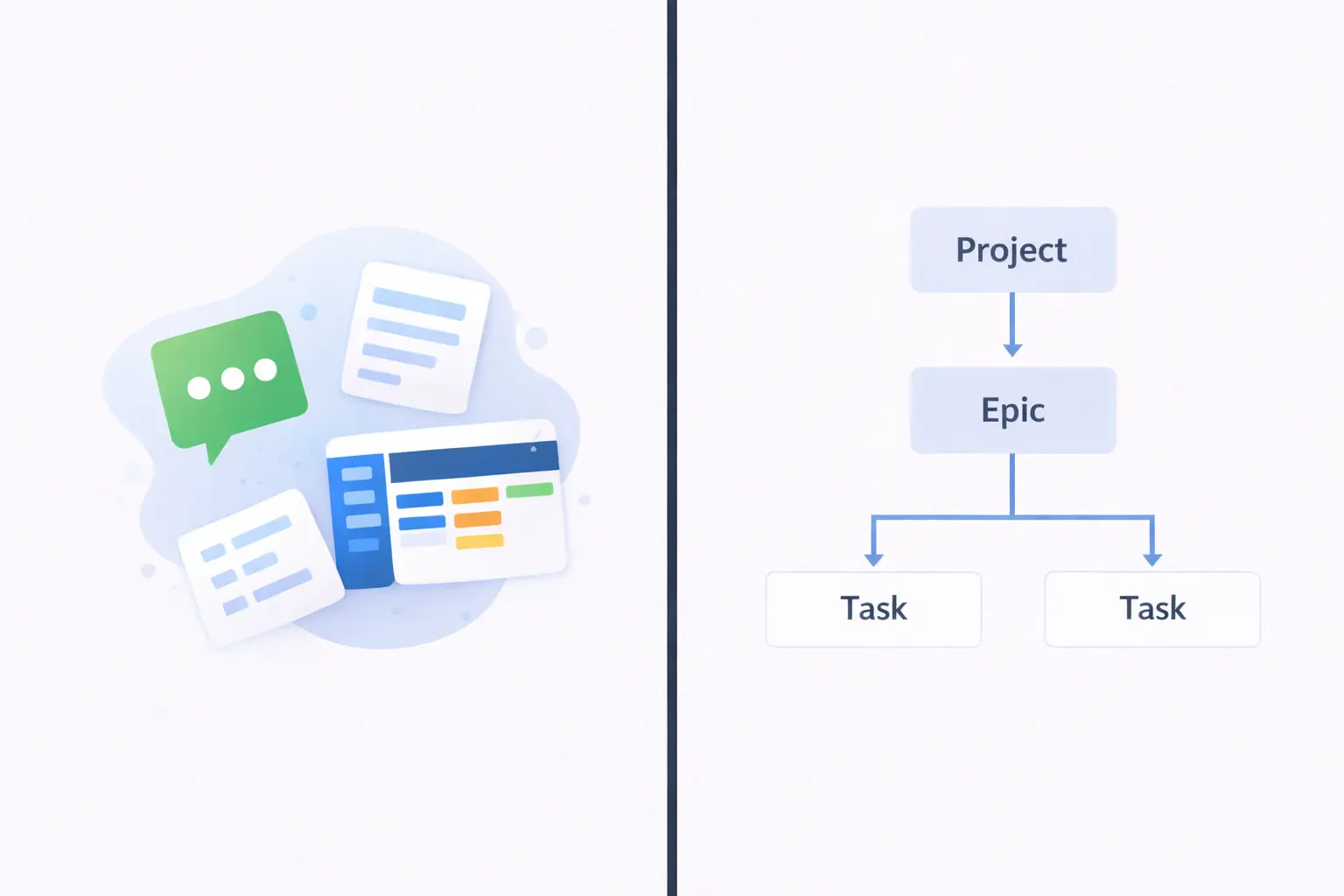
CRM (Customer Relationship Management) is the science of "Making the Promise." It is externally focused, managing the relationship between the business and its leads, prospects, and customers. It excels at tracking the sales pipeline, managing contacts, and automating quotes.
Project and Task Tracking is the science of "Keeping the Promise." It is internally focused, managing the actual work required to produce the product or deliver the service once the sale is made. It focuses on capacity, deadlines, quality control, and operational efficiency.
For many SMEs, the strategic dilemma is this: Do we focus first on increasing the volume of promises made (CRM) or on our ability to successfully fulfill the existing promises (Project Tracking)?
2. CRM: What It Is (and Its Limitations for SME Operations)
CRM systems are vital for structured business development, but they stop precisely where the critical work begins.
The Externally-Focused Vitrin (Showcase)
CRM systems are a vitrin (showcase) for your SME. They provide excellent visibility into the "Lead-to-Quote" phase. They track contact history, identify opportunities, and help close deals. If your biggest problem is finding customers and managing the initial contact, a CRM is an essential starting point.
The Operational Körlük (Operational Blindness)
The defining characteristic of CRM is its operational körlük (operational blindness).
Static Data: CRM deals primarily with static contact data and deal values. It does not contain the technical specifications, design drawings, or dynamic approval history required to do the work.
Ambiguity After the Sale: Once a deal is marked "Closed Won," it is often transferred into an operational vacuum. A CRM will not tell you why a production line is stalled, why a crucial design drawing is three days late for approval, or where the actual production bottlenecks are.
3. Alios and Operational Project Tracking: Building the "Digital Omurga" (Digital Backbone)
Alios distinguishes itself not as a simple contact list or a CRM, but as the "Digital Omurga" (Digital Backbone) of the business. Alios manages the "mutfak" (kitchen) of the business, ensuring that operations are solid before the showcase is polished.
The Cell-Based Revolution: Node Architecture
Alios is built on a "Node" architecture, offering a fundamentally different paradigm for KOBİ (SME) work management than traditional spreadsheets or folders.
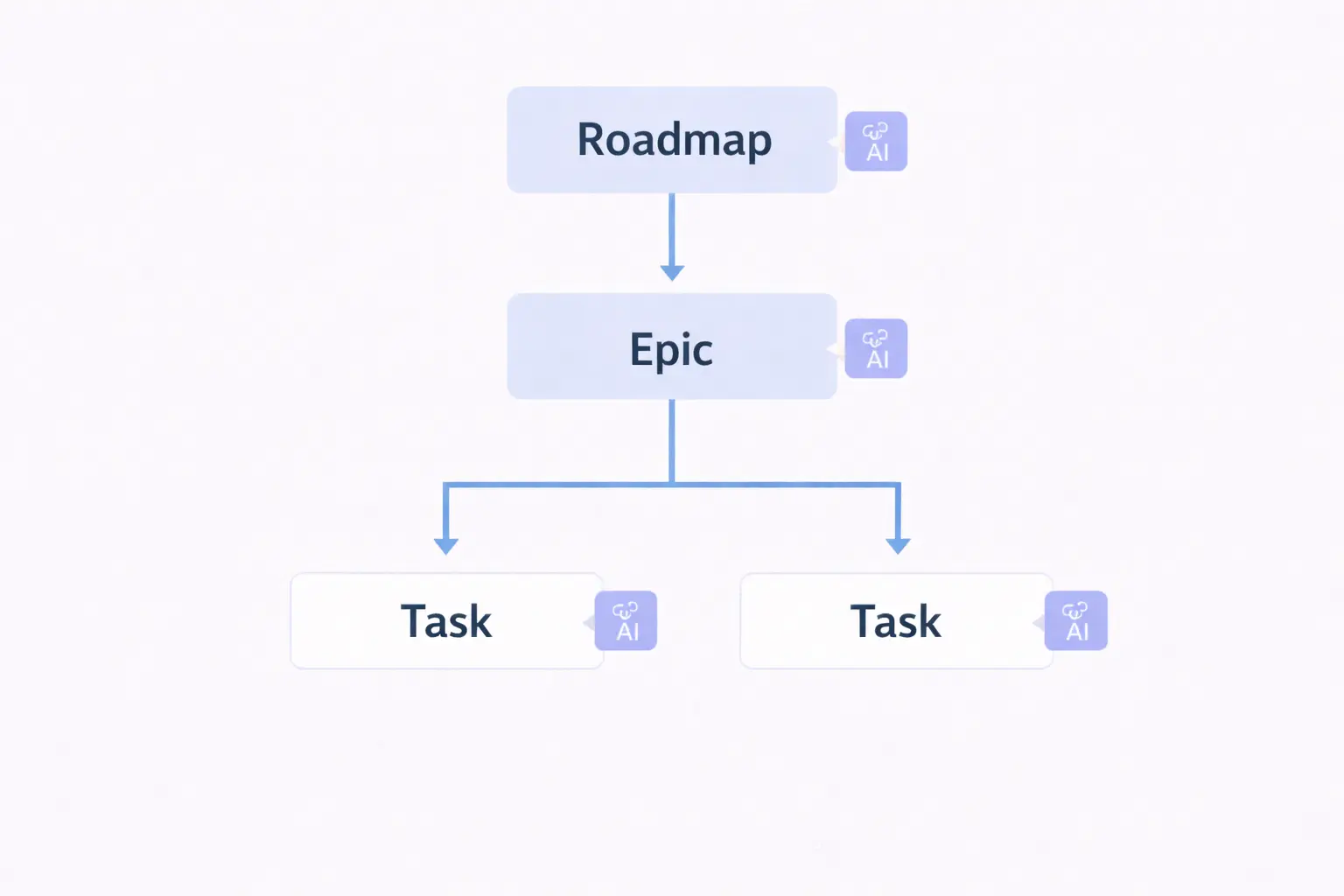
Granular "Hücresel" (Cellular) Information: In Alios, every order, project, or internal task is a distinct Node. This Node is not just a title; it is a living entity containing all associated technical drawings, customer revision history, financial cost data, and internal approval records in a single, accessible location.
Contextual Communication: Instead of asking "What happened to that job?" in a generic messaging app group, the entire discussion takes place within the Node of that specific task. The information is always in context, eliminating search fatigue and information loss.
Visibility into the WAITING (Bekliyor) Bottleneck
Alios excels at exposing the invisible profit leaks. The most expensive phase of an SME task is not when it is being worked on, but when it is WAITING for approval or input.
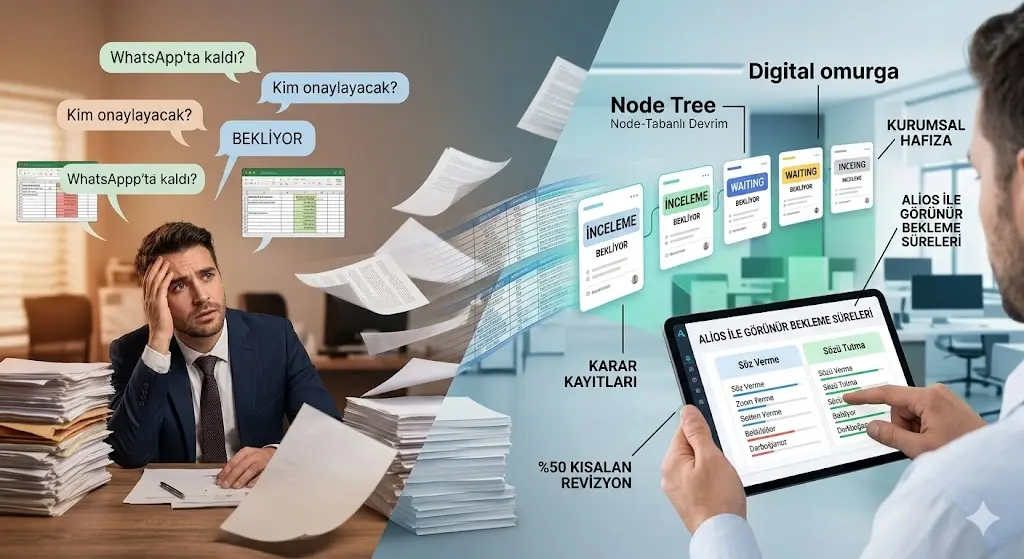
Status Management: Alios provides clear visibility through specific statuses like Review (for internal checks) and Waiting (for external/customer checks).
Proactive Management: Managers can view a dedicated panel and see all tasks currently in a WAITING status, flagged as bottlenecks. This direct visibility allows for targeted interventions to unblock the work and shorten the revision cycle.
4. Why Project Tracking Must Come First for SMEs (Alios Strategy)
The digitalization road map for an SME often benefits from prioritizing operational strength before accelerating sales.
A. Capacity and Bottleneck Analysis: Measure First, Market Second
Alios provides immediate insight into current capacity. You see which staff members are overloaded and where the production line is backed up. Marketing and selling (CRM) without this knowledge leads to Death by Success—where a business acquires too many customers and collapses because it cannot deliver, leading to lost customers and a ruined reputation.
B. Institutional Memory: Systems vs. Individuals
The single greatest hidden cost for an SME is personal dependency. If critical information resides only in an employee’s memory or private chat threads, the business is paralyzed when they leave. Alios builds true institutional memory by recording every decision, version, and comment within the persistent "Node history." A new hire can be onboarded in minutes, gaining context for past projects immediately.
C. True Profitability: Cost of Goods Sold (COGS) vs. Sales Price
A CRM will track the sales price (the revenue). Alios will track the actual cost of delivery. By monitoring the true duration of tasks and associated time costs within Alios, SMEs can calculate their real COGS and provide much more accurate quotes in their next CRM phase, ensuring profitability.
5. Transitioning from Chaos to "True Source of Truth"
For SMEs relying on disorganized tools like private messaging apps and loose spreadsheets, Alios is the recipe for transition to order.
End to WhatsApp Fragmentation: Instead of a search-impossible conversation stream, Alios provides structured "Node-based communication."
End to Spreadsheet Silos: Excel creates data silos with dangerous version control issues. Alios provides a singular "Single Source of Truth."
6. Conclusion: Build the Foundations Before Decorating the Showcase
In conclusion, the decision between CRM and Project Tracking is not about selecting different software; it is about deciding the current strategic bottleneck of the business.
A CRM is the pazarlama gücü (marketing power) and the public-facing showcase of the SME. Alios represents the taşıyıcı kolonlar (bearing columns) and the operational core of that same building. Decorating the showcase (CRM) when the columns are structurally weak leads to systemic collapse at the first sign of scale.
For an SME seeking sustainable growth and reduced dependency on key personnel, the digital journey must begin by solidifying the core operations with Alios Operational Project Tracking. Once the internally-focused foundation is transparent and efficient, selling and managing customer volume (CRM) becomes a significantly more manageable, reliable, and profitable endeavor.