Article
One System for AI Teams: Replace Notion+Jira+Slack with Alios
Combat context loss in the AI era. Discover how Alios unifies project trees, ADRs, and ownership into a single "Digital Spine" for elite small teams and solo developers.
One System for Small Teams Developing with AI: Replacing Notion + Jira + Slack with Alios
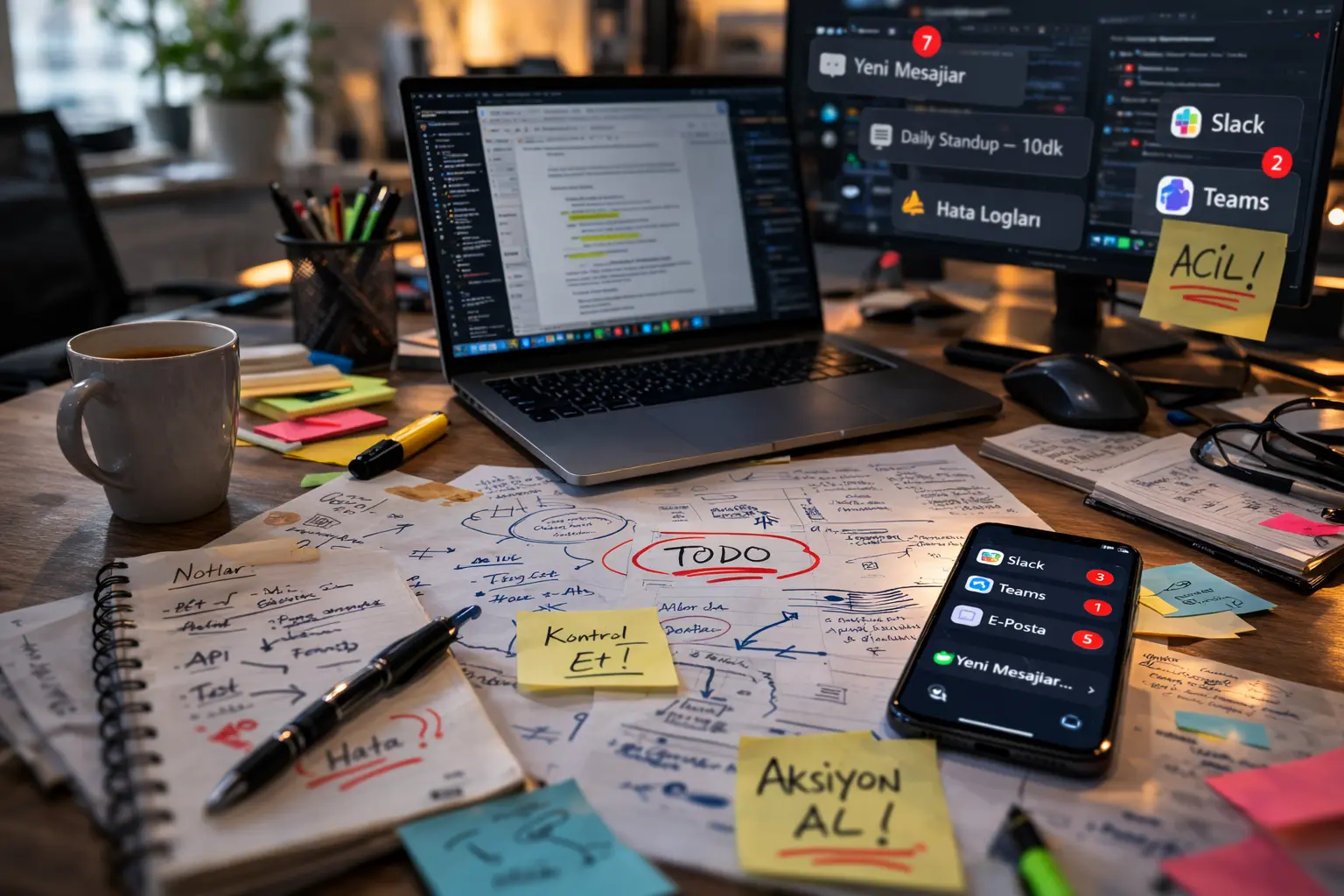
The software development landscape has reached a point of "Hyper-Velocity." With the integration of AI tools such as Cursor, GitHub Copilot, and Claude, the journey from an idea to a deployed feature has shrunk from weeks to mere hours. However, this explosion in output has triggered a critical systemic failure: Context Loss. For years, the "Holy Trinity" of software management has been Notion (for documentation), Jira (for task tracking), and Slack (for communication). But in the AI era, this fragmented stack is no longer an asset; it is a liability. Information is born as a static page in Notion, debated in the volatile, ephemeral streams of Slack, and eventually buried in the bureaucratic complexity of Jira tickets.
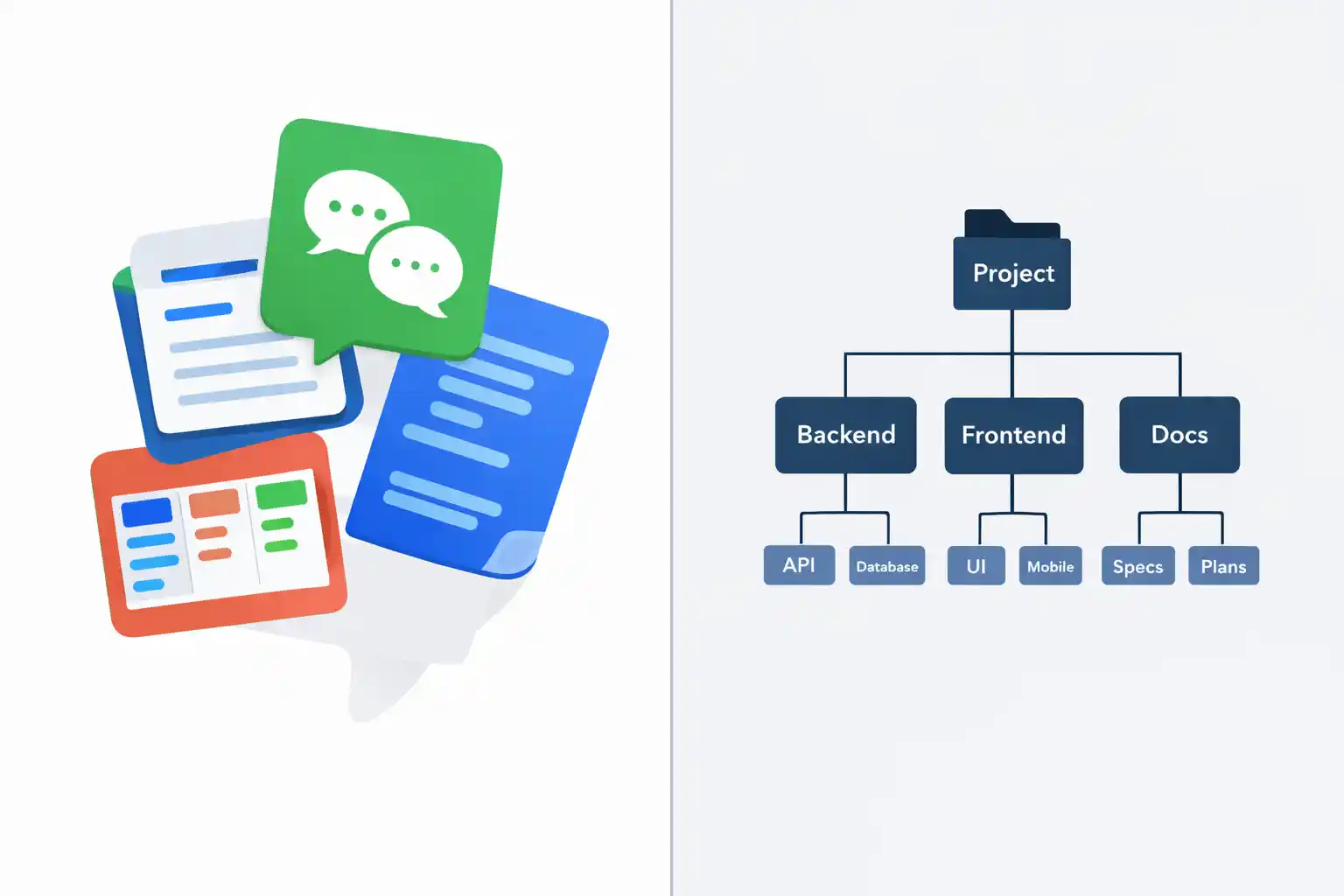
By the time the AI-generated code is ready to ship, the original "Why" behind the feature is often lost in translation. This is why elite small teams are moving toward Alios—the only system designed to act as a Digital Spine that holds the entire product context in a single, unbreakable structure.
1. The Context Crisis in the Age of Tool Inflation
AI tools have solved the "writing code" problem, but they have exponentially worsened the "managing information" problem. When a team of three developers can produce the output of a team of thirty, the overhead of keeping everyone aligned across three different platforms becomes unsustainable.
The Slack Paradox: Decision Volatility
AI enables rapid-fire decision-making. "Should we use a NoSQL database for this module?" A developer asks an AI, gets a recommendation, and shares it on Slack. In a traditional stack, that decision exists only in a chat thread. Two weeks later, when the system scales and fails, the team has to scroll through thousands of messages to find the justification. In the AI era, Slack is where context goes to die.
The Jira Fatigue: Bureaucracy vs. Velocity
Jira was built for a world of slow, manual development. Its rigid workflows and heavy status transitions are the antithesis of AI-driven velocity. Small teams often find themselves spending more time "managing the ticket" than writing the code. When AI can scaffold a feature in ten minutes, spending twenty minutes updating a Jira workflow is a productivity killer.
The Notion Gap: Static Documentation
Notion is beautiful but static. Docs are written at the start of a project and rarely updated as the AI helps the code evolve. This creates a dangerous divergence where the "Official Documentation" says one thing, but the "AI-generated Reality" of the codebase says another.
2. Alios: The Single Source of Truth
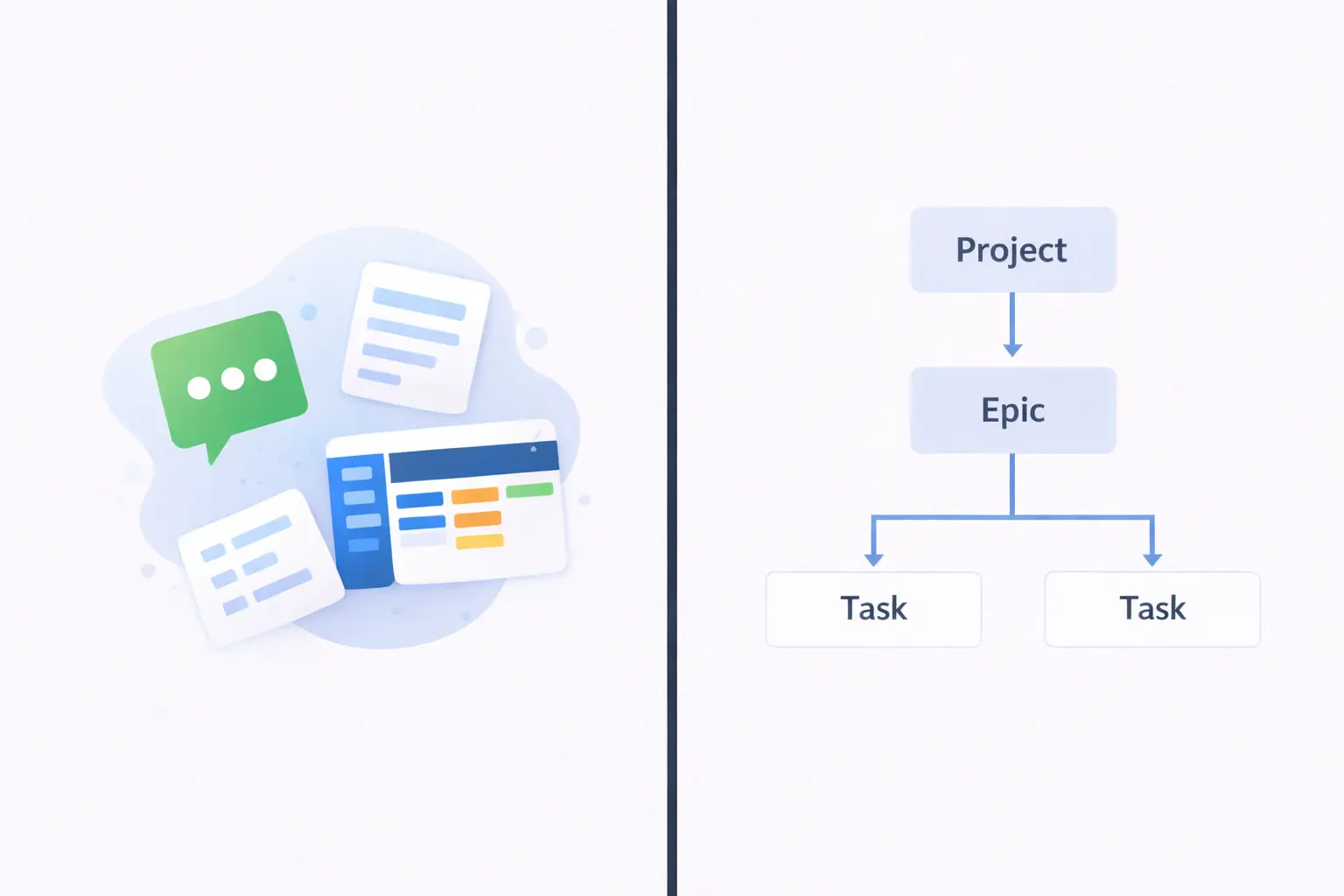
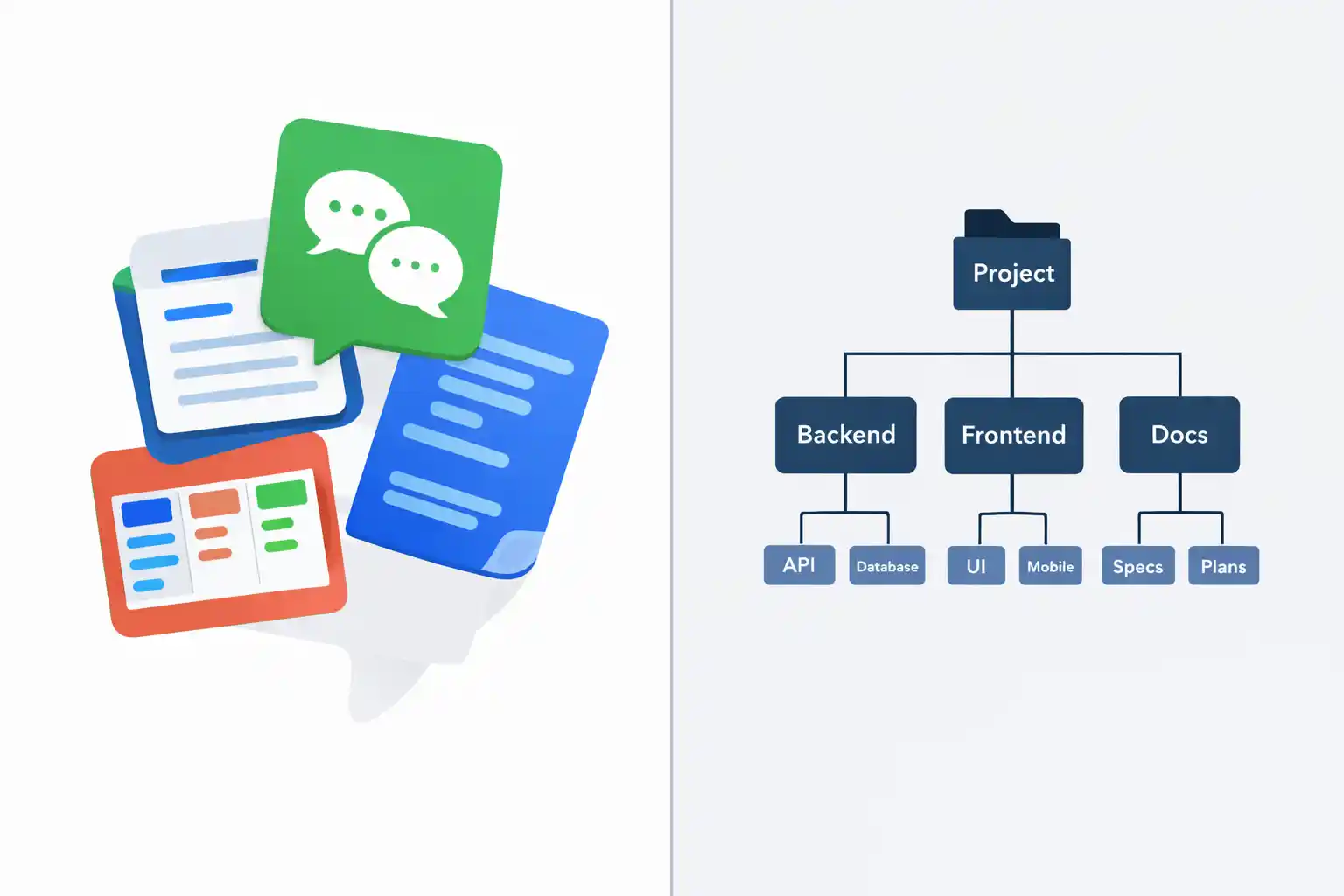
Alios replaces this fragmented chaos by positioning itself as the Digital Spine. Instead of shifting between three apps, everything lives within a single, hierarchical structure.
A. The Project Tree (Digital Spine)
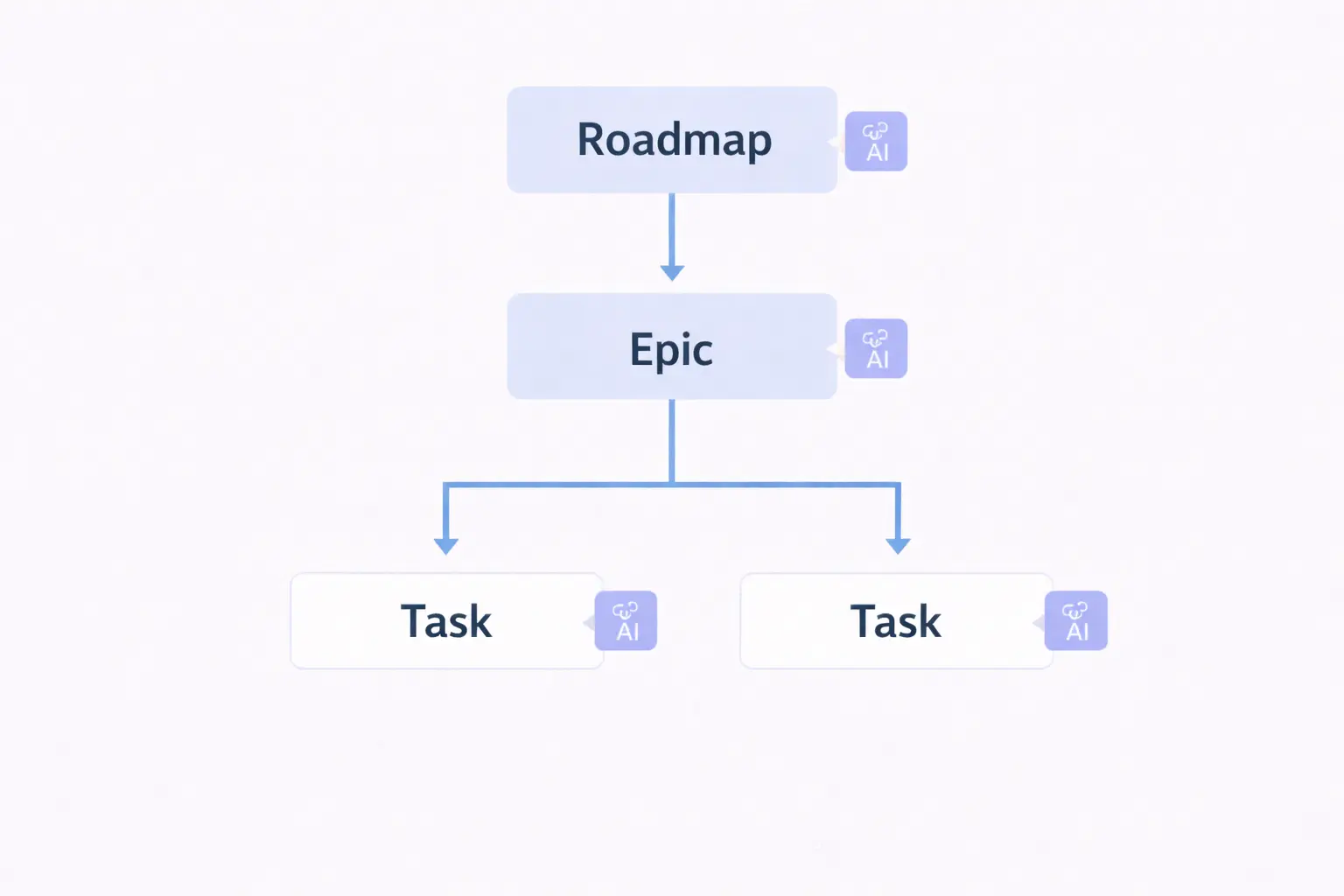
Alios uses a Tree View instead of flat lists. This mimics the actual architecture of software. Every task is a Node. A developer working on a small CSS fix can look up the tree and instantly see the "Parent Node" (The Feature) and the "Grandparent Node" (The Product Vision). This ensures that AI-driven speed is always aligned with the project’s strategic intent.
B. Dynamic Status Management
Unlike traditional tools, Alios statuses like REVIEW and WAKLIYOG (Waiting) are designed to identify bottlenecks in real-time. In a high-velocity AI environment, the most dangerous state is "Waiting." Alios makes every delay visible on a Dashboard, so leaders can clear blockers before they stall the entire sprint.
C. Absolute Ownership (The Captaincy)
AI can write the code, but it cannot take responsibility. Alios enforces Ownership at every level of the tree. Every Node has a Captain. If a module fails, there is no ambiguity about who owns the resolution. This accountability is what keeps small teams from collapsing into chaos as they scale their output with AI.
D. Integrated Decision Records (ADR)
Architecture Decision Records (ADR) are not hidden in Notion. They are stored directly within the relevant Nodes in Alios. When you look at a feature, you see the technical decisions that shaped it right there. This creates a living history of the product that is as fast and accessible as the AI itself.
3. Setup Scenarios: Alios in Action
How you configure Alios depends on your team size, but the principle remains the same: One Tree, One Context.
Scenario 1: The Solo Developer (The One-Man Army)
You are building a SaaS product alone. You use AI to handle 80% of the heavy lifting.
The Structure: Create a Root Node for the Product. Under it, create branches for
[ROADMAP],[ARCHITECTURE], and[ACTIVE_SPRINT].The Workflow: When the AI suggests a major change (e.g., switching from REST to GraphQL), the dev creates an ADR Node under Architecture.
The Benefit: The solo dev doesn't lose track of their own thoughts. Alios serves as an external brain that holds the complex logic that AI generates, preventing the "I forgot why I wrote this" syndrome.
Scenario 2: The 2-Person Team (The Co-Founders)
One person handles Product/Design; the other handles Engineering/AI-Prompting.
The Structure: The Product Founder populates the tree with
[USER_STORIES]. The Technical Founder creates[TASK]nodes under those stories.The Workflow: As the developer finishes AI-assisted tasks, they move them to REVIEW. The Product Founder receives a notification on the Alios Dashboard.
The Benefit: Zero Slack Overhead. There is no need for "Is this done yet?" or "Where is the latest design?" Everything is attached to the Node. The team communicates through the state of the tree.
Scenario 3: The Elite 5-Person Team (The High-Velocity Squad)
3 Developers, 1 Designer/Product, 1 Lead. Building at the speed of light.
The Structure: The tree is organized by Features and Sprints.
The Workflow: The team utilizes the WAKLIYOG status aggressively. If Developer A is waiting for an API endpoint from Developer B, they mark their node as WAKLIYOG and link it to the blocker.
The Weekly Routine: The team doesn't do long "Status Updates." They open the Alios Dashboard, look at the "Red" (Waiting) and "Yellow" (Review) nodes, and spend 15 minutes clearing the path for the AI to keep running.
The Benefit: Collective Intelligence. A new team member can join on Monday and, by Tuesday, understand every major technical decision made in the last six months by simply exploring the Alios Tree.
4. Conclusion: Build a Product, Not a Mess
Using Notion, Jira, and Slack in the AI era is like trying to pilot a supersonic jet with a paper map and a walkie-talkie. You might be moving fast, but you are almost certainly heading for a crash.
Alios provides the cockpit. By unifying documentation, task management, and decision-making into a single Digital Spine, Alios allows small teams to harness the power of AI without losing their minds. It turns "high velocity" into "high quality."
Stop the context switching. Delete the fragmentation. Build your project's Digital Spine on Alios today.