Article
Managing Architectural Decision Records ADR in the AI Era | Alios
AI-driven decisions are happening faster than ever. Stop losing your technical strategy in Slack. Learn how to use Alios to track ADRs and build corporate memory.

Architectural Decision Records (ADR) in the Era of AI: Don’t Let Your Strategy Vanish in Slack (Alios)
The software development lifecycle has entered a state of hyper-velocity. With the integration of Generative AI tools like Cursor, GitHub Copilot, and Claude, the cycle of "ideation to implementation" has shrunk from weeks to minutes. Today, a developer can receive a sophisticated architectural suggestion from an AI, evaluate it, and refactor a core system component before the morning coffee gets cold.

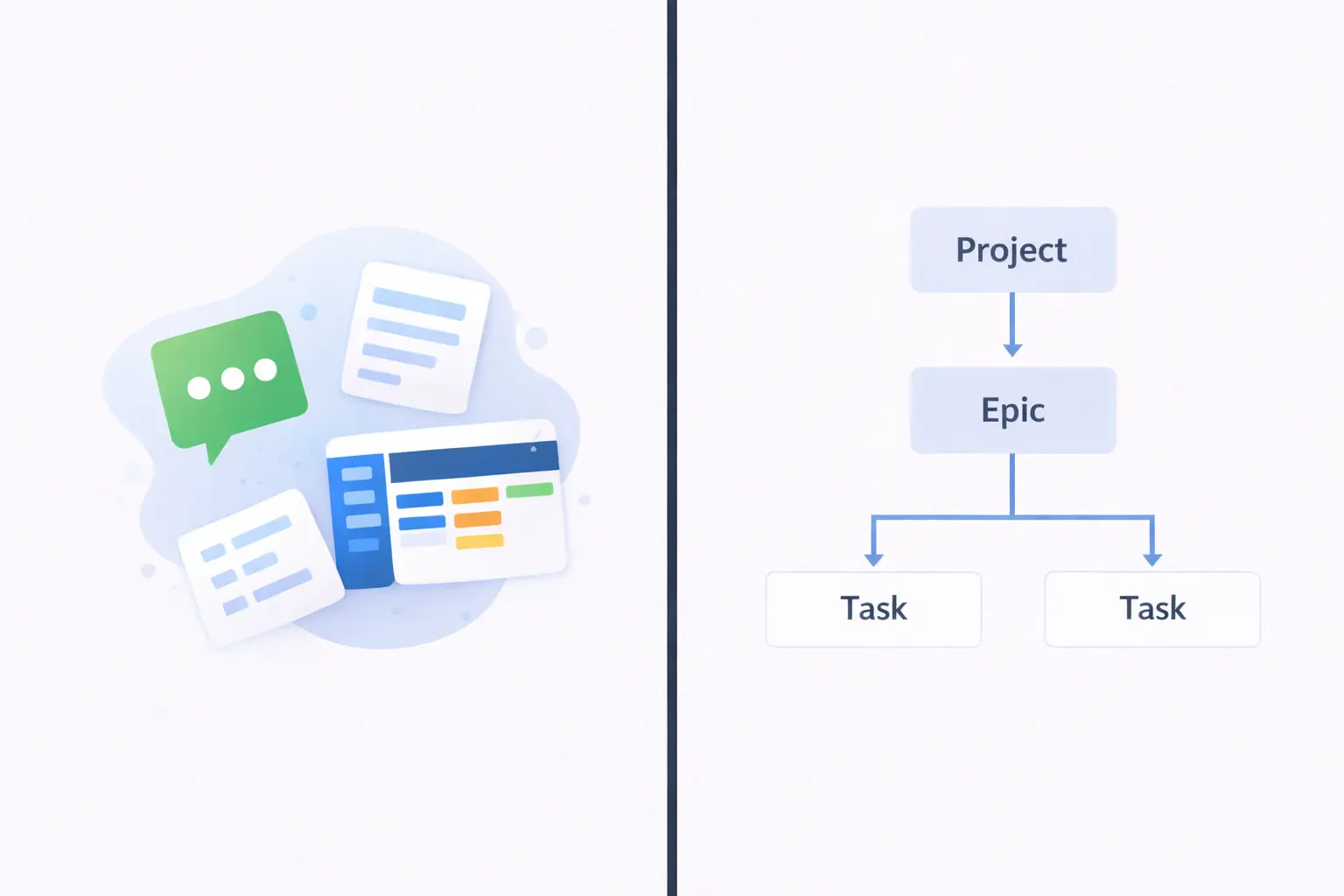
However, this unprecedented speed has birthed a silent crisis: Corporate Amnesia. In high-velocity AI-driven environments, critical architectural choices are being made at an alarming rate, yet they are often discussed in ephemeral Slack threads, lost in the noise of WhatsApp groups, or buried in the transcripts of Zoom meetings.
Six months from now, when a bug emerges or a scaling bottleneck hits, the team will ask: "Why did we choose this specific database schema?" or "Who decided to switch to this microservices pattern?" If the answer is "I think we talked about it on Slack," your project is in danger. To prevent this, you need a Digital Spine—specifically, the discipline of Architectural Decision Records (ADR) managed within Alios.
1. The Paradox of AI Speed: Decision Inflation
AI doesn't just write code; it suggests directions. It might tell you, "Using a Graph database for this social feature will be 10x faster than SQL," or "Implement an Event-Driven architecture here to reduce latency." Because the AI makes these suggestions feel "easy" to implement, the volume of decisions per sprint has tripled.
The Problem with Ephemeral Communication (Slack/Teams):
Fragmentation: A decision is made in
#tech-leads, the implementation happens in#dev-team, and the client is notified in#general. No one has the full picture.Lack of Context: Slack shows you what was said, but not the weight of the decision. It’s a stream of consciousness, not a record of authority.
Searchability Failure: Finding a specific technical justification from four months ago in a busy Slack channel is like finding a needle in a digital haystack.
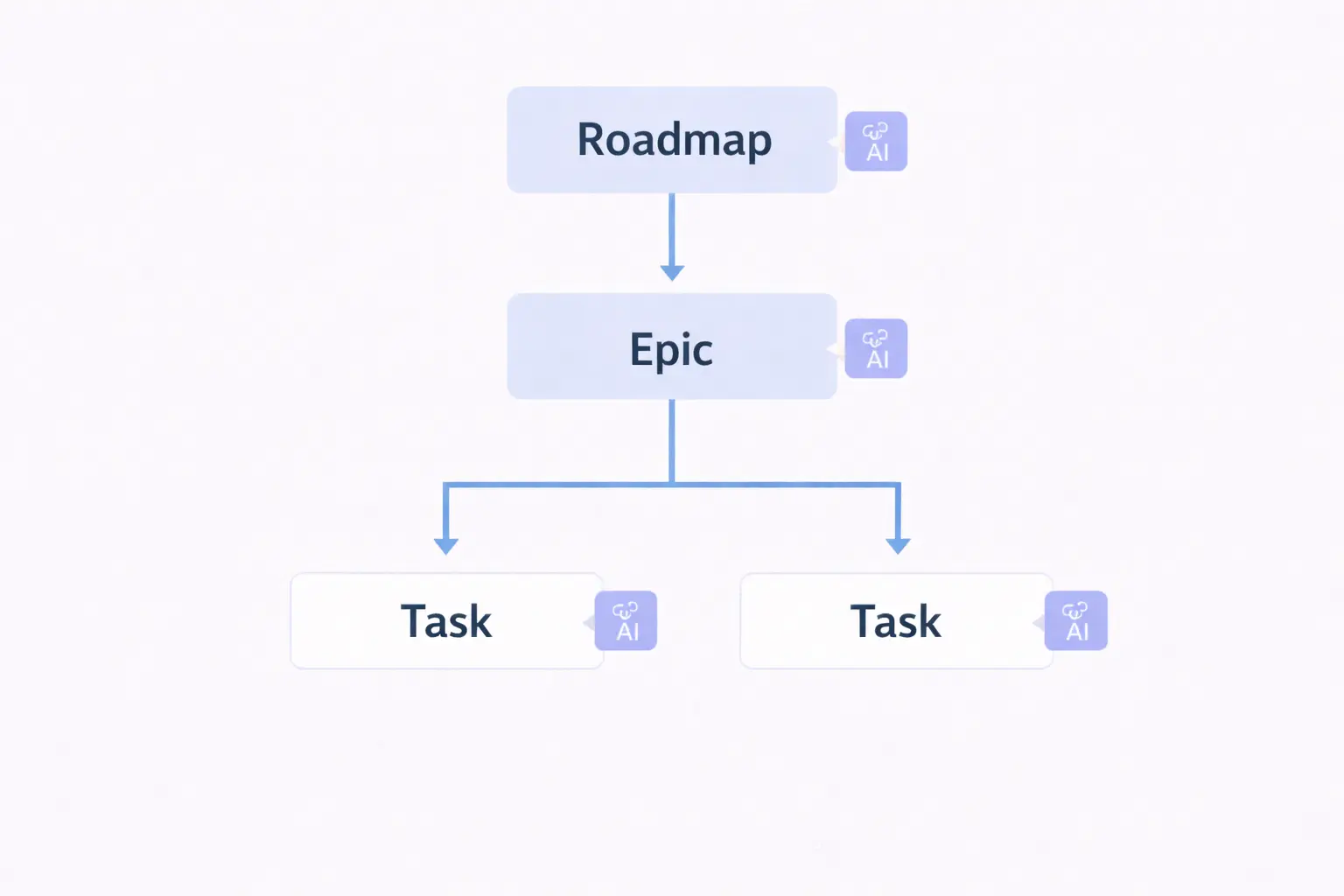
In Alios, decisions aren't "messages"—they are Nodes. By turning a decision into a structural element of your project tree, you ensure it remains visible, searchable, and anchored to the actual work.
2. The Alios ADR Standard: Creating a Permanent Record
An Architectural Decision Record (ADR) is a short text file that captures a significant technical choice, along with its context and consequences. In Alios, we treat every ADR as a Master Node or a Documentation Node within the Digital Spine.
To maintain a high-quality "Corporate Memory," every ADR Node in Alios should follow this standardized format in its description:
The ADR Template for Alios:
Date: When the decision was finalized.
Context: What is the specific technical problem or business need driving this change?
Options: What alternatives were considered? (Including AI-suggested paths).
Decision: Which option was chosen and why? (The core justification).
Consequences: What are the trade-offs? (Technical debt, performance gains, increased complexity).
Links: References to Slack archives, AI prompt logs, or external documentation.
3. A Complete ADR Example (Filled for an Alios Node)
Let’s look at a real-world scenario where a team decides to change their messaging infrastructure based on AI performance simulations.
Node Name: [ADR-005] Migration from Redis Pub/Sub to RabbitMQ for Notifications Captain (Owner): @Technical_Architect Status: DONE / ARCHIVED
[ADR-005] Architectural Decision Detail
Date: March 13, 2026
Context: Our notification system is currently processing 5,000 push events per second. We have been using Redis Pub/Sub as a lightweight broker. However, as we scale toward 20,000 events/sec, we are experiencing message loss during transient network flickers because Redis Pub/Sub does not offer "at-least-once" delivery guarantees. Our AI simulation (run via Claude-4) indicated a 4% message drop rate at peak loads, which is unacceptable for our fintech compliance requirements.
Options:
Stay with Redis (Status Quo): Lowest cost, but requires complex manual "Ack" logic to be built on top, increasing technical debt.
Apache Kafka: Extreme scalability, but the operational overhead (Zookeeper/Kraft management) and cost are too high for our current team size.
RabbitMQ: Provides robust message acknowledgement (Ack/Nack), persistent queues, and sophisticated routing (Exchanges) that fit our multi-channel (SMS, Email, Push) needs.
Decision: We have decided to migrate to RabbitMQ. The primary driver is the "Message Durability" and "Acknowledgement" features which ensure no notification is lost even if a consumer service crashes. AI cost-benefit analysis showed that RabbitMQ offers the best balance of reliability vs. infrastructure cost for our projected growth over the next 18 months.
Consequences:
Positive: 100% message delivery reliability. Better separation of concerns between SMS and Push providers via dedicated exchanges.
Negative: Introduction of a new stateful service to our stack. DevOps maintenance load will increase by approximately 10%.
Technical Debt: Developers must now handle "Idempotency" on the consumer side to prevent duplicate notifications if a RabbitMQ "Ack" fails.
Links:
[Slack Discussion Archive: #architecture-channel-03-2026]
[AI Performance Simulation Report - PDF Attachment]
[Related Implementation Node: @Node-442-RabbitMQ-Setup]
4. Why Managing ADRs in Alios Changes the Game
Managing your technical constitution in Alios, rather than a separate wiki or a chat app, provides three massive advantages:
1. The "Why" is Next to the "What"
In Alios’s Tree View, you can link an ADR Node directly to the Development Nodes that implement it. When a developer clicks on a task to "Write RabbitMQ Producer," they can see the parent ADR Node and instantly understand the "Why" behind their code.
2. Onboarding in Minutes, Not Days
When a new senior engineer joins the team, they often spend weeks questioning previous decisions. With Alios, you simply point them to the ADR Folder in the project tree. They can read the history of the project’s technical evolution in an hour, seeing every fork in the road and why the team turned left instead of right.
3. AI as a Strategic Partner
When you have a history of ADRs in Alios, you can feed these records back into your AI tools. By saying, "Based on our previous ADR-005 regarding RabbitMQ, suggest a scaling strategy for our new microservice," the AI provides much more relevant, "context-aware" advice.
5. Conclusion: Strategy is What Remains
Code is temporary. It gets refactored, deleted, and rewritten—especially with AI. Architecture and Decisions are what remain. If you don't record them, you aren't building a company; you’re just writing transient scripts.
Don't let your project's soul get lost in the bottomless scroll of Slack. Use Alios to build a "Digital Spine" that remembers every critical choice. Your future self (and your future team) will thank you.