Article
Jira or Trello? Startup Tool Selection and Where Alios Fits
The Jira vs Trello question may be the wrong one for early-stage startups. Learn the criteria for startup project management tool selection and where Alios fits.
Jira or Trello? Startup Tool Selection and Where Alios Fits
The tool selection debate is inevitable in early-stage startups. When the team starts growing or the first bout of chaos hits, the decision to "build a system" arrives. The first search usually starts with these two: Jira and Trello.
Both are legitimate tools. Both have millions of users. But they may not be the right tools for an early-stage startup. Because tool selection shouldn't start with the question "what can this tool do?" — it should start with "what do we need at this stage?"
Three Real Criteria for Tool Selection
Three criteria are decisive when choosing a tool for an early-stage startup.
Setup and Adoption Cost
No matter how powerful a tool is, if the team isn't using it, its value is zero. The most important factor determining adoption rate is the initial setup and onboarding process.
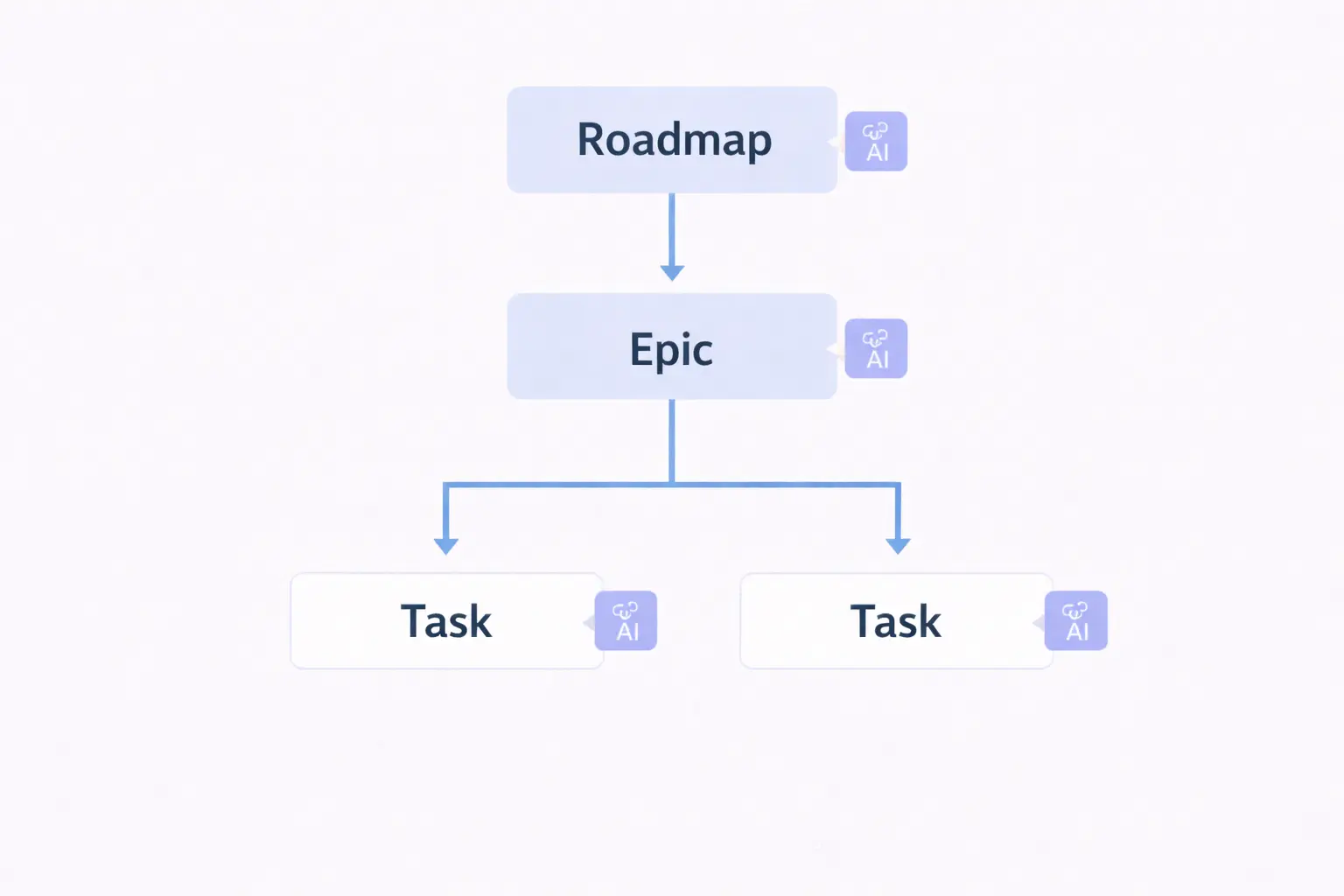
Jira is heavy on this criterion. Workflows, boards, permission levels, the epic-story-task hierarchy — setting these up correctly takes experience. A poorly configured Jira system eventually turns into a graveyard nobody uses. On top of that, time gets spent teaching the team Jira's logic. In the early stage, that time usually doesn't exist.
Trello is much lighter on this criterion. The card system is intuitive, setup takes 10 minutes. But its simplicity turns into a limitation past a certain point. Ownership tracking, deadline management, context transfer — these get hard in Trello.
Complexity and Scale Fit
Every tool is designed for a certain level of complexity. Below that level, the tool brings unnecessary overhead. Above it, the tool falls short.
Jira was designed for large engineering teams. Sprint velocity tracking, burndown charts, detailed reporting — these carry meaning in 20+ person teams. For a 5-person startup, these features are just noise.
Trello is powerful for small, visual workflows. But as project count grows, context deepens, and the team expands, boards get complex and become unmanageable.
Visibility and Context Depth
The most commonly overlooked criterion in tool selection. Keeping a task list isn't enough — why the task was opened, how the decision was made, where the relevant file lives all need to be visible too.
Trello cards are adequate for surface-level context. But they weren't designed to hold the answer to "why was this decision made?"
Jira has deeper context but it's complex to access. Comment threads, attachments, linked issues — they exist but they're scattered.
Jira, Trello, and Alios: A Comparison
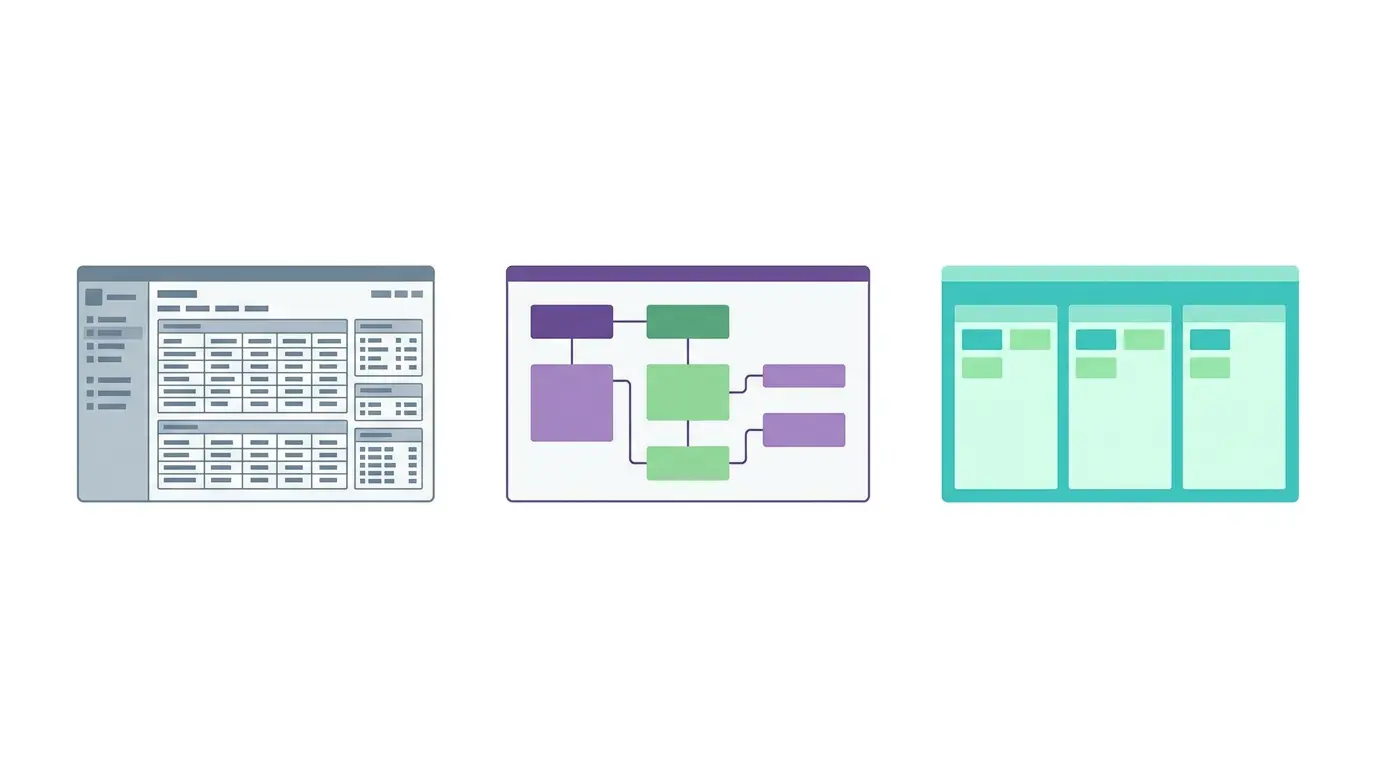
Let's look at the three tools against the same criteria:
CRITERION           JIRA        TRELLO      ALIOS
────────────────────────────────────────────────────
Setup time          Days        Hours       Hours
Adoption            Hard        Easy        Easy
Context depth       High        Low         Medium-High
Visibility          High        Medium      High
Scale fit           20+ people  2-8 people  3-20 people
Finance integration None        None        Yes
Ownership tracking  Yes         Weak        Yes
Decision record     Weak        None        Yes
This table doesn't show which tools are good or bad. Each has a different scenario where it fits best.
Where Alios Is Positioned: Lightweight but Visible
As a startup project management tool, Alios is intentionally positioned between the two: Trello's ease of adoption, Jira's depth of visibility.
"Lightweight but visible" means:
Lightweight: Setup completes in a few hours. The team starts using it from day one. No need to design workflows, configure boards, or set permissions. Open a node, assign an owner, write a deadline — that's it.
Visible: Every task has an owner. Every decision's context lives in the node description. Files and links stay inside the task. The questions "where did this end up?" and "why did we decide that?" get answered in the system.
Adding a finance module and operations tracking means Alios covers multiple needs with one tool. Instead of Notion + Jira + a separate accounting tool — one system.
Which Tool for Which Scenario?
Choose Jira when:
Engineering team of 15+ people
Scrum or Kanban methodology is established
Detailed sprint metrics and reporting are needed
Atlassian ecosystem integration is required
Choose Trello when:
Very small team of 2–5 people
A visual Kanban board is sufficient
Context depth doesn't matter
Short-lived, simple project tracking is needed
Choose Alios when:
Early-stage or growth-stage startup of 3–20 people
Jira feels too complex, Trello too shallow
Decision and context record matters alongside task tracking
Operations and finance need to be kept in the same system
Shortening adoption time is a priority
Project memory needs to be preserved even as the team changes
You want to reduce tool count
Tool Selection Isn't a One-Time Decision
The right tool in the early stage can change as the company grows. A startup that begins with Trello moves to Jira when it reaches 15 people. A startup that begins with Alios may need more enterprise-grade tools when it becomes a large engineering organization.
What matters is choosing the right tool for the current stage. Building an overly complex system today by thinking about what might happen in the future is the "premature optimization" trap. Setting up Jira for a five-person team should be for how five people will work now — not because you'll be 50 someday.
In startup project management tool selection, the best tool is the one the team actually uses.
Final Thought
The most common mistake when asking Jira or Trello is comparing features. The more useful question is: which team, how many people, at what stage, solving which problem?
Jira is a powerful tool — but its power was designed for a specific scale and complexity. Staying below that scale makes Jira a burden, not a strength.
Alios was designed for this gap: fast setup, high visibility, deep context. Too simple for a large team, exactly right for a small one.