Article
Jira Notion Slack Fragmentation: One System for Technical Teams
Context lost between Jira, Notion, and Slack slows technical teams down. Learn how to end tool fragmentation with single system management in Alios.

Jira Notion Slack Fragmentation: One System for Technical Teams
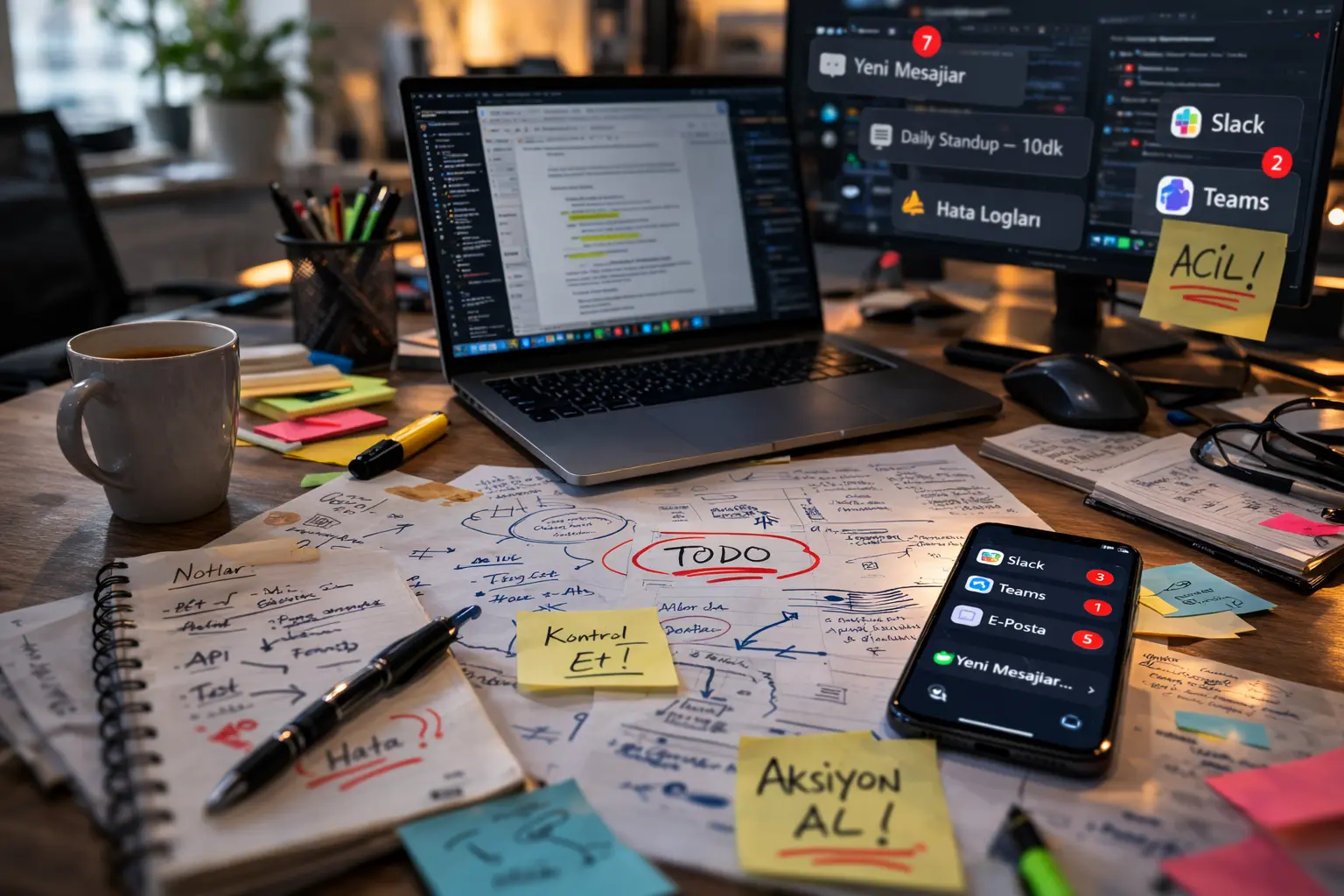
Tool accumulation has become standard in technical teams. Sprint tracking in Jira, technical documentation in Notion, real-time communication and decisions in Slack, files in Drive, wiki in Confluence. Each tool was chosen separately and for good reason. When they're all used together, an unexpected cost emerges: context loss.
Context loss is a silent problem. No invoice arrives, it doesn't show up in error logs. But it gets paid every day.

Two Real Problems Created by Scattered Tools
Context Loss
A developer opens a ticket in Jira: "Optimize the payment flow." Why the ticket was opened, which user complaint it came from, what was tried before and why it was rejected — none of that is there. Maybe there's a page in Notion, maybe a conversation happened in Slack, maybe it was discussed in a meeting.
Before starting work, the developer has to gather the context. Searching Notion, digging through Slack history, finding someone to ask. This research takes 20–30 minutes. Then the same context gets gathered again by another developer.
There's a multiplier effect: in a five-person team, 20 minutes of context gathering per ticket, 10 tickets per week. That's 1,000 minutes — 16 hours per week. Two full working days of the team goes to searching for context.
Lost Work
Lost work is more expensive than context loss. It happens like this:
A backend developer writes an API endpoint. The same day, a frontend developer starts a different implementation for the same endpoint — because neither knows what the other is doing. Both finish; one goes to waste.
Or the quieter version: research was done three months ago, written on a Notion page, nobody read it. The same research gets done again.
These overlaps and repetitions don't come from "no system" — they come from "systems not connected to each other."
Why Single Source of Truth Works
The single source principle is simple: everything about a task — its context, owner, status, files, and decisions — lives in one place.
When this principle is applied, the context-gathering cost disappears. A ticket is opened, everything is inside it. The developer immediately sees what to do, why to do it, what was tried before, and where the related file lives.
Lost work gets prevented too. When who's doing what is visible, two people can't work on the same thing without noticing. Overlap gets caught before it happens.
A Single-Source System for Technical Teams in Alios
Technical team single system management in Alios is built across three layers.
Project Tree: Everything in Hierarchy
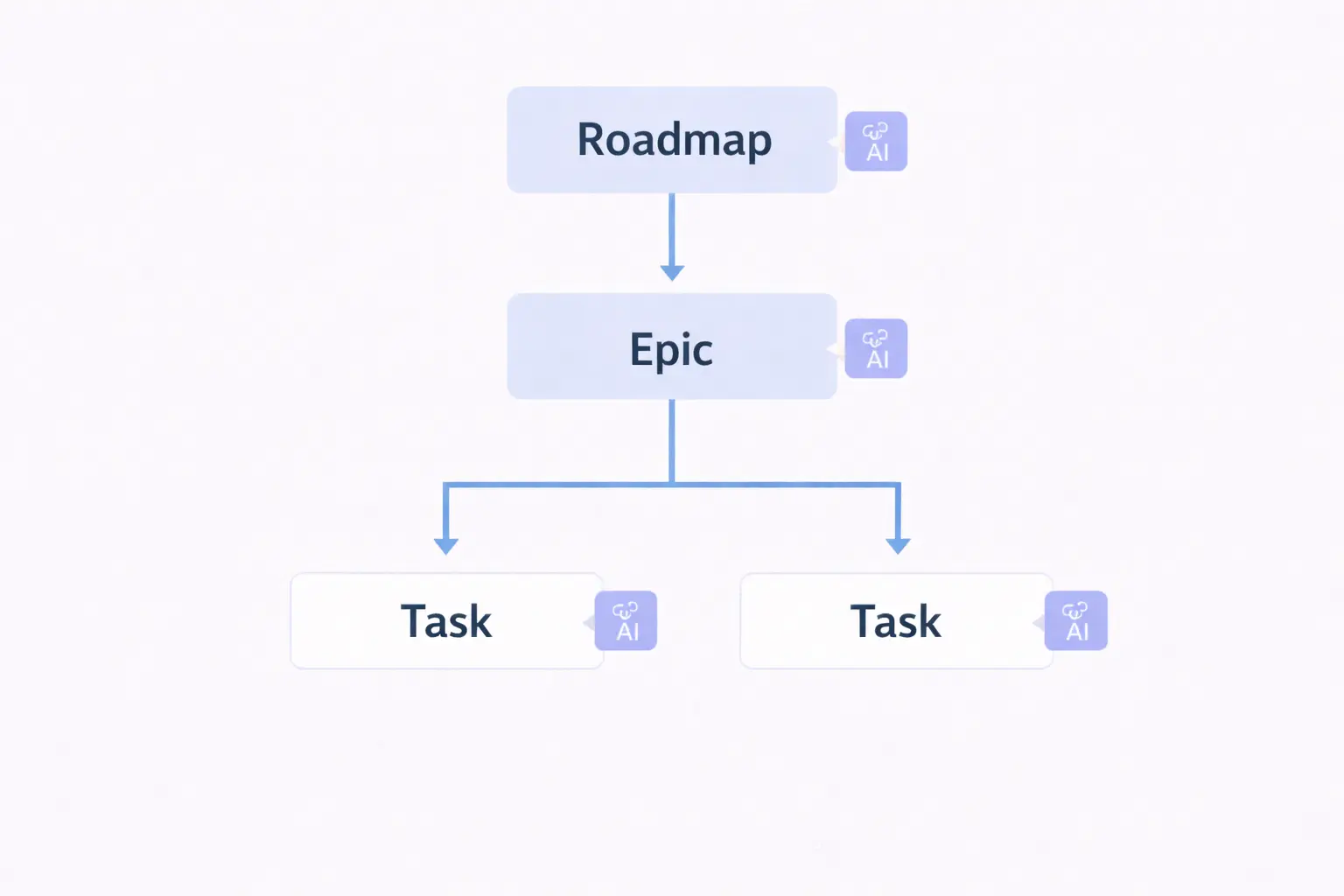
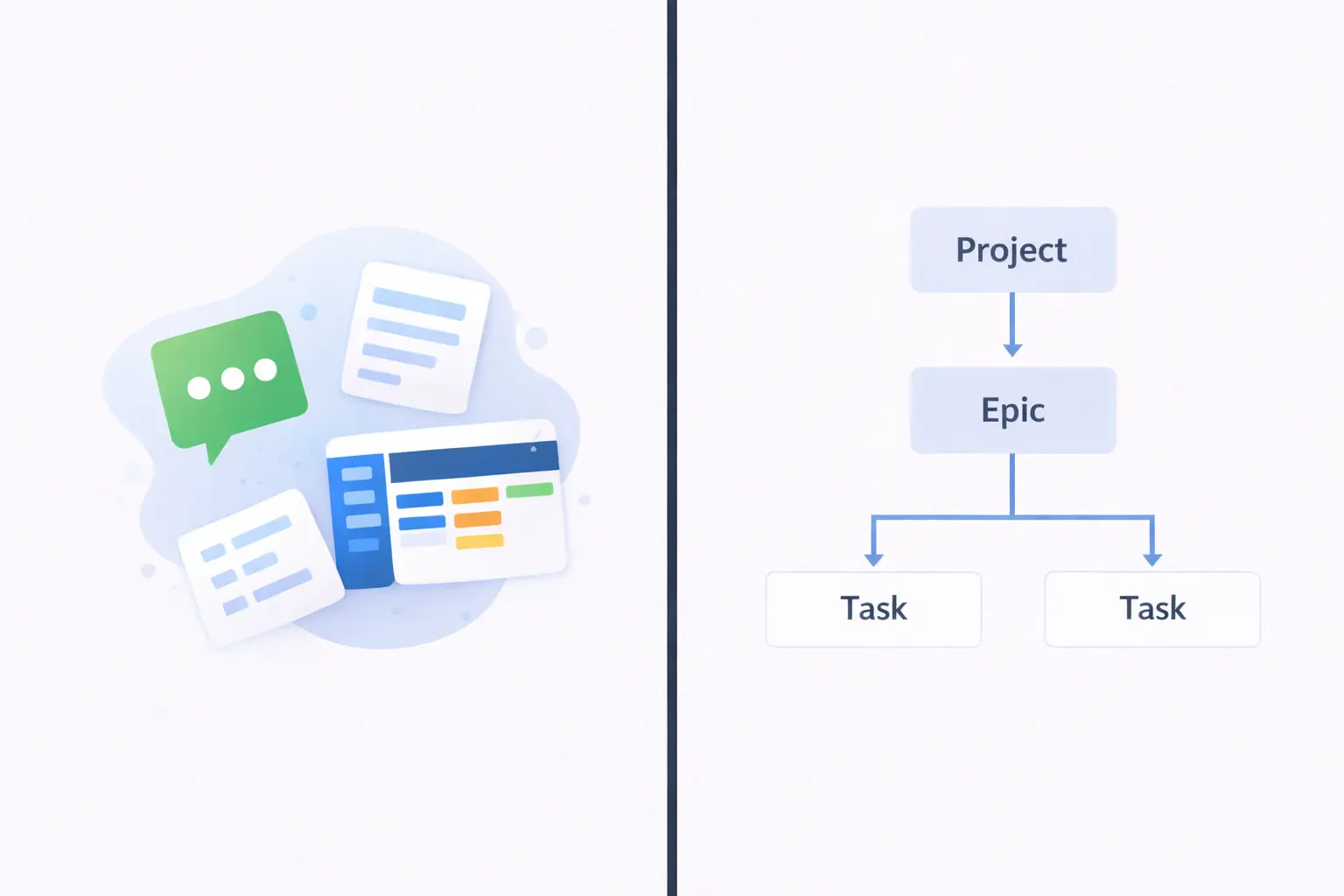
A top-level node is opened for each technical work area. Epics underneath, tasks under the epics. This hierarchy covers both Jira's epic-task logic and Notion's documentation depth in one place.
📁 Backend System
├── 📁 Payment Infrastructure
│   ├── [ ] Stripe webhook integration
│   ├── [ ] Payment history API
│   └── [ ] Error handling standards
├── 📁 User Management
│   ├── [ ] Auth token refresh
│   └── [ ] Role-based access control
└── 📁 Performance
    ├── [ ] Query optimization
    └── [ ] Cache strategy
Each node's description holds technical context: why it was opened, what constraints exist, what was tried before, the relevant PR or doc link.
Statuses: More Than a Ticket
Status stages in Jira usually say: "To Do, In Progress, Done." That's not enough.
Status flow for technical tasks in Alios:
📥 To Do → defined, not started yet
🔍 Researching → spike or technical analysis phase
🔄 In Development → active coding
👀 In Review → PR open, awaiting review
🧪 In Testing → QA or staging test
✅ Done → merged, deployed to production
⏸ Blocked → external dependency or technical blocker
On each status change, a brief note in the description: "PR #42 opened," "error appeared in staging, investigating," "waiting on X service." These notes are valuable for anyone coming back to the same task two weeks later.
Ownership: No Ambiguity
Every node has one owner. Even a task waiting for PR review isn't ownerless — the person waiting for the review is the owner.
Ownership ambiguity in technical teams shows up most in two situations: tasks waiting on dependencies ("I'm done, it's your turn but when is your turn?") and cross-functional tasks ("is this backend or frontend?"). In Alios, these tasks are managed with clear ownership and written dependencies in the description.
30-Minute Setup in Alios
The Alios setup for a technical team completes in 30 minutes with the following steps.
0–5 minutes — Team invite Log into Alios, invite team members, assign roles.
5–10 minutes — Open main project nodes Create top-level nodes for active technical areas. Examples: "Backend," "Frontend," "Infrastructure," "QA." Write a 2–3 sentence description for each node.
10–18 minutes — Transfer active tasks Add currently in-progress tasks as child nodes. Assign an owner and write a deadline for each. Select status: In Development, In Review, Blocked.
18–24 minutes — Transfer the context Write brief context for each active node's description. Add links to relevant PRs, docs, or research. Note any technical constraints or dependencies.
24–28 minutes — Add the backlog Open tasks planned for the next sprint as "To Do." Assign priority: Critical, High, Medium. Don't leave any task ownerless.
28–30 minutes — Team alignment Brief explanation to the team: the node update habit. "Update status when it changes, write in description when there's a blocker."
When setup is complete, open tickets from Jira, technical notes from Notion, and decisions from Slack all become visible in one system.
What to Do During the Transition Period
There's no need to switch away from existing tools immediately. Starting Alios in parallel is healthier.
First two weeks: new tasks get opened in Alios, old ones continue closing in Jira. After three or four weeks, active work has fully migrated to Alios. Critical documentation from Notion gets added as links in node descriptions — it doesn't need to be copied.
Slack doesn't get abandoned entirely. It can continue to be used for real-time communication. But "where does this stand?" and "why did we decide that?" are now answered in Alios nodes, not Slack.
Final Thought
The tool fragmentation problem in technical teams doesn't come from the number of tools — it comes from the disconnection between them. Jira is powerful, Notion is powerful, Slack is powerful — but when none of the three are connected to each other, context stays off the record.
Technical team single system management in Alios closes this gap. A task lives together with its context and its decisions. The developer doesn't open three tools in the morning to find out what to work on. They open one.
A 30-minute setup is enough to start this change.