Article
Handover in SMEs: Preventing Information Loss with Alios
Don't let staff turnover erase your institutional memory. Use Alios to centralize notes, files, and decisions in one place for a flawless and secure handover process.
Handover Processes in SMEs: A System to Prevent Information Loss
For Small and Medium-sized Enterprises (SMEs), the departure of a key employee or a long-term leave of absence is often a nightmare scenario. Most of the time, when a person leaves, it’s not just an employee walking out the door; it is years of accumulated knowledge, the nuances of client relationships, and the critical "know-how" of unfinished projects. In traditional management, this process is handled through scattered emails, disorganized Excel sheets, and endless meetings where the common question is: "What happened with that task?"
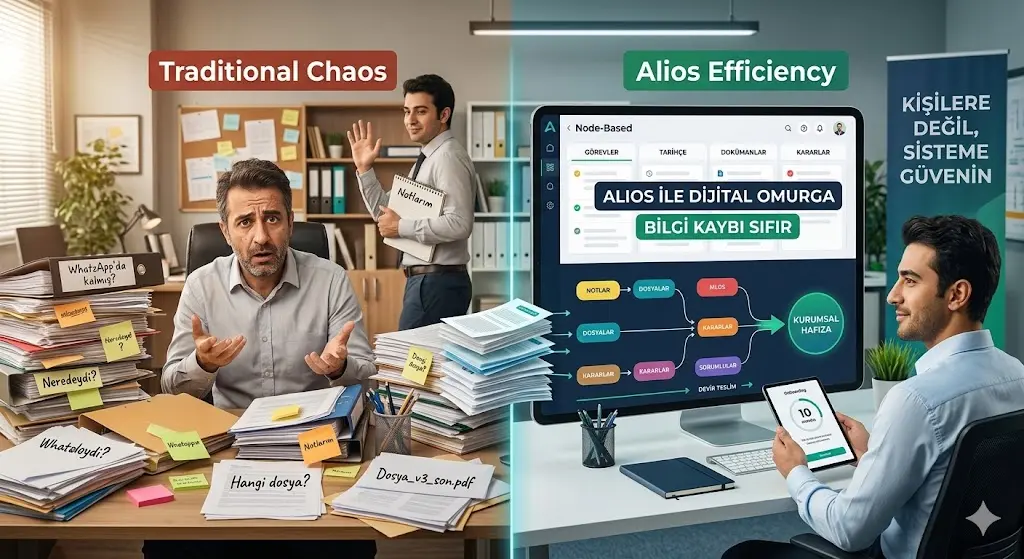
Alios transforms the handover process from a crisis into a standard, seamless operational procedure. By focusing on a "Digital Backbone," Alios ensures that institutional memory is protected and information loss is eliminated.
1. Where is Information Lost? (The Invisible Leak in SMEs)
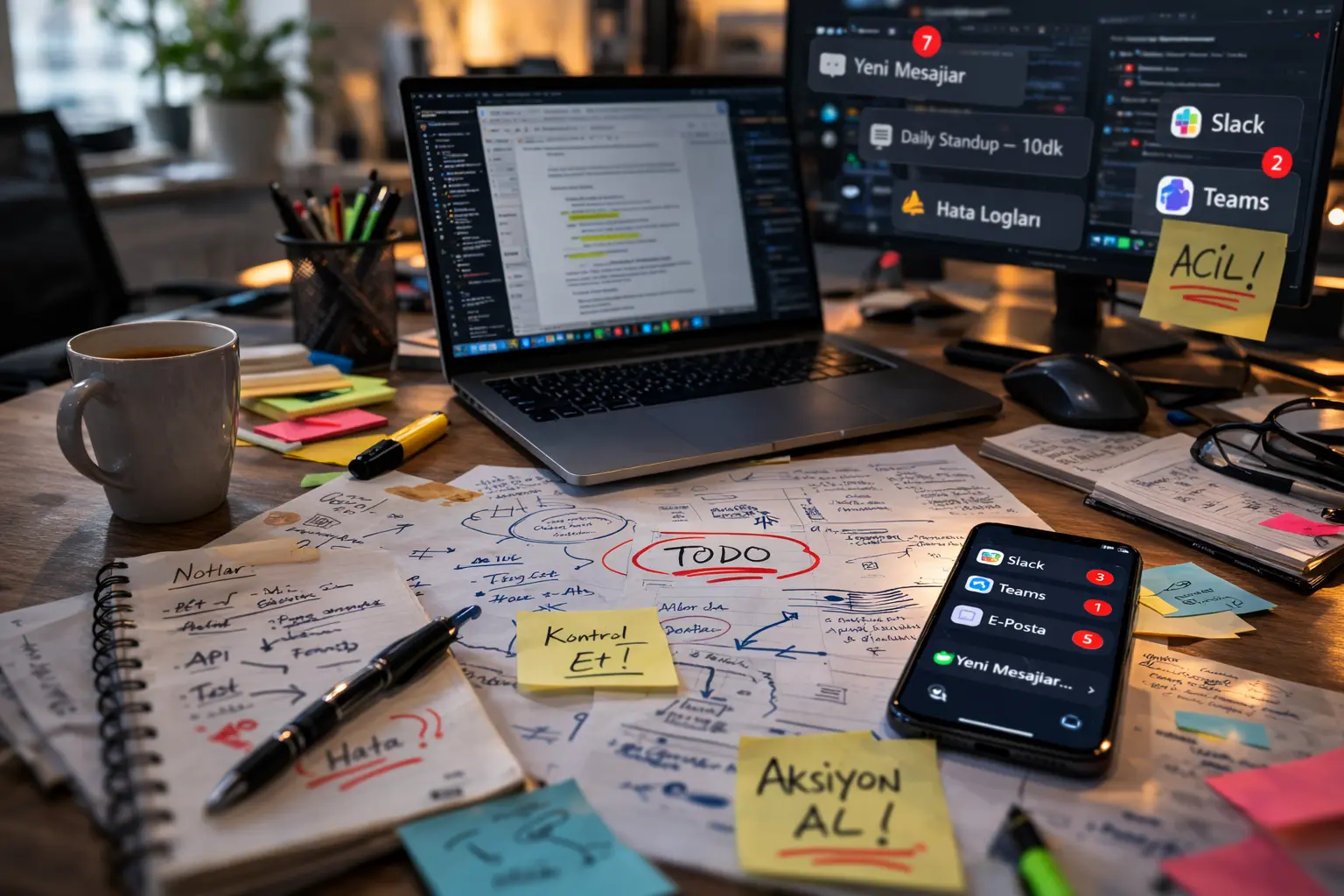
In many SMEs, information loss doesn't happen all at once; it occurs incrementally through fragmented communication and storage habits:
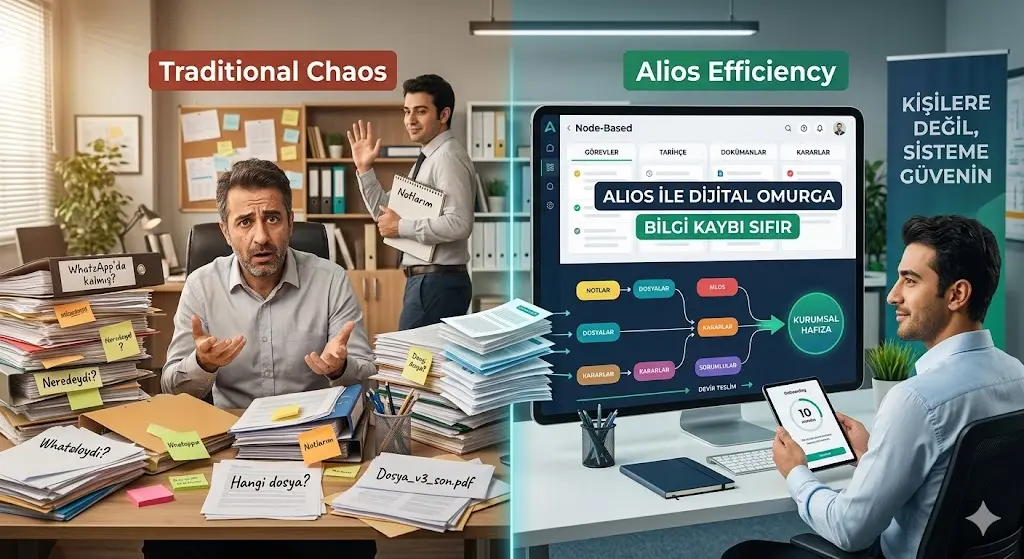
Private Messaging and Silos: When business instructions are given via WhatsApp or personal phone calls, the information becomes the property of the individual rather than the company. When that person leaves, the history of those decisions disappears.
The Document Chaos: Files saved on local desktops with names like "Project_Final_v2_new.pdf" become impossible to locate or verify once the creator is no longer there.
Lack of Decision Logs: If the rationale behind a specific revision was only communicated verbally, the new hire is likely to repeat the same mistakes, leading to operational regression.
2. The Alios Approach: Node-Based Institutional Memory
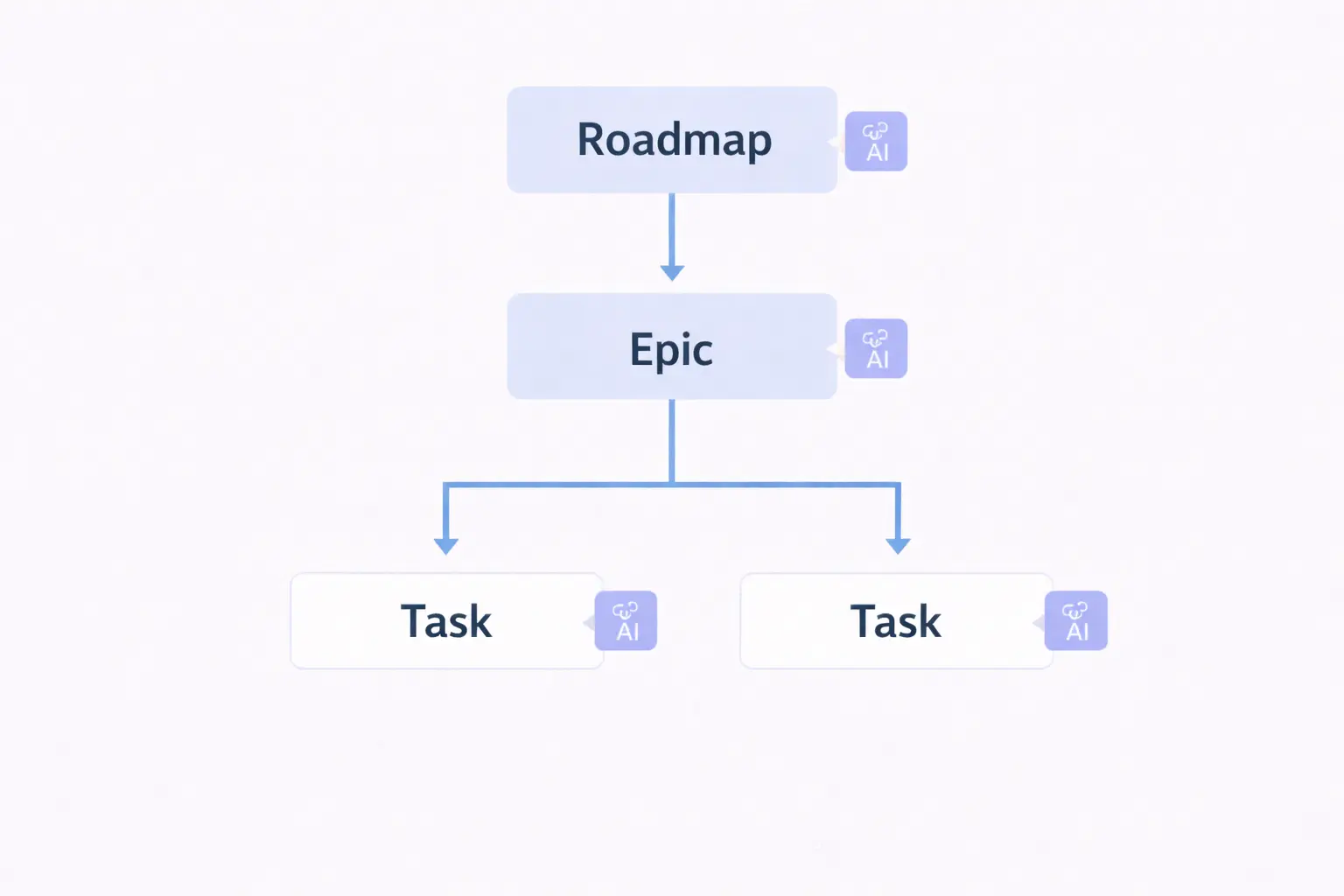
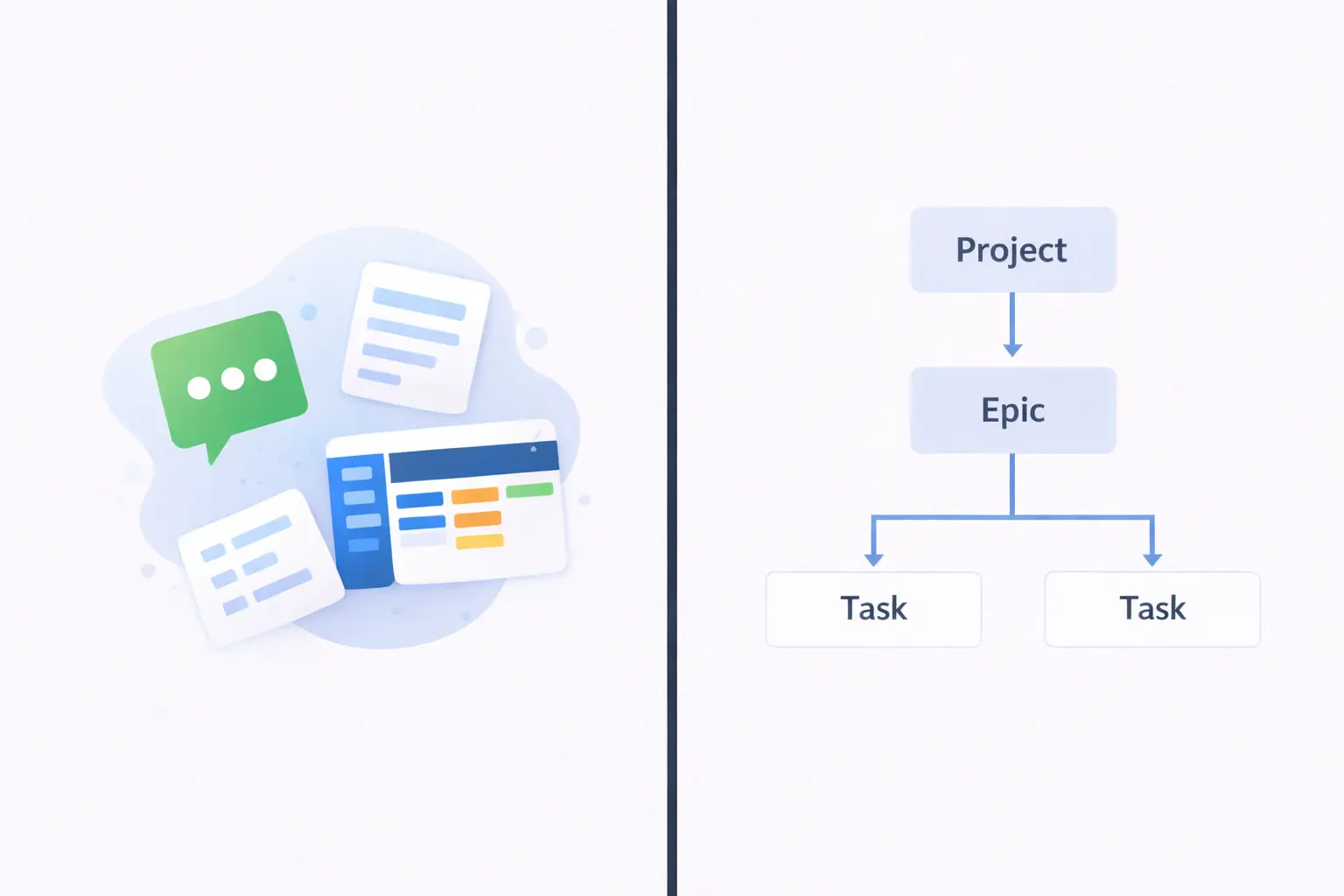
Alios shifts the focus from people-centric knowledge to task-centric knowledge. By using a Node-based architecture, Alios ensures that all information is anchored to the work itself, making handovers intuitive.
A. Every Task Has a "Life Story"
In Alios, every project or task is defined as a Node. Within this Node, the entire history of the task is preserved:
Comments and History: All discussions, from the initial brief to the final approval, are kept in chronological order.
Centralized Documents: All relevant files, drawings, and contracts are uploaded directly into that specific task Node.
Ownership Tracking: The system shows exactly who was responsible for the task at any given time and who holds it now.
B. "Plug-and-Play" Onboarding
When a new employee takes over, they don't need to ask a hundred questions. By simply reviewing the history of the Nodes assigned to them, they can see exactly what the client requested, which revisions were made, and what the final decision was. This reduces the onboarding period from weeks to days.
3. 3 Key Alios Strategies to Prevent Information Loss
ProblemAlios SolutionResultVerbal InstructionsAll decisions are logged as comments within the Node.Verbal promises fade, but Alios records stay permanent.Lost FilesFiles are attached to the specific work node in a central cloud.No more searching through desktops or old emails.Ambiguous OwnershipEvery task has a clear "Captain" (Assignee).No task is left ownerless; handovers are explicit.
4. The Step-by-Step Secure Handover Workflow
Audit the Load: List all active Nodes currently assigned to the departing employee.
Update Statuses: Ensure every task is accurately labeled (Waiting, Review, Done).
Summarize with Comments: Ask the departing individual to leave a final "Status Summary" comment on each of their active Nodes.
Transfer the Captaincy: With a single click, reassign the Node to the new responsible party. The new owner immediately gains access to the full context of the work.
5. Conclusion: Trust the System, Not Just Individuals
For an SME to scale, it needs to move away from "indispensable people" and toward "indispensable systems." Alios digitizes the brain of your business, eliminating the risks associated with staff turnover. Information is no longer trapped in minds or private chats; it lives in the secure, transparent, and accessible structure of Alios.