Article
From Roadmap to Task: Connect Your Product Plan to Daily Work
When a roadmap stays in a document, daily work runs disconnected from strategy. Learn how to build the roadmap task connection in Alios using a hierarchical work tree.
From Roadmap to Task: Connect Your Product Plan to Daily Work
There's a roadmap. A page in Notion, maybe a board in Miro. "In Q3 we'll strengthen user management" is written there. When the developer decides what to work on Monday morning, that roadmap doesn't get looked at.
Two months later the quarter closes. The question comes: "How much did we achieve of the roadmap goals?" The answer: "We worked a lot but we don't exactly know."
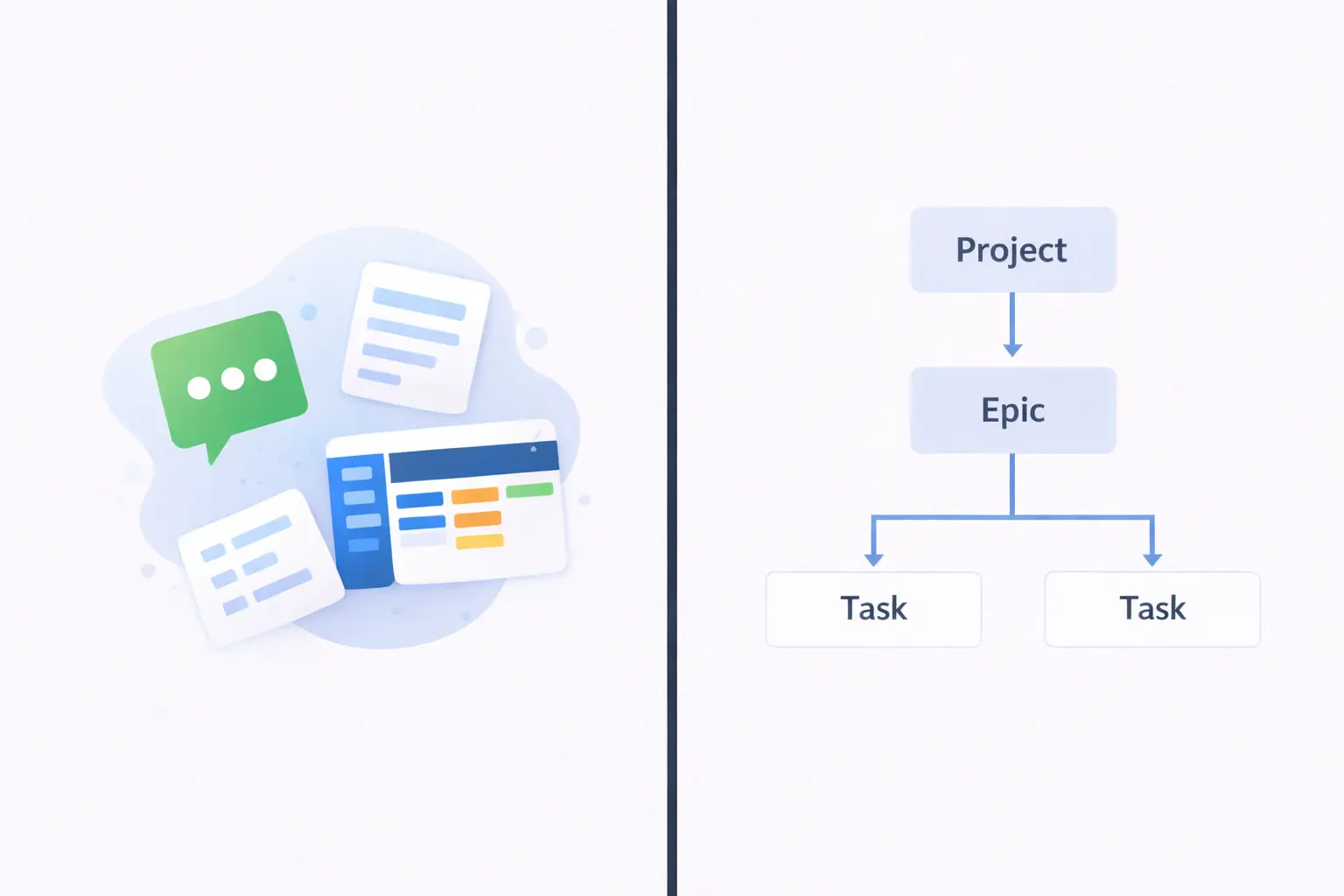
This disconnect isn't a tool problem — it's a structure problem. When there's no bridge between the roadmap and daily tasks, the two live in parallel universes.
Why Roadmaps Stay in Documents
There are two core reasons roadmaps don't translate into practice.
The abstraction level is too high. "Strengthen user management" is a goal. But the path from that goal to the epic "add role-based access control," and from there to the task "write RBAC middleware" — that path was never built anywhere. The connection gets made in someone's head, and when that person changes, the connection breaks.
The tools are separate. Roadmap in Notion, tasks in Jira. Keeping the two synchronized takes time and can't be sustained. Over time the roadmap stops getting updated, tasks become untethered.
Three-Layer Hierarchy in Alios
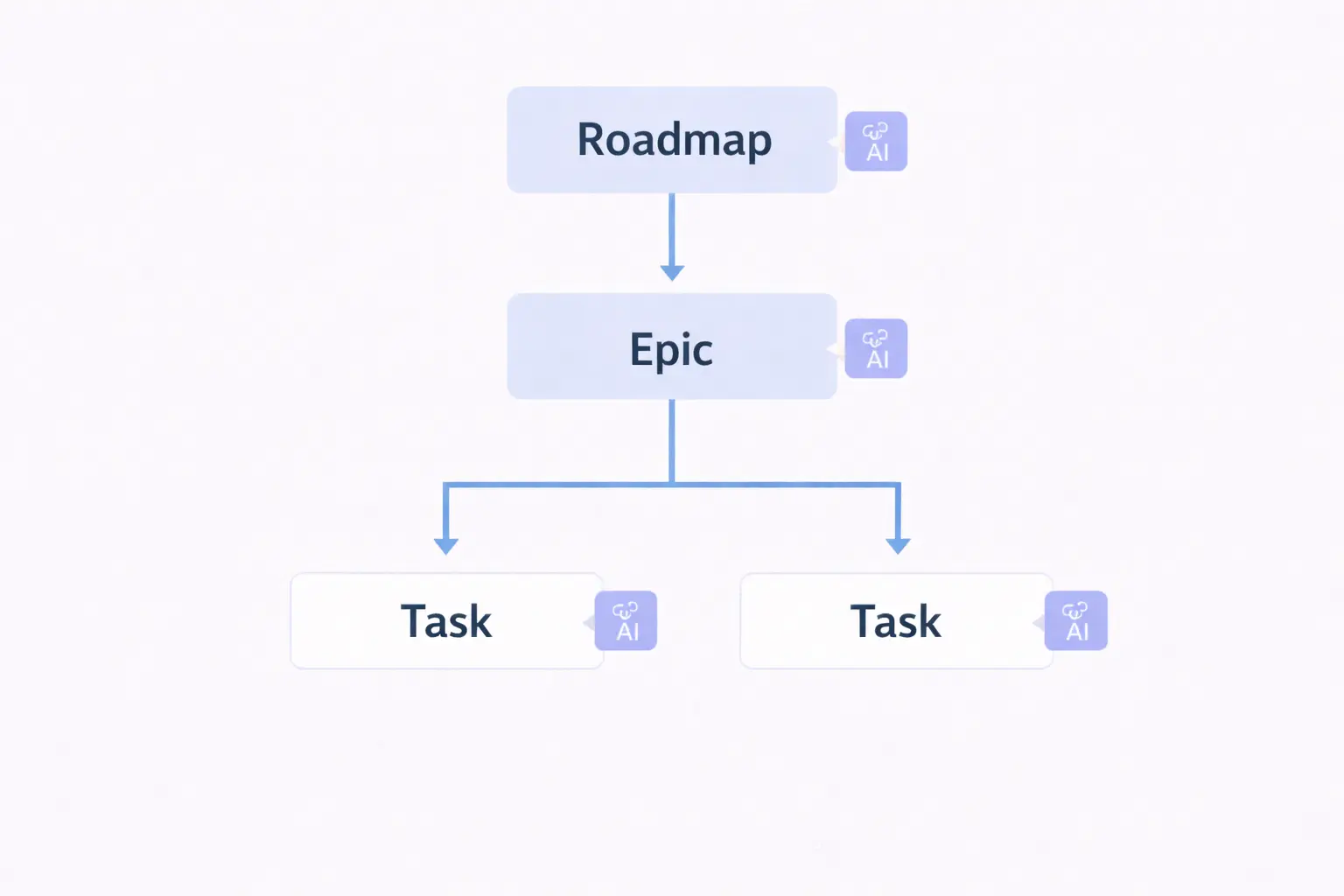
In Alios, the roadmap epic task connection is built in a single system using a nested node structure.
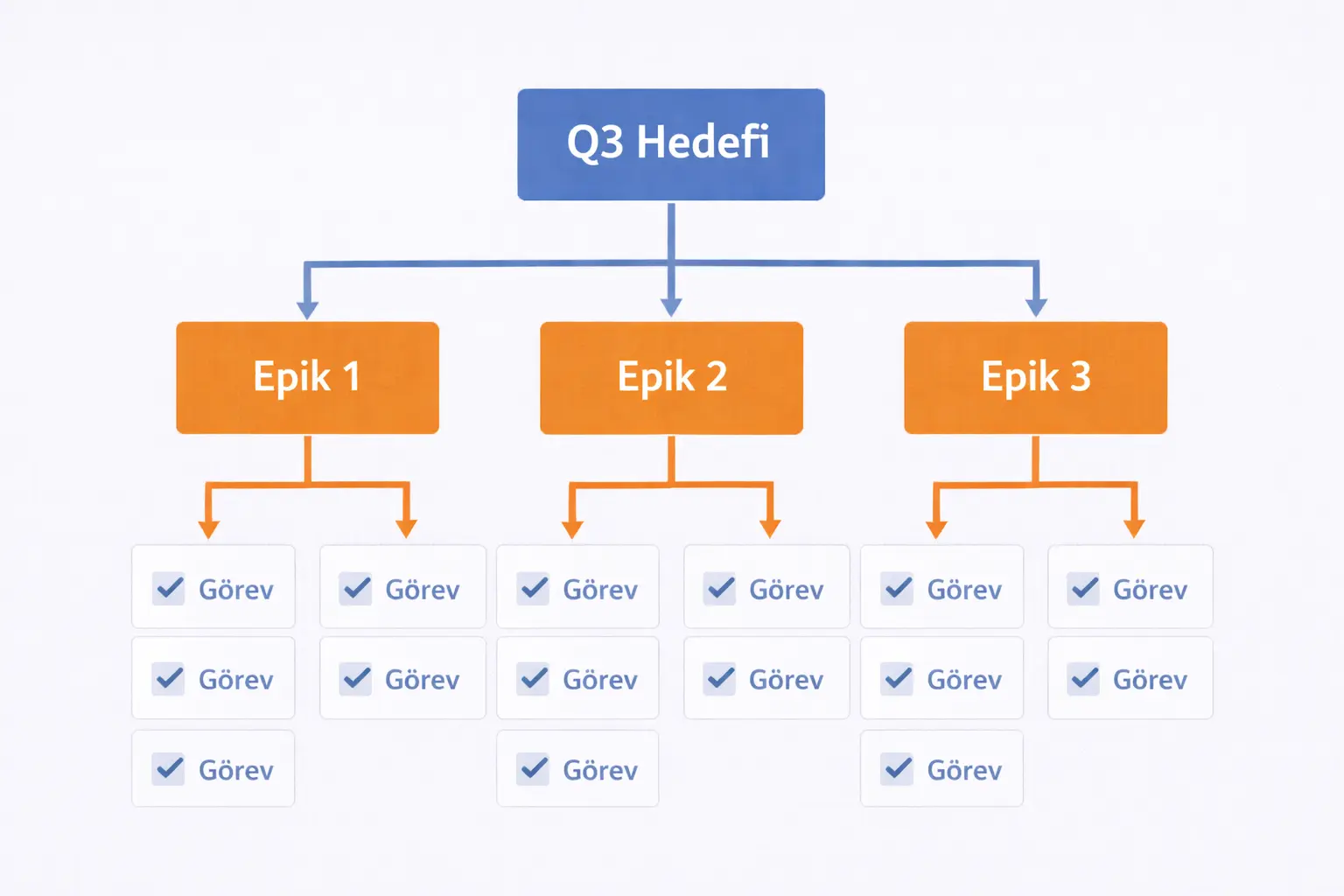
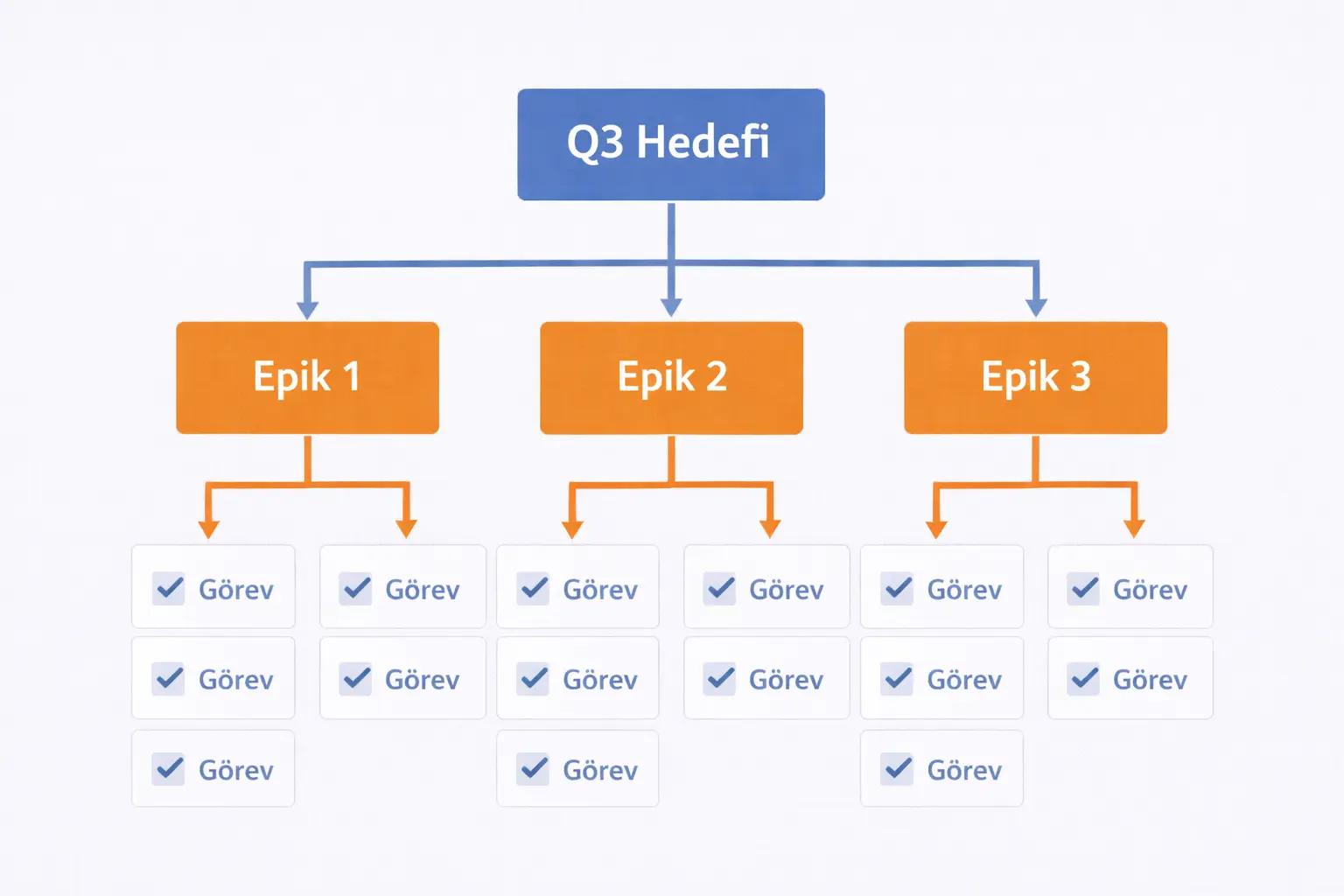
Top-level goal (Roadmap): The strategic priority for the quarter or year. Epic: Groups of related work that break the top-level goal into pieces. Task: Concrete, assignable work items under each epic.
Example Roadmap Tree
📁 Q3 GOAL — Strengthen User Management
Success criteria: Enterprise customer self-serve
onboarding time will go from 3 days to 1 day
Deadline: September 30
│
├── 📁 EPIC 1: Role-Based Access Control (RBAC)
│   ├── [ ] Design RBAC data model — Ali — Aug 5
│   ├── [ ] Middleware implementation — Ali — Aug 12
│   ├── [ ] Frontend permission controls — Mehmet — Aug 19
│   ├── [ ] Admin panel role management — Mehmet — Aug 26
│   └── [ ] RBAC integration testing — Zeynep — Sep 2
│
├── 📁 EPIC 2: Bulk User Management
│   ├── [ ] CSV import feature — Ali — Sep 9
│   ├── [ ] Bulk role assignment — Mehmet — Sep 16
│   └── [ ] Import error handling — Ali — Sep 23
│
├── 📁 EPIC 3: User Onboarding Flow
│   ├── [ ] Invitation email template — Zeynep — Sep 2
│   ├── [ ] First-login wizard — Mehmet — Sep 9
│   └── [ ] Onboarding completion tracking — Ali — Sep 16
│
└── 📋 TOP-LEVEL GOAL NOTE
    Q2 enterprise customer feedback:
    "The admin panel is too complex, adding users is hard"
    This goal is the direct output of that feedback.
Steps for Using the Hierarchy
Step 1 — Open the top-level goal. At the start of the quarter, roadmap goals get opened as top-level nodes in Alios. The success criterion is written numerically — not "strengthen" but "onboarding time will go from 3 days to 1 day."
Step 2 — Break into epics. Each top-level goal gets divided into 2–4 epics. Epics are independently deliverable — one slipping doesn't stop the others.
Step 3 — Distribute the tasks. Concrete tasks are opened under each epic. Sized so one person can finish them in 1–3 days. An owner gets assigned, a deadline gets entered.
Step 4 — Daily visibility. The developer opens their own nodes in the morning. They see which epic and which top-level goal their work connects to. The question "why does this task matter?" has an answer.
Step 5 — Quarter close. The top-level goal node is opened. Which epics were completed, which were partially done, which didn't get done — all visible. The question "what did we do this quarter?" has a ready answer.
Final Thought
When the roadmap epic task connection is built, two things happen: the developer knows why they're working, and the founder can see how much progress has been made.
In Alios, this connection doesn't require a separate tool. When the node hierarchy is set up correctly, strategy and operations meet on the same screen.