Article
Founder Weekly Operations Routine: From Meeting to Action
Meetings end and actions disappear. Learn how to move your founder weekly operations routine from meeting notes to nodes in Alios so nothing gets lost.
Founder Weekly Operations Routine: From Meeting to Action
Monday morning team meeting. An hour of discussion, decisions made, tasks assigned. Everyone said "got it." The meeting ended.
Friday, the same topics come back to the table.

If this cycle feels familiar, the problem isn't the quality of the meeting. It's where the meeting's outputs went.
Most founders leave a weekly meeting with a few actions in their head, maybe a few lines in a notebook, maybe a summary message dropped into Slack. None of these become a tracking system. As the week progresses, actions get forgotten, and by Friday the question "where did that end up?" starts.
Why Meeting Outputs Disappear
There's a systemic problem behind meeting outputs getting lost: there's no bridge between the conversation and the task.
In the meeting, "Ali will handle this" gets said — but the task never gets opened in Ali's system. "Let's get this done by end of week" gets said — but the deadline doesn't get written anywhere. "Let's research this first, then decide" gets said — but the research task never gets assigned to anyone.
Three days later the founder asks Ali "where did that stand?" Ali asks "which thing?" Back to the meeting.
On top of that, meeting notes usually live in a passive document. A page gets opened in Notion, a meeting summary gets written, the page gets closed. Who opens that page again? Nobody.
The problem isn't taking notes. It's turning notes into actions.
The Meeting-to-Node Transition in Alios
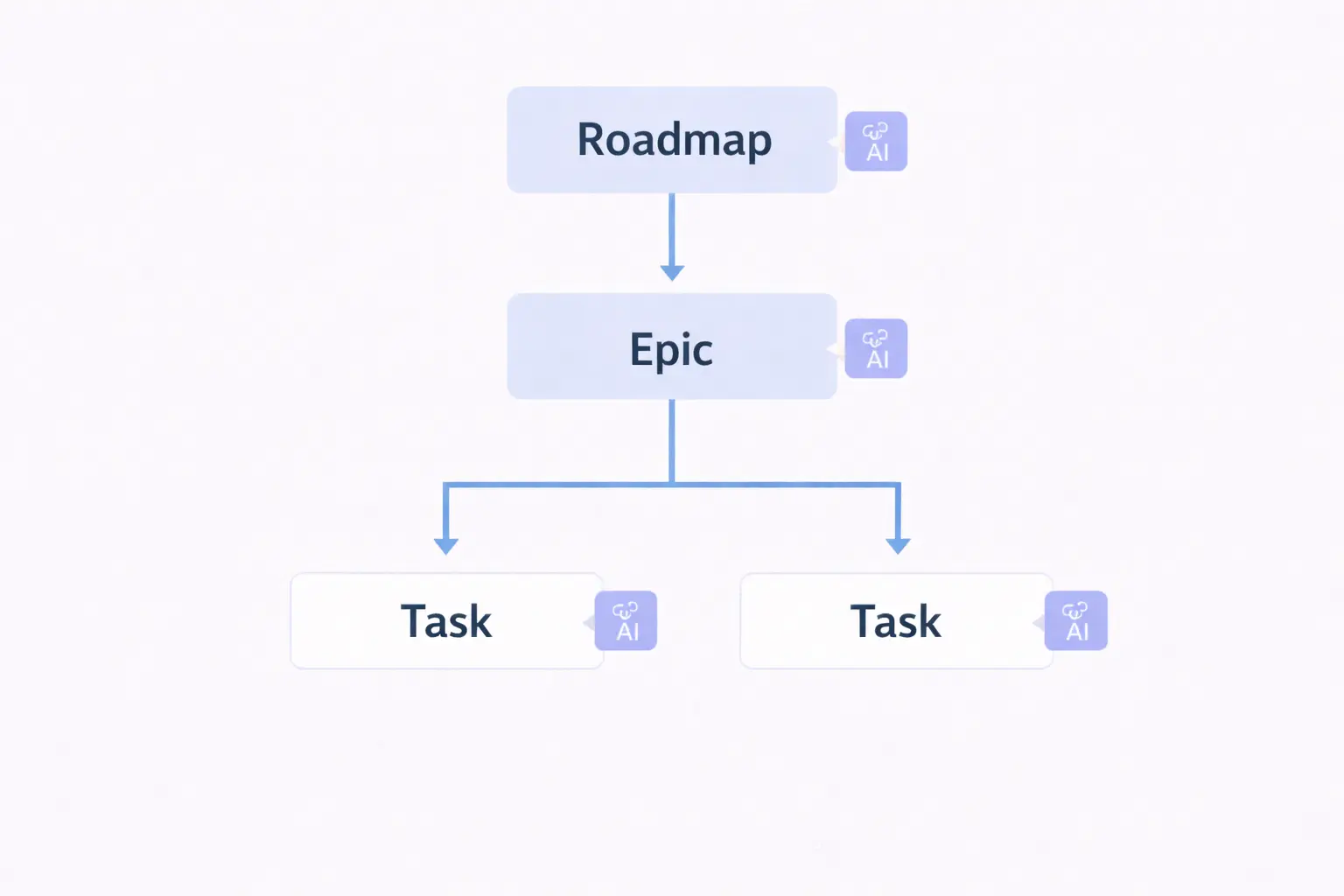
Setting up a weekly operations routine in Alios requires just one habit change: every action from a meeting gets opened as a node before the meeting ends.
This doesn't have to happen during the meeting. It can be done immediately after, within 10 minutes. But doing it that same day is critical — an action left for the next day usually never gets opened.
Each action node is opened with four pieces of information:
📌 ACTION NODE

Title: [What will be done — one sentence, ending with a verb]
Owner: [Person's name — not "the team," one person]
Deadline: [Day and date]
Context: [Why this decision was made in the meeting — 1-2 sentences]
The title matters. "Marketing" isn't a title. "Prepare the social media calendar by Tuesday" is a title.
Context is also critical. The person who opens that node two days later needs to understand why this task was created. "It was discussed in the meeting" isn't enough — what context, why this decision was made, one sentence.
The Weekly Routine: Monday Through Friday
The founder can build the weekly operations routine in Alios with the following structure.
Monday — Meeting and Opening Actions (60 + 15 minutes)
The meeting happens. As soon as it ends — or in the last 10 minutes of the meeting — every action gets opened as a node. Owners are assigned, deadlines are written.
✅ Was every decision from the meeting
   converted to a node?
✅ Does every node have one owner?
✅ Does every node have a deadline?
✅ Are this week's priority nodes marked?
These 15 minutes save the rest of the week.
Tuesday–Thursday — Daily Status Updates (5 minutes/person)
Each team member updates the status of their nodes at the start or end of the day. No meeting, no expectation of a reply.
🔄 If status changed → node is updated
⚠️ If there's a blocker → written in description
✅ If task is done → node is closed
The founder opens Alios in the morning. Which nodes moved forward, which got stuck, which have a deadline approaching — all visible at a glance. Without sending a message.
Friday — Weekly Status Report (15 minutes)
Before the week closes, the founder answers four questions — the answers are already in the nodes:
📋 WEEKLY STATUS REPORT

✅ Completed this week:
[List of closed nodes — 1 sentence explanation]

⏳ Still in progress:
[Still-open nodes — status and brief note]

⚠️ Not completed / Delayed:
[Nodes that couldn't be closed — why, next step]

➡️ Next week's priorities:
[Items to carry into Monday's meeting]
This report can be pasted into Slack or email. Or it can be written into a separate "Weekly Report" node in Alios. Preparing it takes less than 15 minutes because the information is already written in the nodes — no need to gather it again.
When Is an Action Considered "Closed"?
Closing a node matters, but without closing criteria the system gets loose. An action can be closed when it meets these conditions:
There's a deliverable output. The task is complete and has a result — a document, a decision, code, an approval. "I looked at it, I thought about it" doesn't count as closed.
The owner confirmed it. The person who closes the node is its owner. Nobody else can close it.
Context was updated. If something important was learned during the task — a change, an obstacle, a note — it's written in the description.
If there's a next step, it's been opened. Does this task trigger another task? If so, that node is opened now.
Final Thought
Weekly meetings aren't a waste of time. But if their outputs don't make it into the system, they become a waste of time.
In Alios, the founder weekly operations routine can be reduced to three steps: open the actions as nodes when the meeting ends, update statuses during the week, pull the report from the nodes on Friday.
Once this routine settles in, the question "what did we decide in the meeting?" disappears. By Friday, half the report is already written. Monday's meeting shifts from "remembering last week" to "planning this week."