Article
Converting Client Requests to Technical Backlog with Alios
Client requests lost in email mean the backlog never reflects real priorities. Learn how to build a client request to technical backlog flow in Alios.

Converting Client Requests to Technical Backlog with Alios

A client wants something. "Could you move that button?" "Can you add a bulk export feature?" "It would be great if this report was sent automatically." An email comes in, a WhatsApp message arrives, something gets said in a meeting.
The sales or customer success team takes a note. Or doesn't. It gets passed to the technical team. Or doesn't. It goes into the backlog. Or doesn't.
Three months later the same client repeats the same request. "I mentioned this before," they say. They're right.
Client requests getting lost isn't a one-off case of forgetting. When there's no bridge between the request and the backlog, the same thing happens every time.
Why Requests Don't Reach the Backlog
There are four structural problems behind client requests failing to convert into technical backlog items.
The intake point is unclear. Does the request go in an email, into Slack, into a form? Without a standard, everyone writes it somewhere different. Some people don't write it anywhere.
The request has no owner. The client request came in, but who follows up isn't clear. Sales? Product manager? Developer? An ownerless request sleeps in the waiting queue.
The analysis step gets skipped. The client says "I want this" — but what the technical equivalent is, how much effort it takes, which priority it fits into — none of this gets evaluated before it goes straight into the backlog, or never goes in at all.
There's no closing loop. The request went into the backlog — then what happened? Was the client notified? Was "done, it's live" said? When this loop doesn't close, the client is left in the dark.
The Four-Step Request Flow in Alios
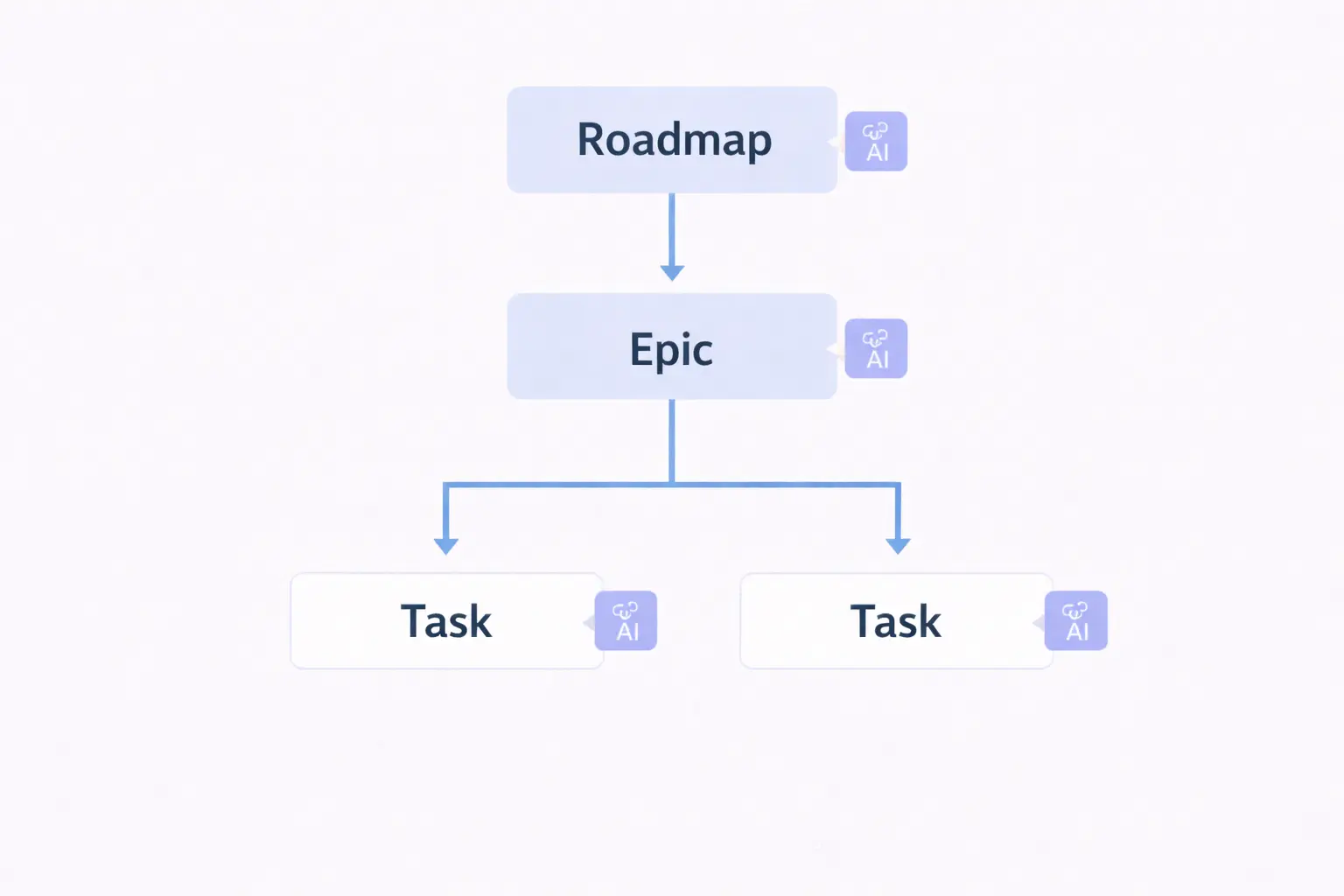
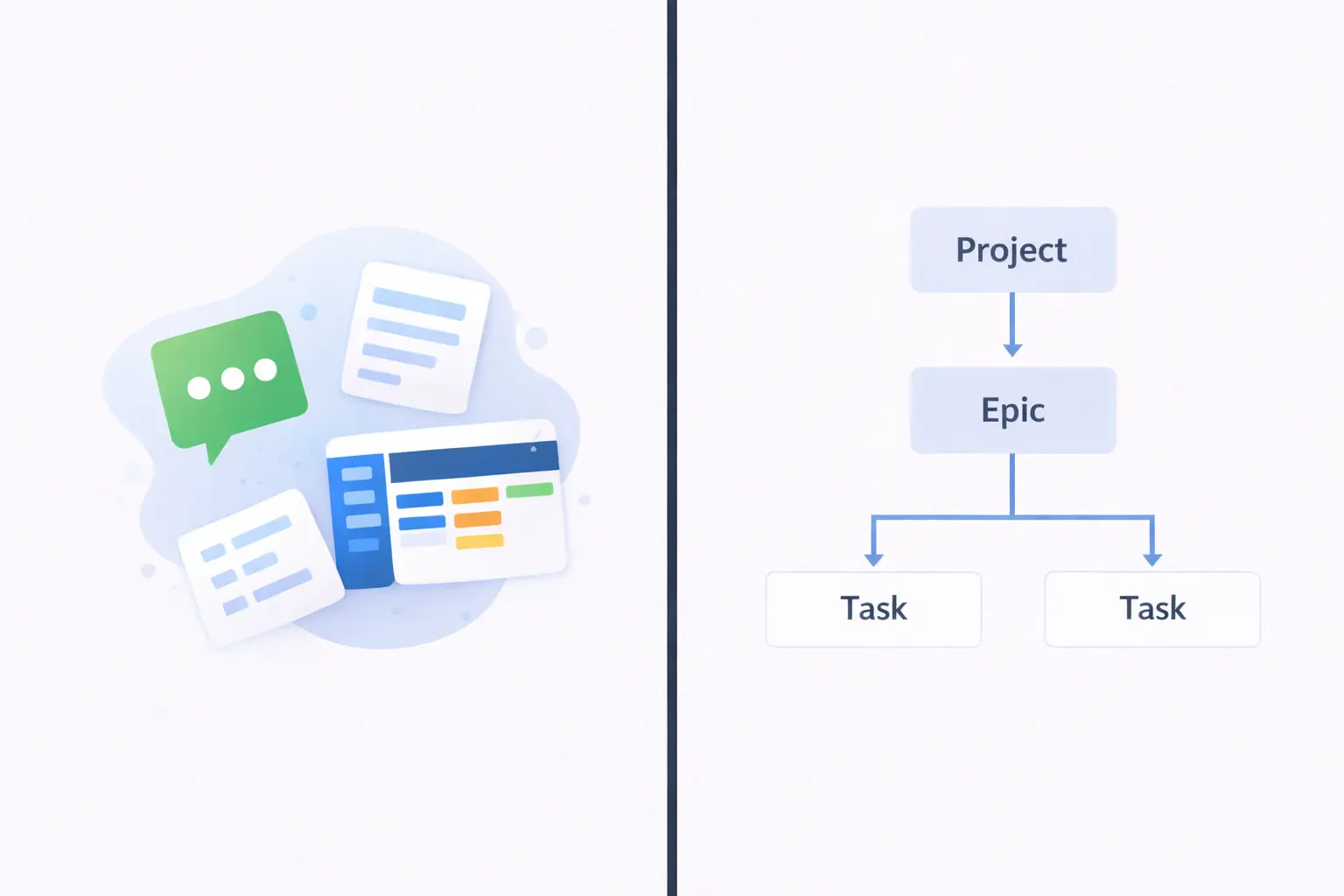
The client request to technical backlog flow in Alios has four steps: request → analysis → development → delivery. Each step is a separate status, a separate owner, a separate output.
Step 1 — Request: Record and Source
Wherever the request comes from — email, meeting, support ticket, sales call — it gets opened as a single node. This node lives in the "raw request" stage.
📌 REQUEST NODE

Title: [Request in one sentence — in the
client's own words]
Status: Request Received
Owner: [Person who received it — sales or
customer success]
Source: [Client name — channel — date]
Raw request: [Client's exact words, copied]
Deadline: [Target date for analysis — 3-5 days
after request date]
No technical evaluation happens at this step. It's just being recorded. Goal: no request gets lost.
When multiple clients want the same thing, no new node is opened — a new source is added to the existing node's description:
Source 1: Client A — Demo meeting — March 3
Source 2: Client B — Support ticket — March 7
Source 3: Client C — Email — March 12
Total: 3 clients / 2 different segments
Step 1 output: Every request is on record, its source is clear, it has an owner.
Step 2 — Analysis: Technical Evaluation
The request node moves from "Request Received" to "Under Analysis." The owner changes: now it's the product manager or lead developer.
📌 ANALYSIS NOTE [added to Step 1 node]

Status: Under Analysis
Owner: [Product manager or lead developer]
Deadline: [Analysis completion date]

What is the technical equivalent?
[What this request means technically — 2-3 sentences]

Effort estimate:
[Small / Medium / Large — or day/sprint estimate]

Dependencies:
[Dependent on anything else? What needs to finish first?]

Priority assessment:
[Does it fit the roadmap? How many clients asked? Strategic value?]

Decision:
[ ] Added to backlog — priority: [Critical / High / Medium / Low]
[ ] Rejected — reason: [Why]
[ ] More info needed — questions: [What to learn]
The request doesn't go into the backlog until this analysis form is filled. This step is the bridge between "what was requested" and "what will be built."
Step 2 output: Request was technically evaluated, decision made, priority set.
Step 3 — Development: From Backlog to Delivery
If the analysis was approved, the request goes into the backlog. At this point a new node is opened, or the existing node moves to "In Development" status.
📌 DEVELOPMENT NODE

Status: In Development
Owner: [Developer name]
Deadline: [Sprint or delivery date]
Linked request: [Name of Step 1 node]

Technical approach:
[How it will be implemented — brief technical note]

Acceptance criteria:
[ ] [Criterion 1 — testable]
[ ] [Criterion 2 — testable]
[ ] [Criterion 3 — testable]

PR / Branch: [Link]
Test notes: [QA output]
Acceptance criteria are critical. Saying "done" isn't enough — the question is whether the client's request was fulfilled, and it needs to be verified against testable criteria.
Step 3 output: Development complete, acceptance criteria met, ready to deploy.
Step 4 — Delivery: Close the Loop
This is the most commonly skipped step. Development finished, deployed to production, but the client wasn't notified. The client still doesn't know what happened to their request.
📌 DELIVERY NOTE [added before node closes]

Status: Done
Owner: [Customer success or sales]
Delivery date: [Production deployment date]

Client notification:
[ ] All requesting clients notified
[ ] Release note or changelog updated
[ ] Client feedback collected — note: [Their reaction]

Node closed: [Date]
This step isn't just good client relations. It's also data: the client's reaction gets used when prioritizing similar requests in the future.
Step 4 output: Client notified, loop closed, feedback recorded.
The Complete Flow: At a Glance
CLIENT REQUEST
      ↓
📥 REQUEST RECEIVED
   Owner: Sales / Customer Success
   Output: On record, source clear
      ↓
🔍 UNDER ANALYSIS
   Owner: Product Manager / Lead Dev
   Output: Technical evaluation, priority decision
      ↓
🔄 IN DEVELOPMENT
   Owner: Developer
   Output: Acceptance criteria met, deployed
      ↓
✅ DONE
   Owner: Customer Success
   Output: Client notified, loop closed
Different owner at each step. No step is ownerless. Every step has a clear output.
For Rejected Requests
A rejected request also gets closed but not deleted. Why it was rejected is written in the node description. The client gets a brief note — "we received this request, we can't add it to the roadmap right now for this reason."
This message looks hard to send but it builds trust. Far better than the feeling of "I said it, nothing happened."
Rejected nodes get reviewed every three months. If conditions changed — more clients asked, technical cost dropped, strategic priority shifted — it can be re-evaluated.
Final Thought
Building a client request to technical backlog flow doesn't require a major operational change. What's needed: every request has an intake point, the analysis step doesn't get skipped, the loop closes at delivery.
In Alios, these four steps work together with node structure, statuses, and owners. Requests don't get lost in email, don't enter the backlog without analysis, don't get closed without being delivered.
The client doesn't say "I mentioned this before." Because what they said is visible in the system and they're getting a response.