Article
Client Communication for Agencies: Actionable Systems with Alios
Transform messy client chats into disciplined tasks. Learn to use Alios nodes to prevent context loss manage scope creep, and build a Single Source of Truth for your team
Client Communication for Agencies: How to Build a System Where No Action is Lost
The success of a digital agency is measured not only by the quality of the creative work it produces but also by the communication discipline during the production process. In the agency world, "communication" is often not a project management tool but a source of chaos. Client demands flow to the team through WhatsApp messages at all hours of the day, endless email chains, instant notifications in Slack channels, and impromptu phone calls. These communication channels, which seem "fast and practical" at first, turn into a massive information black hole as projects become more complex and the number of clients increases.
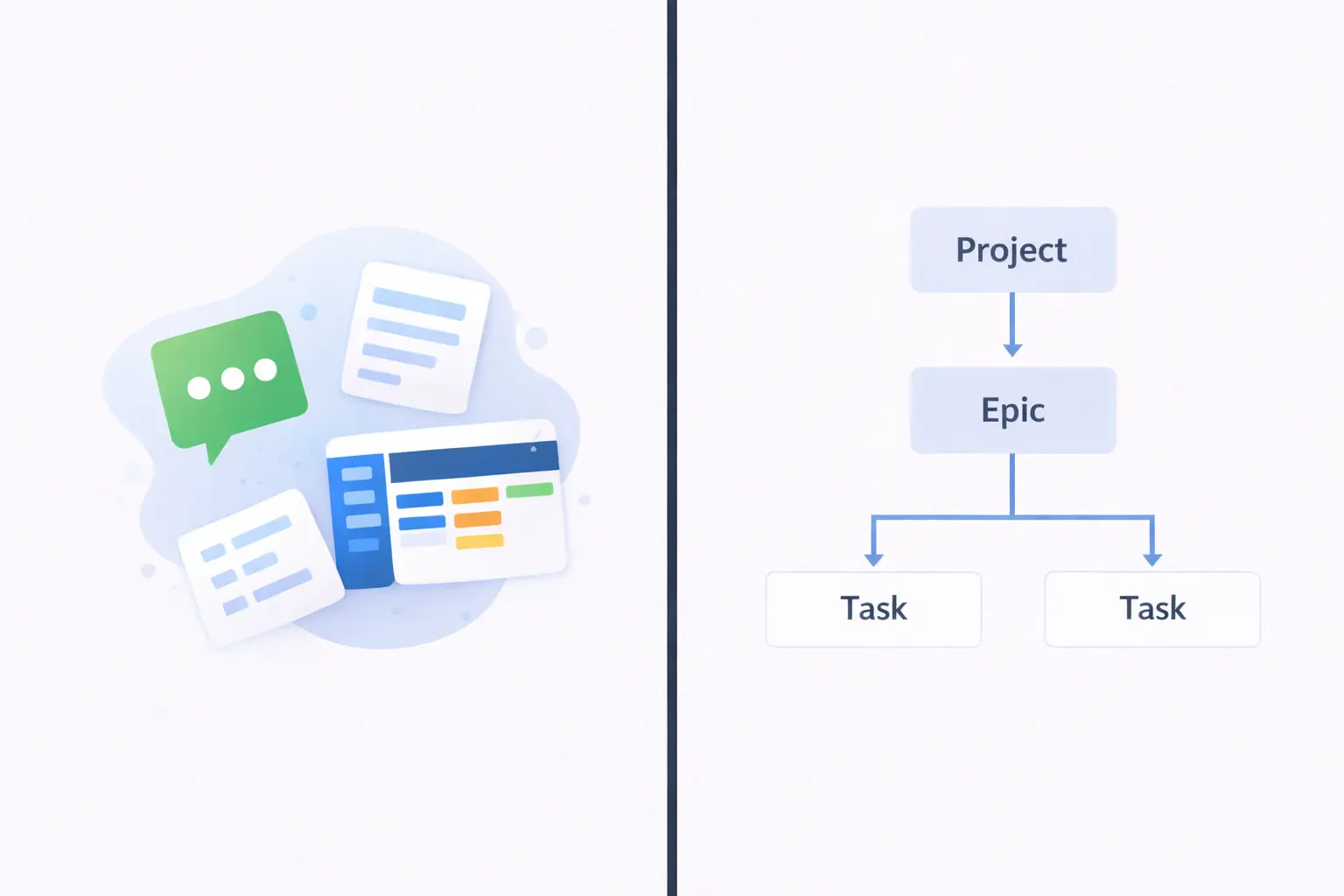
Teams often face these draining questions: "Was that revision the client asked for last week done?", "Who was supposed to approve this request?", "Which email attachment had the latest version of that file?" Even asking these questions is a loss of productivity. The fundamental problem is that client communication remains at the "conversation" level and never translates into a "work system" (operational action). In this guide, we will examine how to transform client messages into disciplined tasks using node-based systems like Alios and how to build an agency ecosystem where no action is lost.
1. Requests Lost in Chat: The Secret Enemy of Agency Profitability
Client requests remaining only in chat windows is not just a "clutter" problem for the agency; it is a direct financial loss. The structural damages of chat-oriented communication to agency operations include:
A. Context Loss
When a client sends an image via WhatsApp and says "Let's fix this," it is clear at that moment which project, task, or campaign period the message belongs to. However, for a designer seeing that message 3 days later, the "context" is lost. The time spent searching for information is a nightmare that drains agency profitability.
B. Diffusion of Responsibility
General requests thrown into group chats ("Guys, let's handle this") are usually not owned by anyone. Everyone assumes someone else will do the job. Every second a job is not assigned as a "node" (task), the probability of it being forgotten increases.
C. Erosion of Client Experience
When a client submits a request, they want to know it has been recorded and processed by the agency. The sentence "Sorry, we missed that message" is the heaviest blow to the agency's professional image. A lack of system creates distrust in the client.
D. Scope Creep
"Small favors" coming through chat are usually not billed or included in the project scope. When these "invisible jobs" accumulate, the agency team overworks while the agency's profitability stands still.
2. Transforming Communication into Operations: The Alios Node Logic
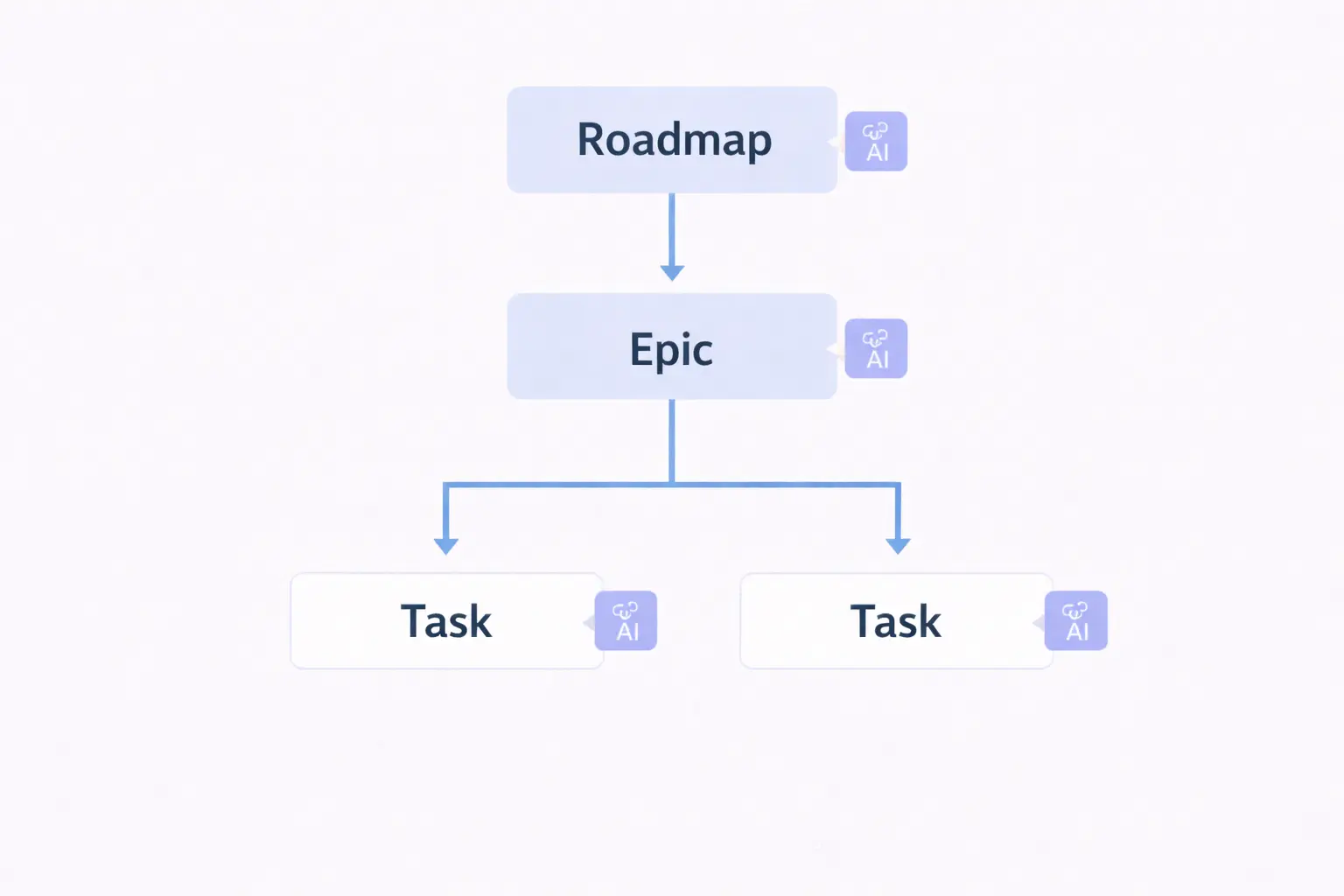
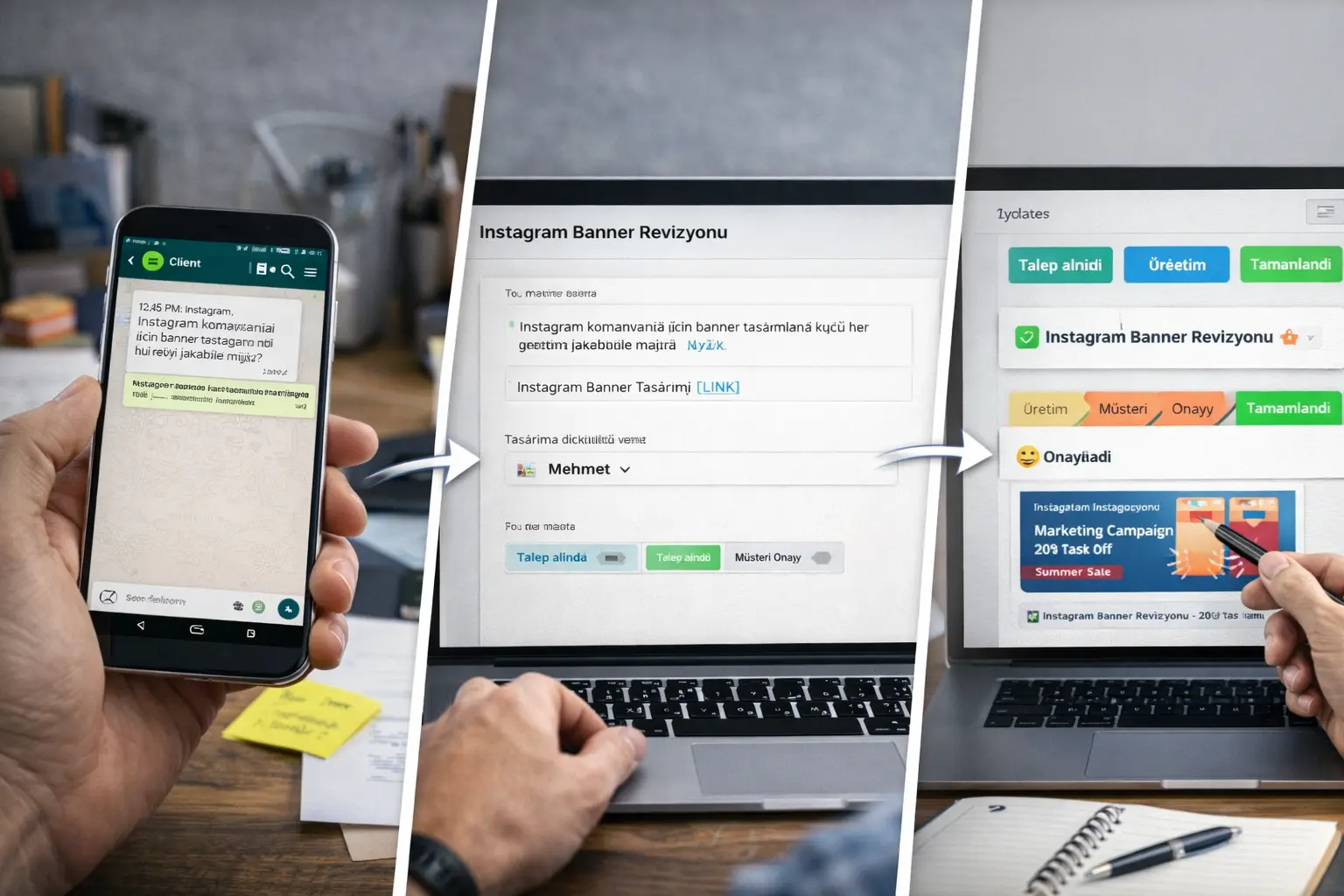
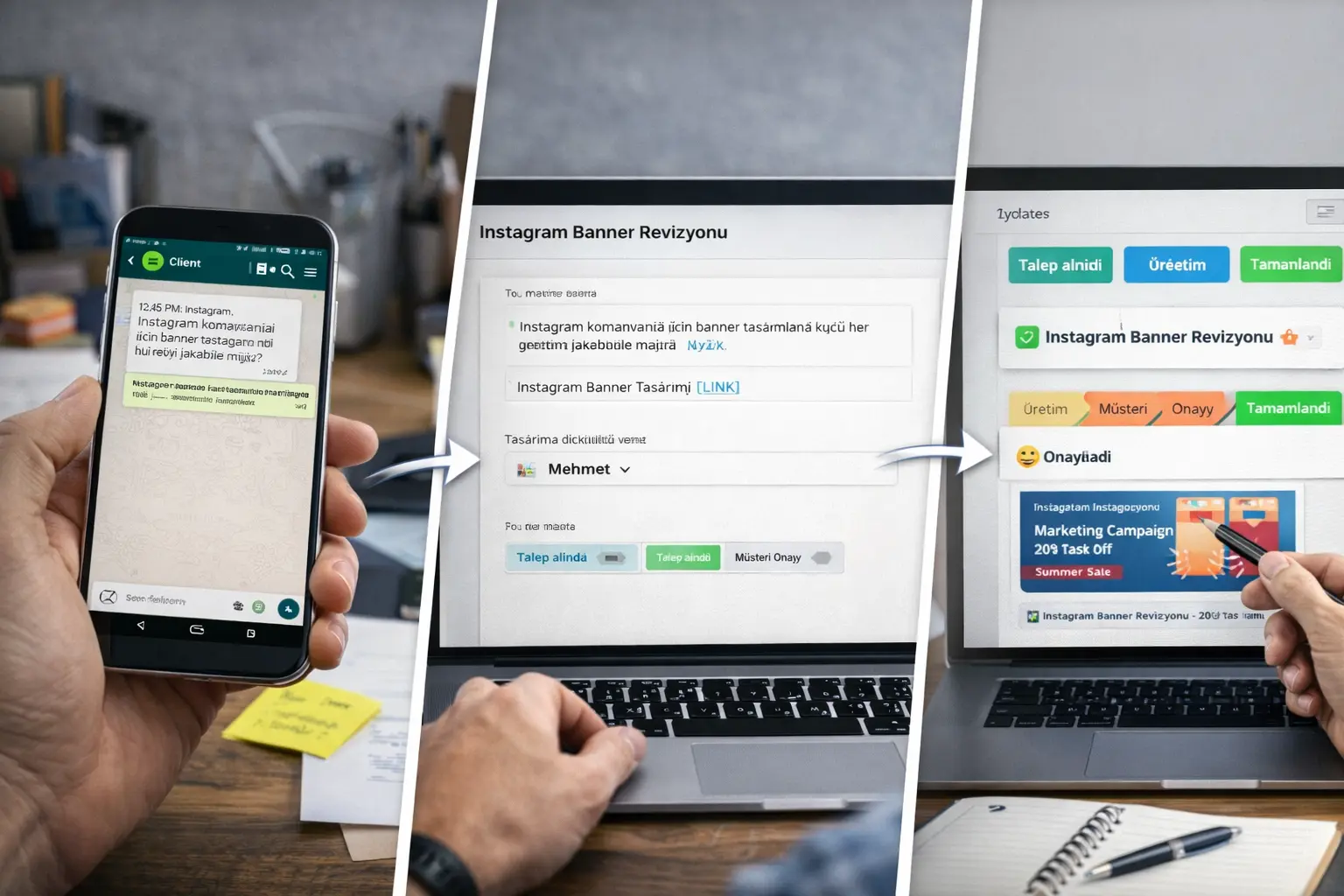
Alios takes client communication out of being a "chat" and turns it into a "data structure." The key concept here is the Node. Every client request is born into the system as a node. This transformation process consists of the following steps:
Step 1: Filtering and Capturing the Message: Every piece of data from the client (text, voice recording, image) is filtered by a project manager or client representative. Is this message "information" or an "action"? If it’s an action, a node is created on Alios within seconds.
Step 2: Taskification: The created node is not just a title. It contains:
Source: The channel the request came from and a copy of the original message.
Goal: What should this look like when finished?
Constraints: Deadline and budget/scope information.
Step 3: Assignment and Ownership: A node cannot remain "ownerless" in the system. It is assigned to a team member. Once this assignment is made, the job escapes the volatility of the chat and officially enters a person’s To-Do list.
3. What Should a Perfect Client Request Node Look Like?
Opening a task is not enough; the content of that task must be "self-contained." A good Alios node structure consists of these components:
A. Clear and Descriptive Title
Titles like "Revision" or "Urgent" are mistakes. A correct title: [Client Name] - [Campaign Name] - Instagram Carousel Design Revision. This way, when a search is performed or the panel is viewed, the nature of the job is immediately understood.
B. Briefing Area (The Description)
The client message is usually scattered. The project manager should add this message to the node description in the following format:
Request: What does the client want?
Reasoning: Why do they want it? (To provide vision to the designer).
References: File links or Figma connections if any.
C. Status Workflow
The task takes on different colors and statuses throughout its lifecycle:
BACKLOG: Not yet planned.
TODO: In this week's plan.
IN PROGRESS: Being worked on.
WAITING (Client Approval): Work is done, waiting for a response from the client.
DONE: Completed.
4. Status Tracking: Why Transparency Matters
The biggest benefit of the "Action System" established with the client is that it takes the agency's internal functioning out of being a "black box."
Early Diagnosis of Bottlenecks: If 50 nodes have accumulated in the "Waiting for Client" status, the problem is not in the production team but in client management. This visual transparency in Alios immediately shows the point that needs intervention.
Team Capacity Management: Seeing how many active nodes are on whom determines who will be assigned new incoming requests. This prevents the team from experiencing burnout and protects delivery quality.
Data-Driven Reporting: When a client asks, "Why is work moving slowly?", you present Alios reports instead of chat history: "You submitted 45 requests last month, we completed 42, and 3 are waiting for your approval." This approach moves communication from emotionality to professionalism.
5. The Rule of "Single Source of Truth"
The agency's greatest enemy is the fragmentation of information. To solve this, you must make this rule the constitution within the agency: "A job that is not in Alios does not exist."
If a client has requested a revision on WhatsApp and it has not turned into a node in Alios, the designer is not responsible for doing that job. This rule may seem harsh at first, but it ensures that the entire team and the client work more peacefully within a week. Because everyone knows that all "reality" is in the Alios panel.
6. FAQ: Common Communication Hurdles
Q: Should we include the client inside Alios? A: This depends on the agency's preference. However, the healthiest model is to offer restricted access where the client can only see the jobs waiting for their own approval (nodes in Waiting status). This reduces email traffic by 80%.
Q: Should we open a node for very small requests (5-minute jobs)? A: Yes. Ten 5-minute jobs are a 50-minute loss of work time. If these jobs are not recorded, at the end of the day, a feeling of "I did nothing today but I'm exhausted" arises. Moreover, these small jobs are the main source of scope creep.
Q: Should we close chat channels completely? A: No, chat is necessary for fast communication and relationship management. But chat should be a place for "decision making" and "information sharing," not "job storage." Once a decision is made, it must be noted under the relevant node in Alios.
7. Conclusion: Systematic Communication, Happy Team, Profitable Agency
Leaving client messages to the volatility of chat applications is not managing an agency; it is being tossed around by the wind. A successful agency operation is a closed-circuit system where every message is tied to an action, every action to a responsible person, and every responsible person to a result.
The node structure established with Alios provides your agency not just with order, but with "corporate intelligence." In an environment where no revision is forgotten, no file is lost, and every request is tracked transparently, the team focuses only on creativity. Remember; a good system is more valuable than the most talented employee. Say goodbye to communication chaos in your agency today; turn every client request into a node and enjoy professional growth.