Article
Async Work for Agencies: Ending Messaging Chaos with Alios Nodes
Stop the Slack noise. Learn how to implement an asynchronous work model using Alios to boost deep focus, document every decision, and build a Single Source of Truth.
Async Work: Saving Agencies from Messaging Chaos with Alios
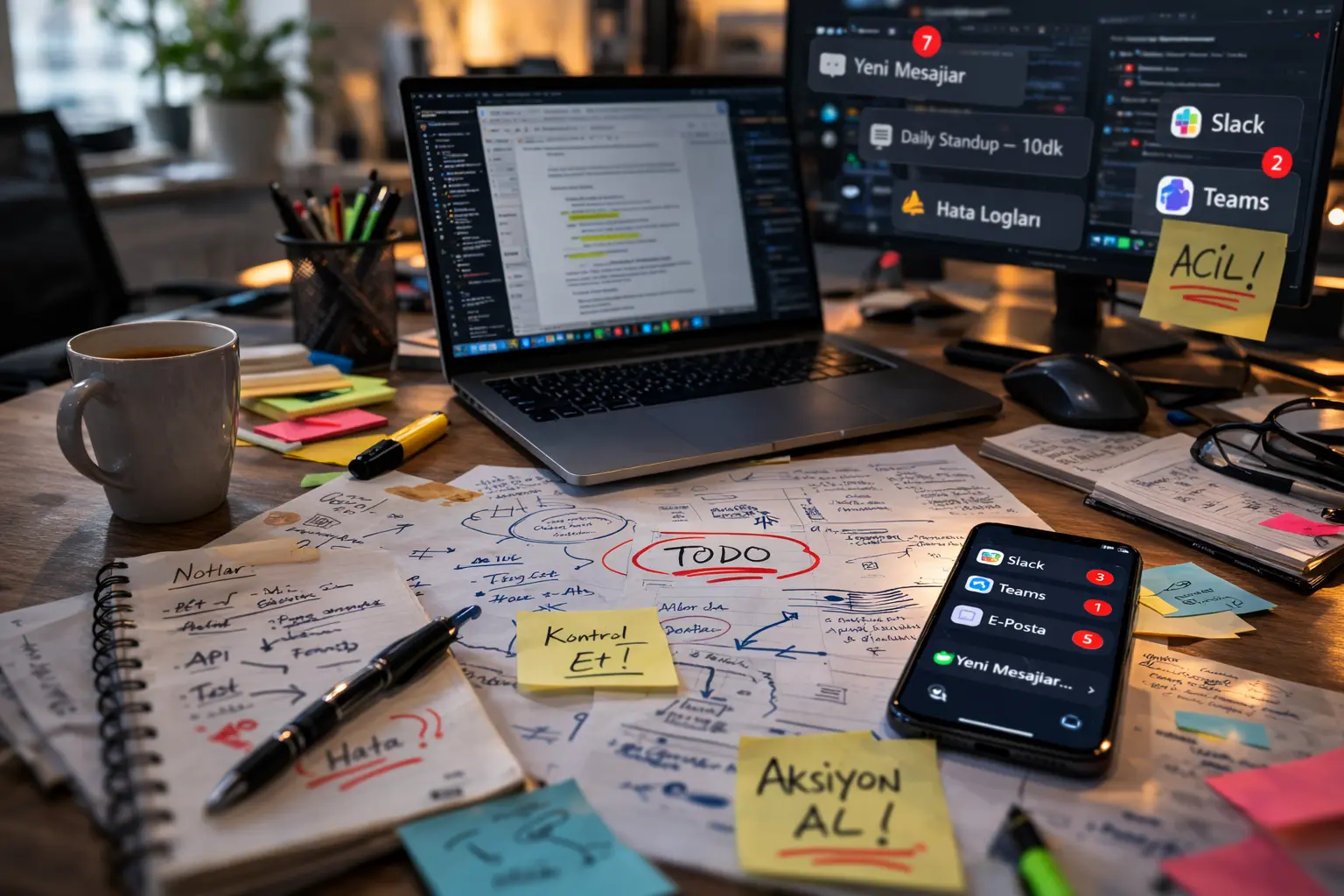
In the modern agency world, as remote and distributed team models become the standard, the biggest obstacle to operational efficiency has become the illusion of "constant communication." In the traditional agency model, everyone is expected to be online at the same time, giving instant replies on channels like Slack or WhatsApp. However, this has ceased to be a factor that increases productivity and has turned into a chaos that interrupts creative focus and creates information pollution.
In this guide, we will detail why the Asynchronous (Async) Work model is a necessity rather than a preference, the hidden damages of messaging traffic to agency profitability, and how to establish a "Single Source of Truth" approach with systems like Alios.
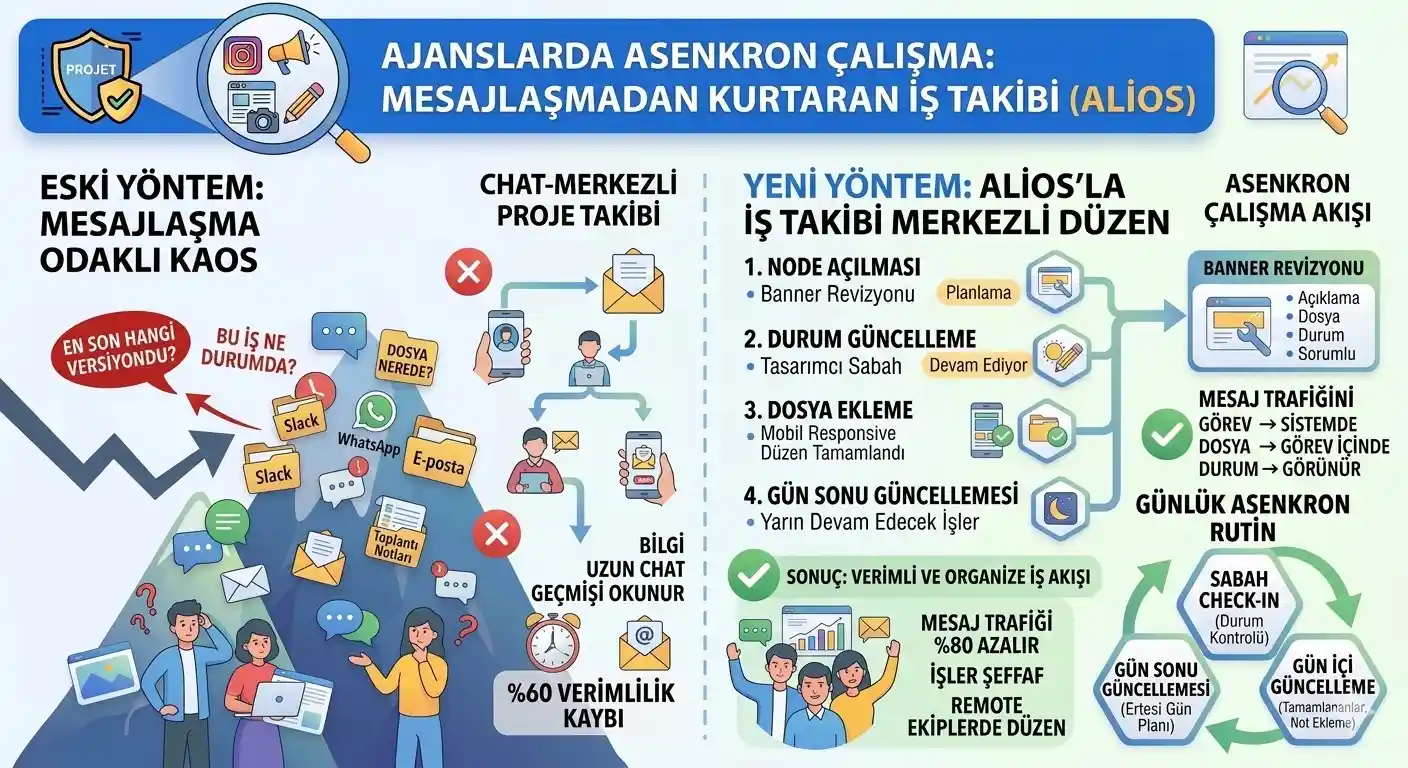
1. What is Async Work? A New Standard for Modern Agencies
The asynchronous work model is a way of working that does not require team members to be online at the same time or provide instant responses. In this model, communication is built not on "instant reaction," but on "information transfer and documentation." Team members work during their most productive hours, and the workflow continues based on the status of tasks in the system, not on the immediate presence of individuals.
Key Components of the Async Model
Time Independence: A designer finishes their work at 09:00 and uploads it. The PM checks it at 14:00. The developer starts coding at 20:00. No one asks, "Is it done yet?"
Deep Work: Instead of being interrupted by notifications every 5 minutes, team members can work uninterrupted for hours.
Documentation Culture: Based on the principle that "spoken words fly away, written ones remain," all decisions are recorded within the system.
2. Why Messaging Creates Operational Issues
Many agency managers mistake constant chatter on Slack or WhatsApp for "active working." However, heavy message traffic is actually a symptom of a systemic deficiency or a broken process.
Hidden Problems Created by Chat Apps
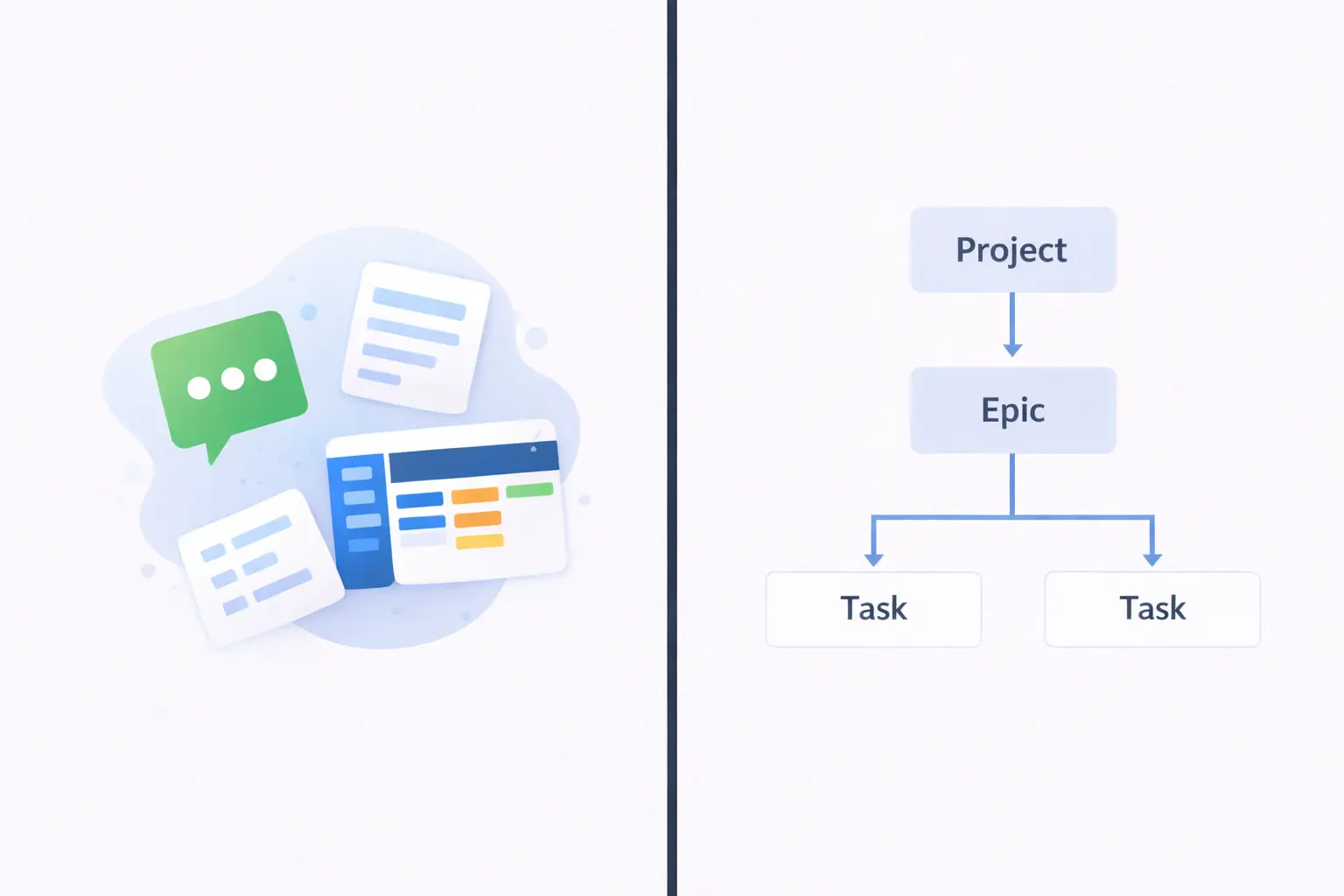
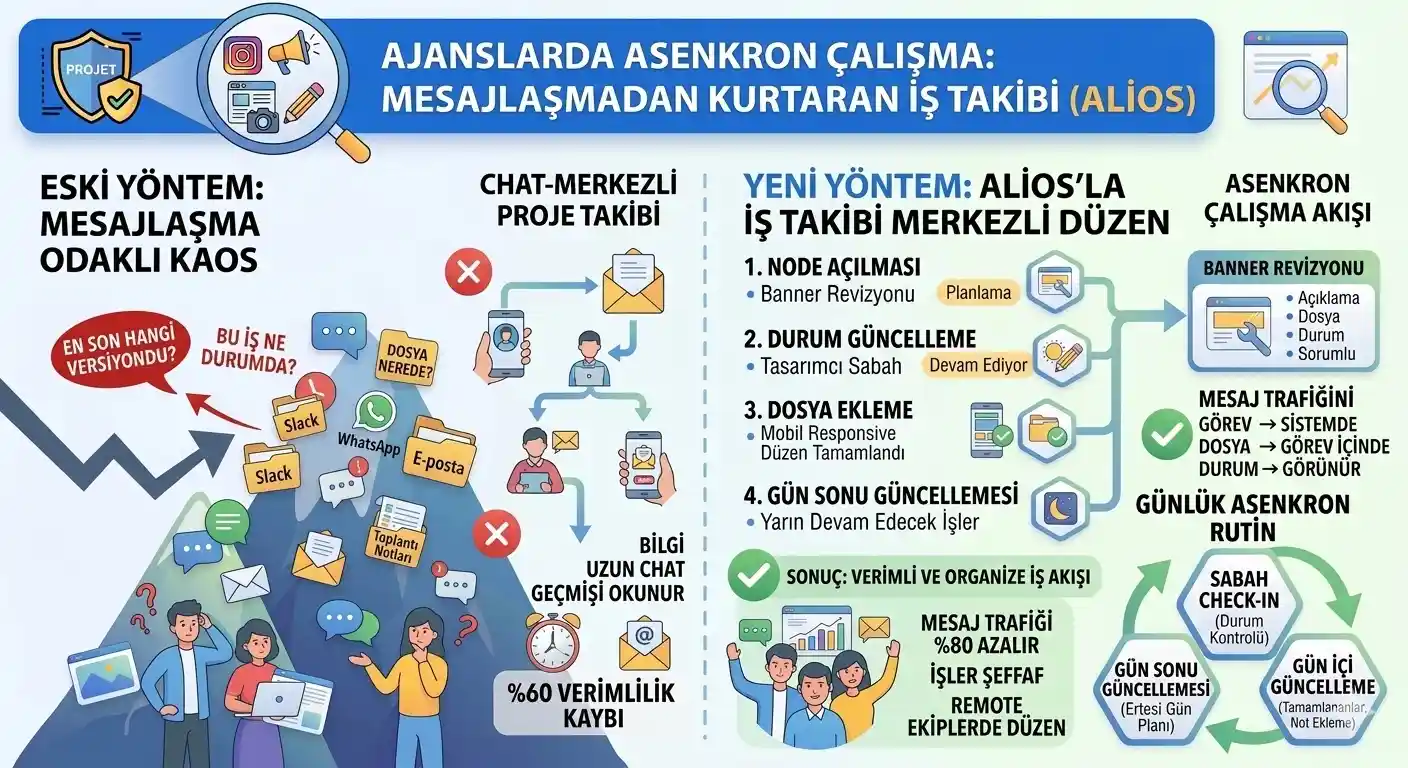
Information Fragmentation: A revision note stays in WhatsApp, a file link in Slack, and a meeting decision in email. A team member must check four channels before starting work.
Dependency Loops: One must constantly ask questions to understand a task. "Which was the latest banner version?" steals time from someone else because the answer isn't in the system.
Loss of Decision History: Critical reasons behind a design choice or a rejected client request get lost in a history of thousands of messages.
3. Positioning Alios as the Single Source of Truth
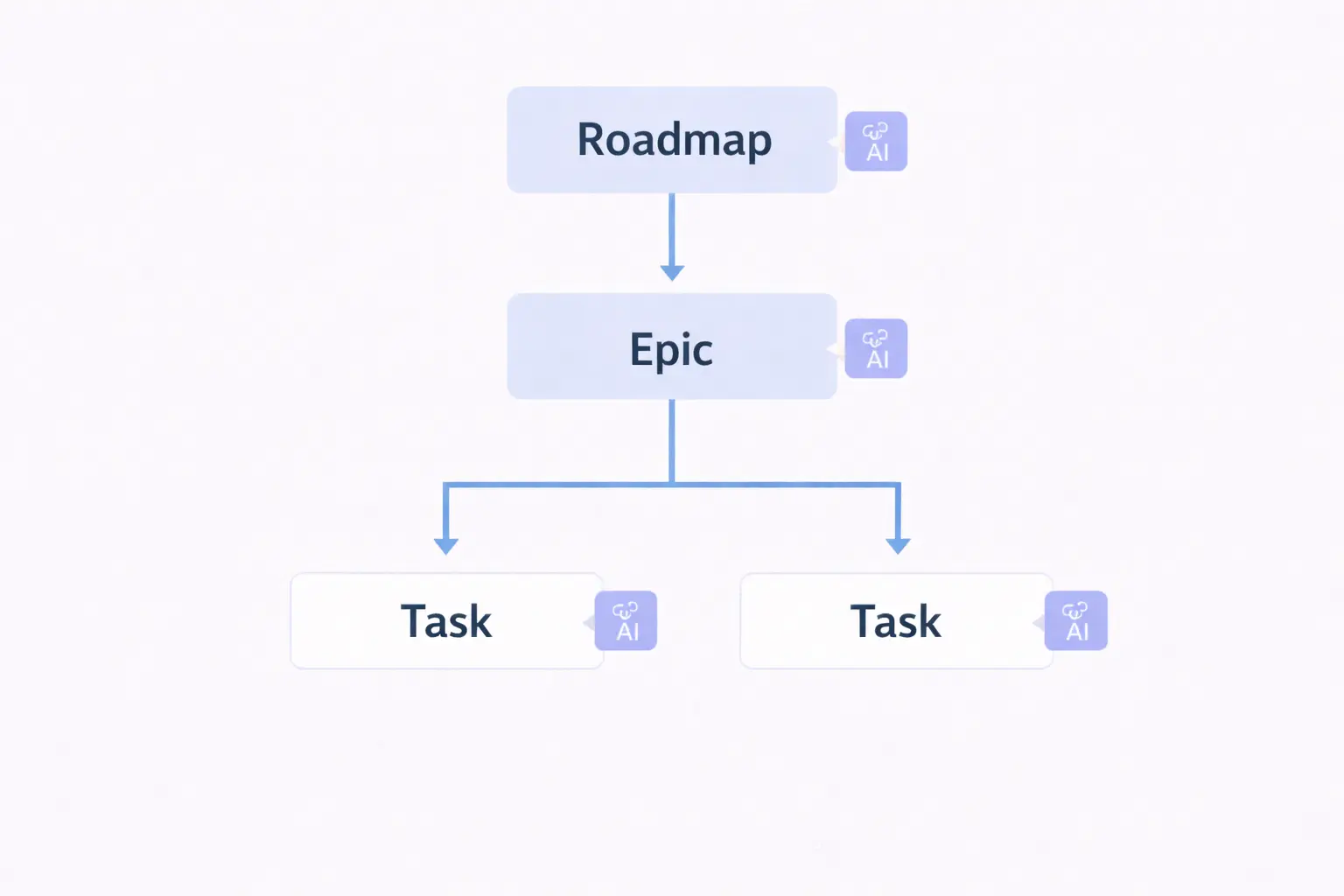
For async work to succeed, the system must be "smarter than the person." The greatest value Alios offers is gathering all processes in a central point within a "Node" structure.
Transformation of Communication with Nodes
In Alios, every job is a living document containing descriptions, reference files, revision history, and real-time status.
The Old Way: "Hey, did you finish the logo? Where did you put it?"
The Async Way (Alios): When the designer finishes, they set the node status to "Done" and upload the file to the node. The manager gets a notification, enters the system, and finds the file. Not a single message is needed.
4. Daily Check-ins and Update Flows for Async Teams
To ensure trust and progress in an environment where teams don't see each other, specific routines should be established on Alios:
Morning Check-in (Visibility): Team members look at their task list and update their active work to "In Progress." This tells the team: "I am focused on this now; you know what I'm doing if you need me."
In-Task Micro-Updates: "Done" isn't enough in async work. Brief notes should be left in the node: "Responsive layouts finished, color palette updated." This allows a manager to understand the process in seconds when they log in hours later.
End of Day Planning: Completed tasks are marked, and reminders are left for tasks carrying over to the next day. The teammate starting the next shift can take over without asking a single question.
5. FAQ: Managing Async Expectations
Q: Does async work slow down the agency? A: No, it speeds it up. While "instant messaging" feels fast, the "interruption cost" slows down the actual production. Async work prioritizes high-quality output over high-speed chatting.
Q: How do we handle emergencies? A: Define what a "true emergency" is. If a server is down, use a phone call. If a client wants a font change, it belongs in an Alios node. 99% of agency tasks are not emergencies.
6. Conclusion: From Messaging to System-Centricity
The asynchronous work model is not a "non-communication" model; rather, it is a model for making communication high-quality and permanent. Teams freed from the noise of chat applications produce better work, and operational stress decreases.
By using Alios's task hierarchy, node structure, and transparent status tracking, agencies can:
Prevent information loss,
Increase deep focus time for teams,
Set a corporate standard for remote work efficiency.
Building your agency operations on a traceable and scalable system instead of the chaos of chat windows is the surest way to gain a competitive advantage in the digital age.