Article
AI Coding is Easy, Architecture is Hard: Manage it with Alios
AI has accelerated coding, but project architecture and coordination have become more complex. Learn how to use Alios to manage work trees, ownership, and status.
AI Makes Coding Easy: The Real Challenge is Project Architecture and Task Tracking (Alios)
The software development landscape is currently undergoing its most significant shift since the invention of high-level programming languages. Generative AI tools—ranging from GitHub Copilot and Cursor to specialized LLMs—have turned the act of writing code into a high-speed commodity. What used to take a senior developer hours of deep focus can now be generated in seconds with a well-crafted prompt.
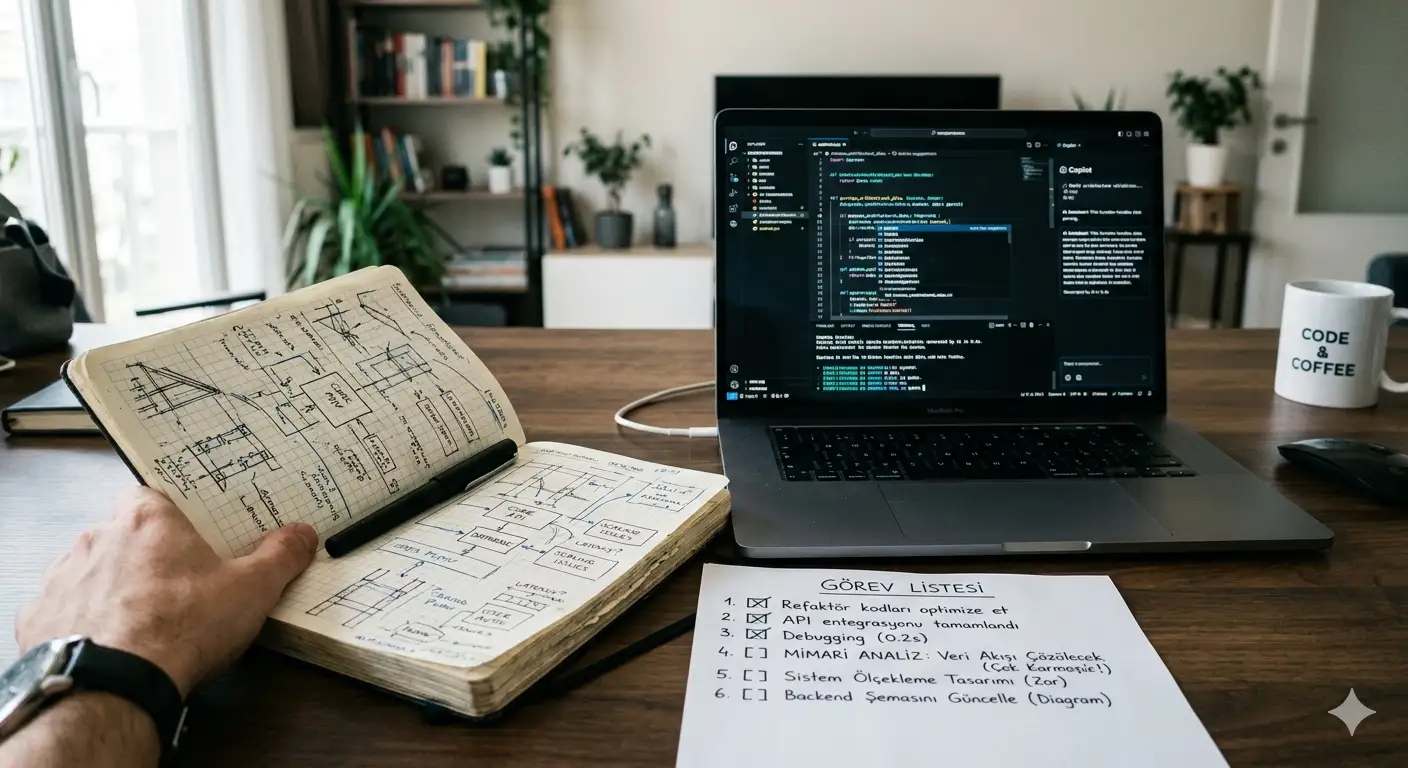
However, this explosion in productivity has birthed a new, more complex crisis. As the friction of "writing" code disappears, the friction of managing that code skyrockets. Today, the primary bottleneck in software projects is no longer the syntax; it is the architecture, the scope, and the coordination of thousands of AI-generated components.
In this era of hyper-speed development, Alios emerges not just as a project management tool, but as the "Digital Spine" that anchors architectural decisions, work hierarchies, ownership, and real-time status into a single source of truth.
1. The Devaluation of Syntax and the Rise of Architectural Decisions
AI has effectively turned coding from a "craft" into a "service." Today, even a junior developer can produce thousands of lines of syntactically correct code using AI. But speed without direction is a recipe for technical debt.
What is an Architectural Decision?
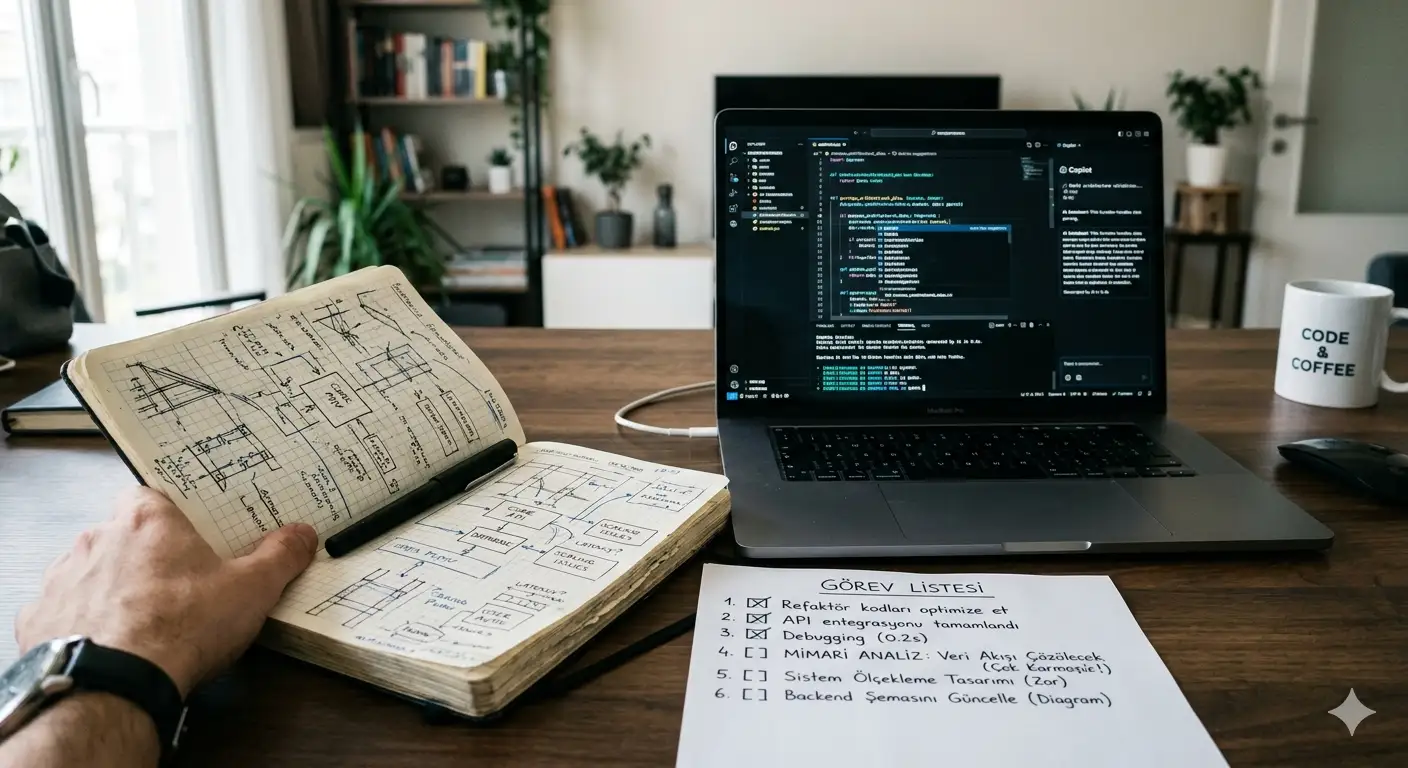
Architectural decisions are not about how to write a function, but about how the system lives. Which database is the best fit for scaling? How will microservices communicate? Where does the security layer sit? While AI can write a function for you, it cannot inherently understand the long-term implications of that function on system performance or scalability.
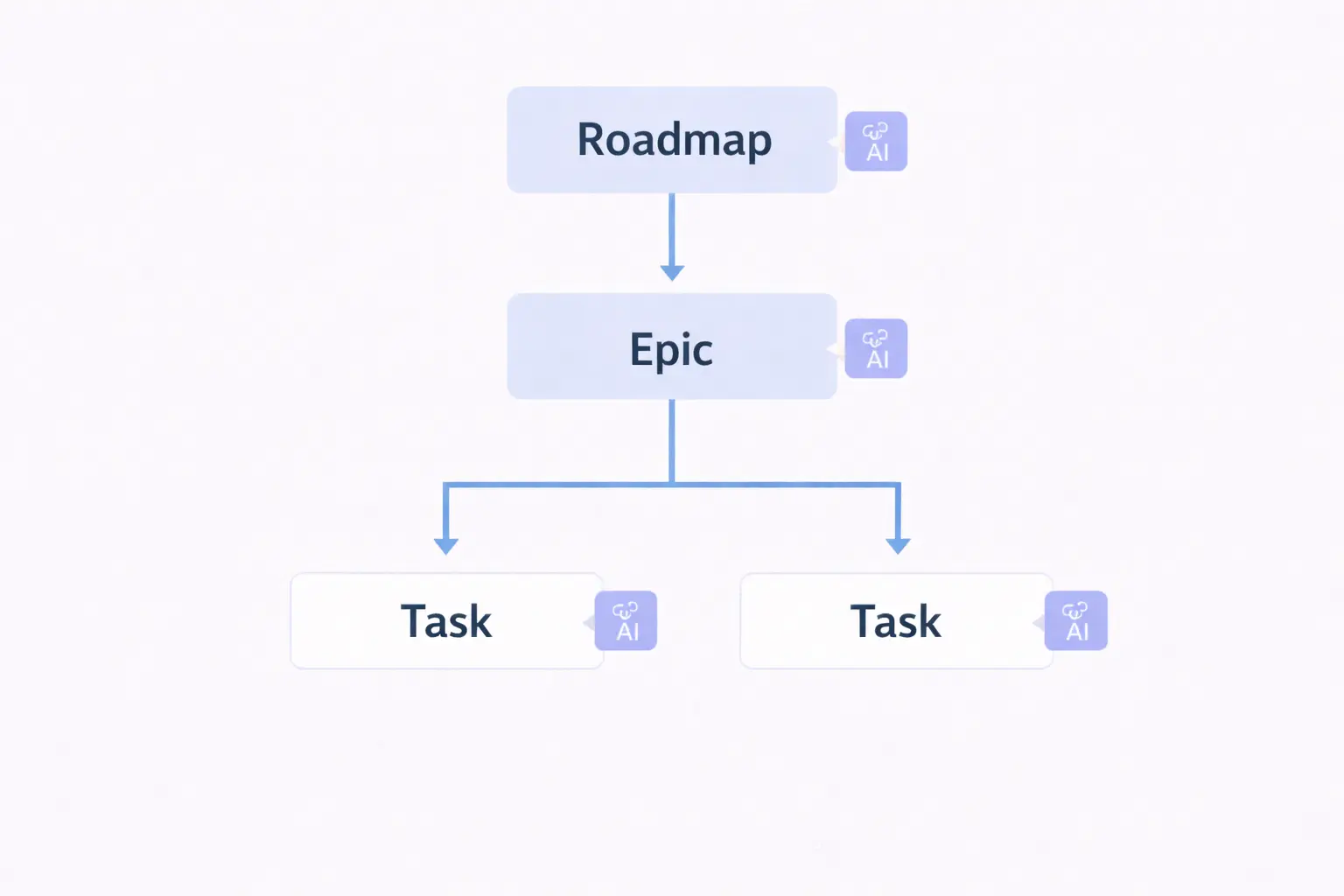
Alios prevents these critical decisions from vanishing into Slack threads or forgotten meeting notes. In Alios, every technical roadmap is defined as an Architectural Node. Even if the code is written by AI, it must adhere to the "constitution" stored within the Alios node structure.
2. Scope Creep in the Age of Instant Code
When coding was slow, scope was naturally limited by human capacity. Now that AI has removed that barrier, project backlogs are exploding. SMEs often fall victim to "Feature Creep"—the tendency to add endless functionalities simply because they are "easy to generate."
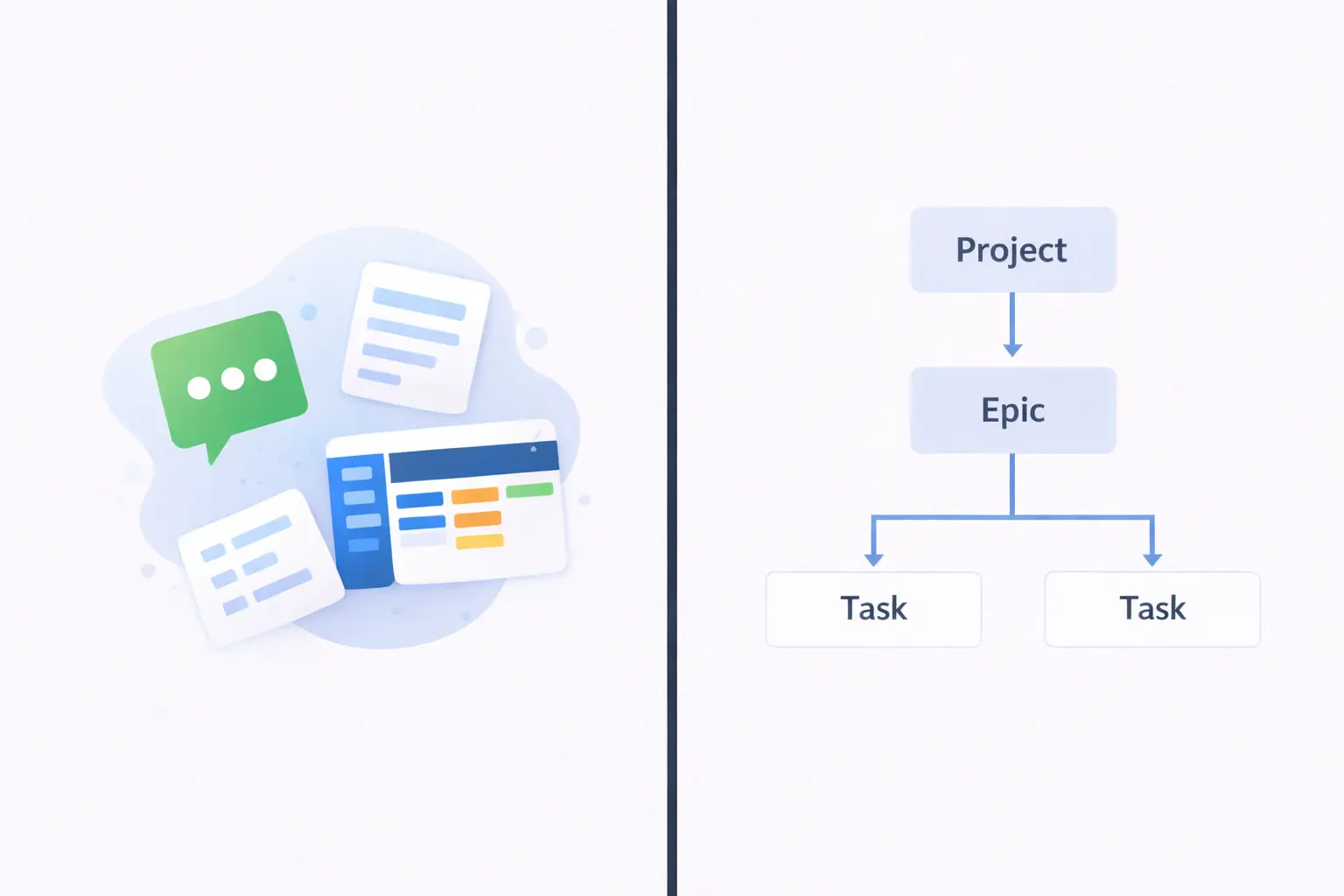
The Alios Work Tree (Tree View) structure brings vertical discipline to this horizontal chaos. Every AI-generated module must be nested within a specific branch of the tree, serving a parent Node.
Code can get lost in repositories.
But the reason for that code’s existence is permanently anchored in the Alios hierarchy.
3. The Ownership Void: "If AI Wrote It, Who Owns It?"
A dangerous illusion in AI-driven teams is that responsibility somehow shifts to the AI. In reality, humans remain 100% accountable for the code’s security, stability, and maintenance. As development speeds up, the question "Who is responsible for this module?" often goes unanswered.
Alios solves this with the Captain (Assignee) Logic. * A block of code might be produced in seconds.
However, its corresponding Node in Alios must have exactly one "Captain."
Ownership in Alios is never diluted; it is clarified. The AI may be the producer, but the human Captain is the decision-maker and the guardian of that Node.
4. Status Management: Beyond the "It’s Done" Myth
The biggest lie in software development is "The code is finished." Writing code is only one step; testing, deployment, and architectural validation are where the real work happens. AI-speed "fake finishes" often lead to massive integration failures at the end of a project.
Alios’s status management system provides a real-time X-ray of the project:
IN PROGRESS: AI is generating/the dev is integrating.
WAKLIYOG (Waiting): The code is ready, but it's waiting for an API key or a design sign-off (Instant bottleneck diagnosis).
REVIEW: A human expert is reviewing the AI-generated code for architectural compliance.
DONE: The task is truly complete, meeting all defined standards.
5. Alios: The Single Source of Truth for the Digital Spine
If AI tools (Cursor, Copilot, ChatGPT) are the "engines" of production, Alios is the "control tower." As coding speed increases, management must evolve to match that velocity. Alios prevents the accumulation of technical debt by recording every decision, every revision, and every hand-off, creating a permanent Corporate Memory.
The 30-Minute Alios Setup for AI-Driven Projects
To master your AI-accelerated development process, follow these steps to set up your Digital Spine:
1. Build the Master Tree (5 Minutes)
Define Master Nodes: Create primary nodes for core project pillars (e.g., Frontend, Backend, Infrastructure, Documentation).
Set the Constitution: Under each master node, add an "Architectural Decision Node" outlining the coding standards and tech stack to be followed by both humans and AI.
2. Establish Ownership (5 Minutes)
Appoint Captains: Assign a single Captain to every master node. Ensure the team knows who is responsible for approving AI outputs for each section.
Add Observers: Link stakeholders or project managers as "Observers" to ensure visibility without cluttering the workflow.
3. Organize the Backlog (10 Minutes)
Create Sub-Nodes: Break down the AI production plan into small, manageable sub-nodes within the tree.
Set Termins (Deadlines): Input realistic deadlines that reflect the increased speed of AI but account for human review time.
4. Configure Your Radar (5 Minutes)
Create Custom Filters: Set up views for "Pending My Review" or "Blocked Tasks (WAKLIYOG)."
Pin the Dashboard: Customize your main screen to immediately show overdue tasks or bottlenecks first thing every morning.
5. Centralize Communication (5 Minutes)
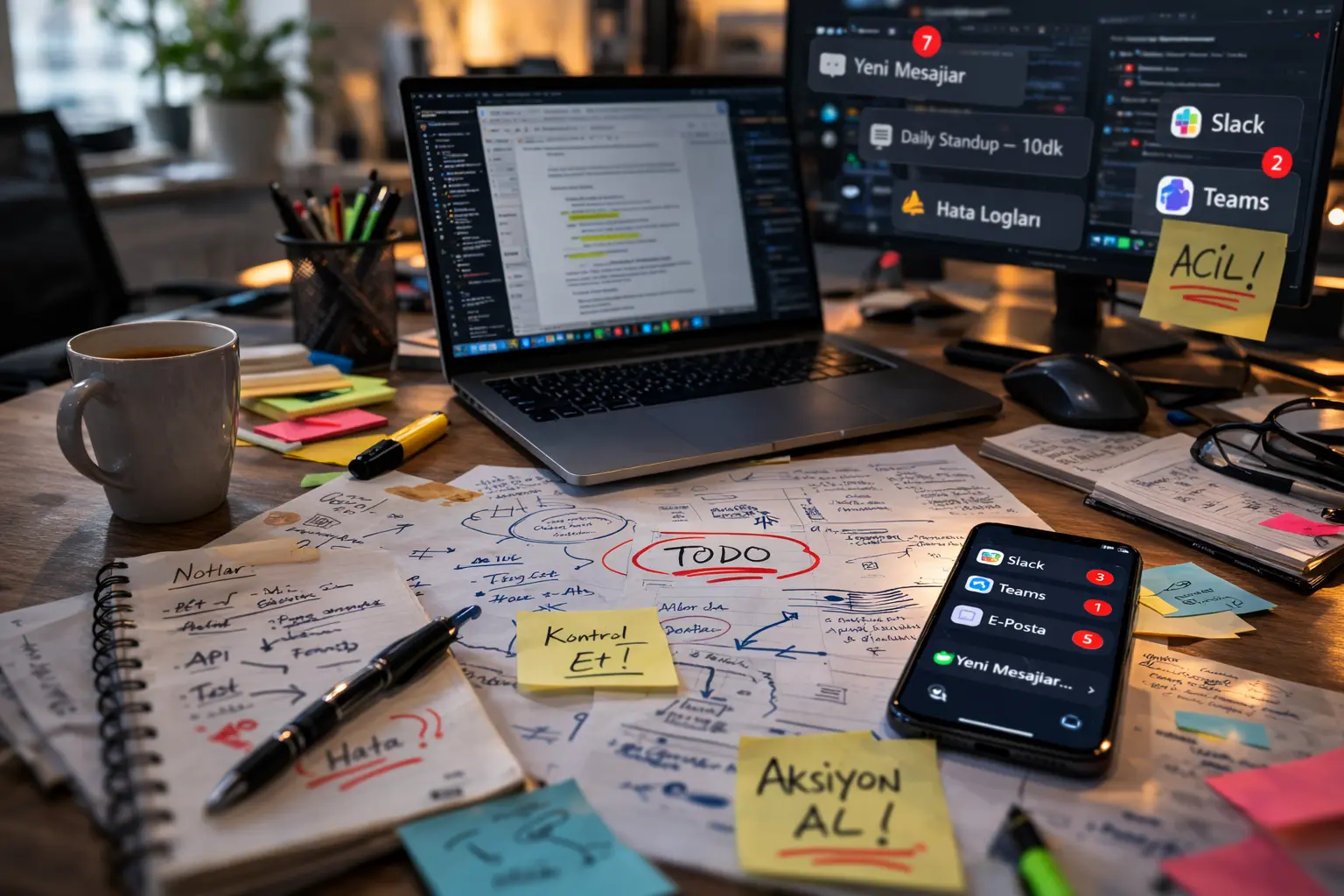
Abandon Internal Messaging for Task Details: Stop discussing technical specifics in Slack or WhatsApp. Move all AI prompts, outputs, and technical debates into the comments of the specific Alios Node.
Attach Documentation: Drag and drop architectural diagrams and API specs directly into the relevant nodes.
Conclusion: Writing code has become a commodity. The real competitive advantage now belongs to those who manage that code with the right architecture, the right timing, and clear ownership. Combine the speed of AI with the discipline of Alios to transform from a team that just "writes code" into an organization that "builds systems."