Article
Developer Onboarding: A 7-Day Template for Productivity
Without a standard, onboarding slows down new developers and kills motivation. Learn how to build a productive start with a developer onboarding template in Alios.

Developer Onboarding: A 7-Day Template for Productivity

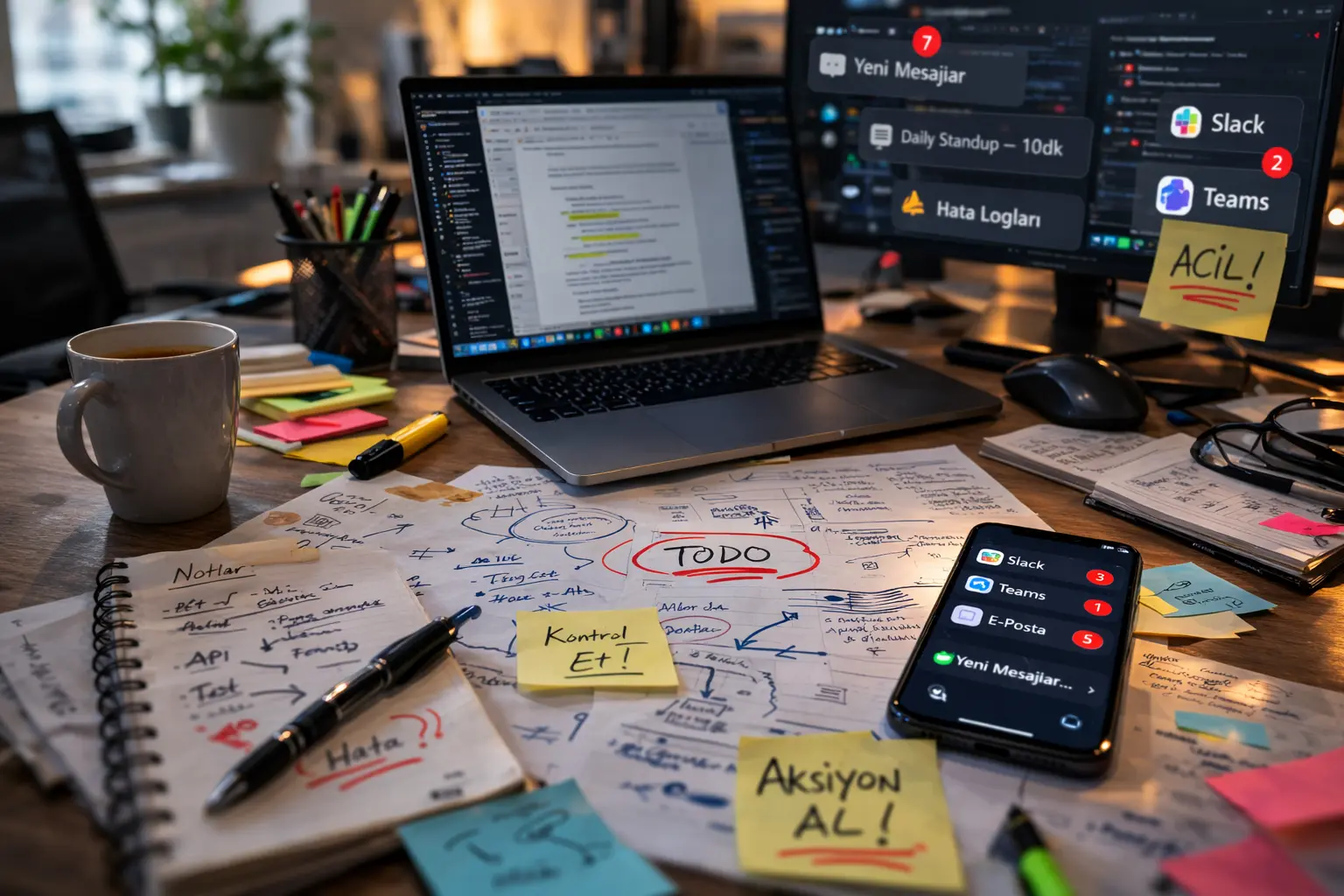
The new developer arrives on day one. A laptop gets handed over, a few repo links get dropped in chat, "look at this document" gets said. Day two, what to work on isn't clear. By day three, they're starting to hesitate before asking questions. Week one is over, they still haven't made their first commit.
This scenario doesn't mean onboarding was done with bad intent. It means there was no standard.
When technical onboarding runs on verbal handoffs, the quality of onboarding is only as good as whoever is doing the onboarding. If they have a busy week, the new developer gets left to fend for themselves. For the next hire, the same process starts from scratch.
Why Developer Onboarding Falls Apart
Technical onboarding has its own unique challenges — the technical layer gets added on top of general onboarding problems.
Setup steps exist only in someone's head. "Set up your environment" gets said. Which steps, in which order, which version, what issues might come up — none of this is written down. The new developer stops someone at every step to ask. Both people lose time.
No architectural context. Repo access exists but not why it's structured this way. What each service does, why this technology was chosen, what to watch out for — without these, code doesn't get understood, gets changed, gets broken.
The first task isn't clear. "Look at this module, understand it" is not a task. When is the first real task coming, how big should it be, what's the success criteria — when these are unclear, the new developer can't figure out what to do.
Starting from scratch every time. Nothing learned from previous onboardings carries forward to the next one. The same questions get asked again, the same problems get experienced again.
A Copyable Onboarding Structure in Alios
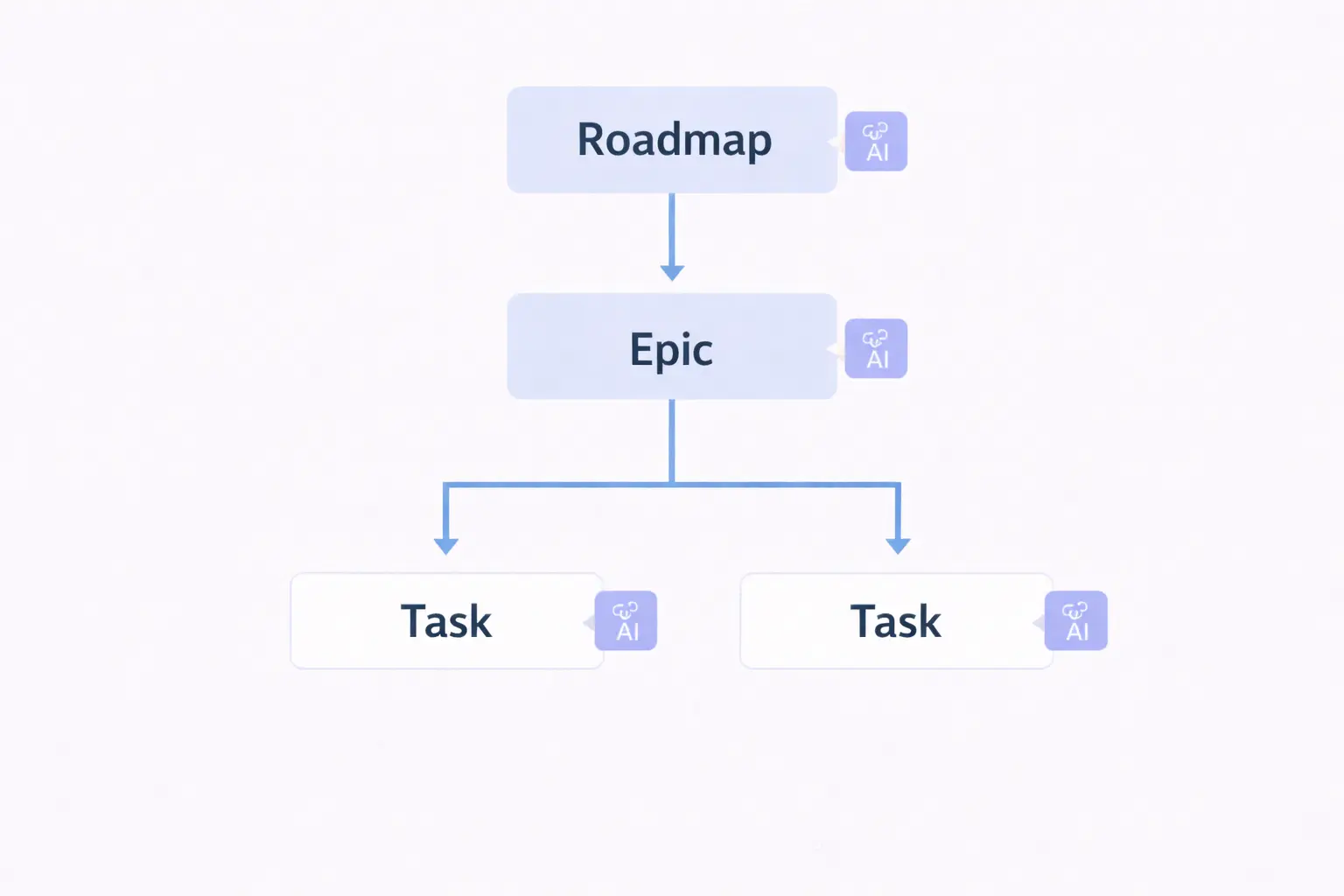
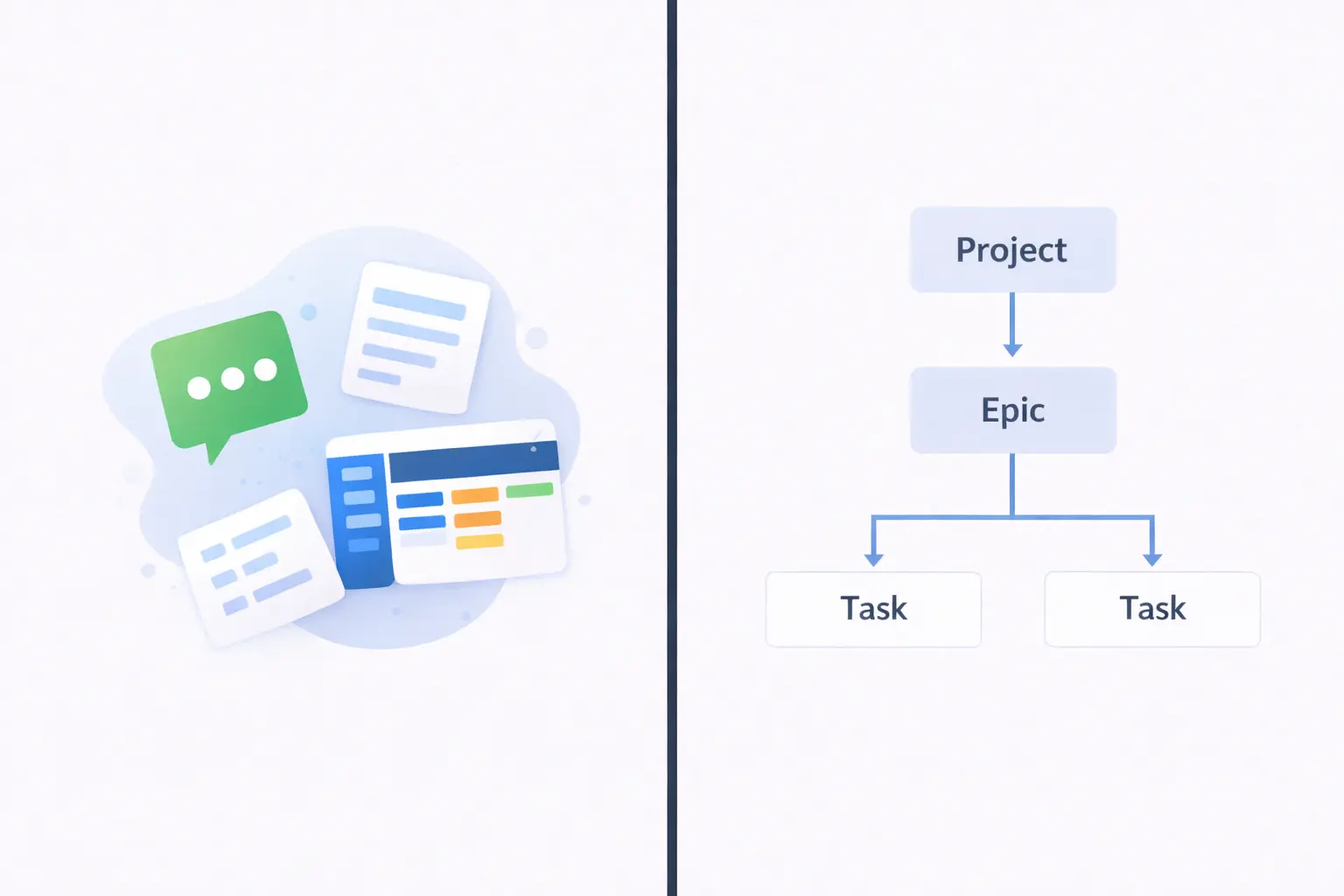
The developer onboarding template in Alios gets built once and copied for every new hire. A main node is opened, day-by-day child nodes get added beneath it. For each day, tasks, expected outputs, and descriptions are ready and waiting.
Copying works like this: the template node gets copied, the top node's name gets updated to "[Name] — Onboarding," the start date gets written, an owner gets assigned. Everything else is already ready.
The template below can be used directly in Alios.
📁 [Name] — Developer Onboarding — [Start Date]
Day 1 — Environment Setup and Access
Goal: Developer can run the local environment independently.
TASKS:

- [ ] Install required software
      [Node version, Docker, IDE, package manager —
      full list and version numbers in node description]

- [ ] Clone repos and install dependencies
      Expected output: `npm install` or equivalent
      completes without errors

- [ ] Bring up local environment
      Expected output: App running on localhost,
      login works

- [ ] Get and test access
      GitHub, staging environment, database, monitoring
      tools — logged into all of them

- [ ] Join communication tools
      Slack channels, calendar invites, Alios invite

EXPECTED OUTPUT:
Local environment running. All access complete.
Can answer "what was hard about the setup?"

NODE DESCRIPTION:
Common setup issues and solutions.
Updated after each new onboarding.
Day 2 — Architecture and Codebase Orientation
Goal: Developer understands the project's overall structure and core flows.
TASKS:

- [ ] Read the architecture overview node
      [System diagram, services, data flow —
      node link in description]

- [ ] Review technical decision nodes
      Read at least 3 critical decision records:
      why this technology, why this structure,
      why this approach

- [ ] Walk through the repo structure
      Write a 1-sentence note on what each
      folder does

- [ ] Trace a core flow end to end
      Example: User logs in → token generated →
      accesses protected page. Find where this
      flow lives in the code.

- [ ] Build a questions list
      Write everything that's unclear in the
      onboarding node — document before asking

EXPECTED OUTPUT:
Can explain the core flow. Questions list ready.
Has enough context to ask "why did you do it this way?"
Day 3 — First Task: Small, Independent, Real
Goal: Makes the first real contribution, learns the process habits.
TASKS:

- [ ] Pick up the first task node
      [A small pre-prepared task with clear scope
      and written acceptance criteria — a bug fix
      or small improvement is ideal]

- [ ] Read the task and complete questions
      Acceptance criteria understood, approach decided,
      no ambiguity before starting

- [ ] Complete the task
      Open branch, make the change, test it

- [ ] Open a PR and request review
      Write what changed and why in PR description

- [ ] Go through the code review process
      Respond to review comments, update if needed,
      merge

EXPECTED OUTPUT:
First PR opened, went through review, got merged.
In the developer's own words: "I understand the process."

NODE DESCRIPTION:
PR link. What was learned during the review — 2-3 sentences.
Day 4 — Processes and Tools
Goal: Knows the sprint process, QA flow, and team routines.
TASKS:

- [ ] Learn the sprint structure
      Look at current sprint nodes. How is it planned,
      how does it close, how do review and retro work

- [ ] Review the QA process
      Look at test checklist and bug nodes. Read the
      QA nodes from the previous sprint.

- [ ] Learn the deployment process
      How staging deployment works, what the production
      go-live flow is, who approves

- [ ] Get comfortable with Alios usage
      Opening nodes, updating status, adding blocker notes —
      learn by doing

- [ ] Attend team routines
      Daily standup, weekly review — as an observer

EXPECTED OUTPUT:
Has enough process knowledge to take independent tasks
in the next sprint. Using the tools.
Day 5 — Medium-Sized Task
Goal: Can work independently on a more substantial task.
TASKS:

- [ ] Pick up the medium-sized task node
      [2-3 days, touches multiple files,
      a real sprint task]

- [ ] Plan the task
      Write the approach in the node description.
      Identify dependencies. Collect questions
      before starting.

- [ ] Start the task
      Try to progress independently. When stuck:
      first look at docs, then search Alios nodes,
      then ask.

- [ ] Write daily check-in node
      What was done today, what happens tomorrow,
      any blockers

EXPECTED OUTPUT:
Started and made progress independently.
Looked at resources before asking questions.
Day 6-7 — Completion and Reflection
Goal: Task is done, onboarding evaluation complete.
TASKS:

- [ ] Complete the medium-sized task
      PR opened, review complete or in progress

- [ ] Write onboarding retrospective
      In node description: What went well, what was hard,
      what was missing from the template, suggestions

- [ ] 1:1 meeting with manager
      First-week review. What did I learn, what's still
      unclear, what will I work on in the next two weeks

- [ ] Update the template
      Steps found to be missing or incorrect during
      onboarding get written into the template —
      for the next hire

EXPECTED OUTPUT:
Two PRs complete or process is understood.
Template updated.
"I know what I'm working on in the next sprint."
Getting Maximum Value from the Template
Prepare the first task in advance. Before the developer arrives, the Day 3 task should already be opened, acceptance criteria written, scope clarified. When the developer arrives and asks "what's my first task?", the answer is ready.
Keep the architecture context node current. This node is the heart of onboarding. When a new decision is made, when a new service is added, this node gets updated. The new developer builds their context by looking here.
Don't skip the retrospective. The "update the template" step on Days 6-7 is frequently skipped. This step makes the next onboarding better. When something that challenged one person gets added to the template, the next person doesn't face the same challenge.
Don't close the onboarding node — archive it. Completed onboarding nodes don't get deleted. The question "who was onboarded when and how?" might be asked later. How much the template evolved, what was added in which version — this history is valuable.
Final Thought
A developer onboarding template, once properly built, pays dividends with every new hire. The initial setup takes 2-3 hours. But every subsequent onboarding moves faster, more consistently, and with less energy.
The copyable node structure in Alios makes this consistency possible. The new developer knows what to work on, the existing team isn't dependent on whoever is doing the onboarding, and each onboarding improves by learning from the last.
The first commit comes on Day 3. Because on Day 3, the first task is already waiting.